Birdsong heralded the start of a new day, gently ushering in the chilly, grey morning with a subtlety that was appreciated by all in the house. Gradually, eyelids fluttered open, fingers and toes stretched and alarm bells of the non-panic-filled variety coaxed the more resolute sleepers from their beds. The stillness of the night slowly receded into the furthest corners of the house, where it would watch and wait amid the daily hullabaloo.
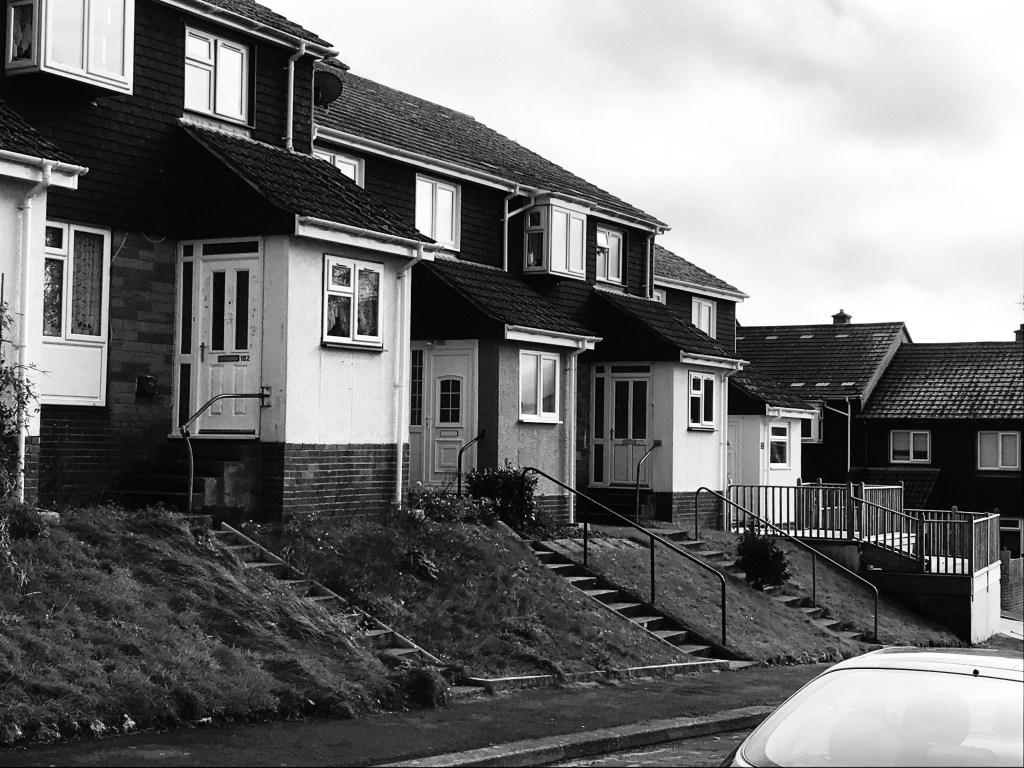
The woman flitted about from room to room, silently chivvying the sleepiest heads into action by means of a well-timed flick of the light switch or the opening and closing of a door. As everyone rose, so did the tension in the small, terraced house. Kitchen smells and sounds, the burning of toast and the scrambling of eggs ricocheted around the walls and up the stairs, hastening the brushing of teeth and the painful detangling of ‘bed hair’. Like a carefully crafted scene from a play or a movie, the hustle and bustle built to a crescendo before peaking and falling away as one by one, everyone went on their way.
Somewhere, a clock ticked, marking time. The woman sighed with relief and mentally gave herself a pat on the back. Another morning successfully navigated and that certainly wasn’t easy in this house. Of course, it had helped that he hadn’t been home. God only knew where he’d ended up the night before, probably in the bed of some local trollop sleeping off the mother of all hangovers. Again. Leaving them to fend for themselves. Just like his father had. A memory stirred, incomplete. Something missing, something that she couldn’t quite remember.
She checked herself. Perhaps not quite like his father had, but she could see it coming. She could see history repeating itself. Time going round and round in circles, oblivious to the destruction in its wake, the reiteration of mistakes and life-changing decisions as if to make a point that nobody could ever quite understand.
She was a simple woman, in both appearance and outlook. Pragmatic and certainly not a believer of fairy tales. She’d lived enough to know that happily ever after was a childish concept devoid of any understanding of reality. Her shoulder-length hair hung loose but was well-maintained, her dress clung to her slim, athletic figure devoid of creases or stains. Simple but ordinary and she was happy to be so. She accepted that there were many things that women were not meant to understand and the ignorant, heartless behaviour of some men was one of them. Once upon a time, she had placed all of her faith in God but had long since seen the light.
The morning passed slowly, the ticking of the kitchen clock a constant companion to the otherwise silent atmosphere that accompanied the woman moving from room to room, carrying out her daily routine. Still she couldn’t shrug the feeling that she was forgetting something, that something was missing. Around mid-morning she turned on the old wireless set in the lounge but received nothing but a short, raucous burst of static for her troubles, a poor substitute for Elvis Presley or Patsy Cline. To quell her disappointment and in an attempt to bring a little life to the otherwise hushed aura of the house, she began to hum a tune to herself.
The sound of a key in the lock fifteen minutes later came as an unwelcome intrusion into her day, more so when he barged through the front door reeking of stale alcohol and cheap perfume. He loomed over her, perfectly framed in the doorway, a silhouette against the slate-coloured sky outside. A memory surfaced of primal fear, of vicious whispers and hands closing around her throat. Feeling the panic rising within her, she swiftly brushed past him and padded quietly up the stairs, hoping that he would just carry on doing whatever it was that he had in mind now that he had returned home.
The remainder of the afternoon passed without incident, until the children came home from school, the four of them bundling through the front door as one, an amalgamation of arms, legs, jumpers and bags. At the sight of their father sprawled asleep on the sofa, they fell silent, terror writ large upon their faces as they quietly scurried away, three up the stairs and the eldest, a girl of thirteen with short, blonde hair disappeared in the direction of the kitchen. She reappeared a few minutes later, carrying a cup of tea and a pile of Rich Tea biscuits balanced on small plate as a pre-emptive gift of appeasement in the event of any such necessity occurring in the coming hours.
Back upstairs the woman spent time with the children, watching them with a calm air of sympathy and understanding as they drew and scribbled and played with dolls and occasionally teased each other in a good-natured manner so as not to catch the attention of their father, who remained snoring steadfastly in the lounge. Relative calm reigned until dinner, when the children were summoned downstairs with a solitary holler, hunger causing a rumble in their tummies and a nervous gaggle of excitement as they swept into the kitchen, only to be silenced by a reproachful glare from their father.
The woman made as if to follow them but paused as she reached the top of the stairs, her senses piqued by the ticking of the old, incongruous grandfather clock on the landing. She watched the pendulum swing back and forth almost hypnotically as the melodic chimes signified the arrival of seven o’clock. Again, that feeling of unease, the nagging doubt at the back of her mind. The clock felt important, time felt important. Then the shouting began.
It was hard to tell what started it all off. It often was. Sometimes it was the smallest of things and sometimes it was as though trouble was just waiting to happen, the catalyst was irrelevant. In this instance, the green beans were just slightly overcooked and the gravy hadn’t been stirred quite enough. As the woman made it to the bottom of the stairs, she heard the husband shouting, the atmosphere thick with a tension that was palpable. Two of the children were already crying, the youngest two, while the eldest was offering to remake the gravy in a bid to keep the peace. The woman watched in silence, feeling something amiss. Something that she’d been feeling all day but hadn’t been able to put her finger on. Then she saw another woman sitting at the table, cowering in fear, a bruise rapidly developing across her left cheek. And then she remembered. Terrible flashes of the past crashing across her senses, the same fear that she saw in front of her now spreading its icy tendrils through her veins. A rage unfettered visible in eyes that bored through to her very soul. Hot breath on her cheek as hands closed around her neck, pressure increasing on her windpipe and a terrible, final darkness creeping in at the edges of her vision as she fought for breath, feet flailing wildly and hands clawing at her assailant.
The husband picked the gravy jug up and threw it at the wall. It shattered instantly, showering the table with shards of porcelain and globules of thick, brown liquid. Children scattered as the table was upended, plates of mashed potato and pork chops sliding from the tablecloth to the floor, gravy pooling on the carpet like dark, viscous blood. The man was standing over his wife, who was cowering against the wall, feet slipping from beneath her in blind panic as she begged for mercy over the wailing and the sobbing of their children.
’STOP IT!’ The woman screamed from the other side of the room, picking a glass up from the coffee table and hurling it at the man, missing him by inches before it too smashed against the wall. ’STOP IT, STOP IT, STOP IT!’
Surprisingly, everything stopped. Everyone turned in silence to look at the woman. No, through the woman. They stared at the space that she occupied and the woman realised, with a crushing disappointment that they couldn’t see her. Collectively, their eyes widened in disbelief as she slid a pile of newspapers, magazines and envelopes from the coffee table to the floor. And she finally understood.
Every night she would disappear, her memories slipping through her fingers before she returned to the house in the morning, oblivious to how she had lost her life. Until now. Because this was the house where she had died, murdered by the father of the man who now stood before her, bestowing the same pain that she had suffered upon his own family, repeating the actions and mistakes of his father. She was here to stop him. To stop history repeating itself.
On the far wall of the kitchen hung an ornamental, wooden crucifix holding a silver figure of Christ upon the cross. The woman moved across to it and used all of her concentration to slowly turn it upside down. The children gasped and tried to hide behind the tipped over table, scrabbling among the mess beneath their hands and knees. The rage built inside the woman as she remembered her dying moments, how her husband had squeezed the very last breath out of her in front of his son, her stepson. She focussed, channelled her energy and used her mind to throw the crucifix across the room, hitting the husband square in the face, cutting him just above the right eyebrow. As blood ran from the wound, mixing with the sweat from his exertions, she summoned one final effort to unleash a scream so full of fury that it split the veil between life and death, a deathly cold blast of vengeance and defiance bellowed into his face.
‘LEAVE THEM ALONE!’
The man whimpered, losing control of his bodily functions before hurtling across the room, throwing the front door open and fleeing, leaving the traces of his personal misdemeanours hanging in the air. Silence slowly fell, like fresh snow on a winter day. The sudden quiet, a total contrast from the recent pandemonium, brought with it something else. Relief. And hope.
The children scrambled to their mother, who held them tight as she sobbed, completely bewildered by the unseen intervention. The pile of newspapers on the floor ruffled and separated as a yellowed, aged-looking front page blew towards the devastated family. The mother reached down and picked the paper up, reading through tear-filled eyes.
The lead headline told of the murder of Mary Hepburn by her husband, Thomas. He had strangled her in their bedroom at seven o’clock on the evening of April 30th, 1958, the sounds of the struggle drowned out by the chimes of the old grandfather clock and the music from the radio.
The mother caught her eldest daughter trying to read the article and still had enough of her wits about her to know that it was not a story that should be told this day, folding the paper and tucking it away beneath her. She had read enough to understand and silently offered up a prayer of thanks that caught Mary’s attention as the world around her began to dissolve and disappear from view. It was time to move on. Mary had never believed in happily ever after, but she was happy for her final thought to consider that this was the next best thing.
The husband never returned. But neither did the ghost of Mary Hepburn.

There’s a footnote to this particular story, one that I’ve agonised over sharing and have ultimately come to the conclusion that it’s worth including. I’ve spent a lot of time over the years trying to make sense of my childhood and the behaviour of my parents, in particular my father.
For context, my Dad loved a story. I think that he was ashamed of his roots and following his passing in 2015, I decided to dig into our collective past. He had often alluded to a dark secret concerning his father and on the rare occasions when he talked of his childhood, he spoke more of his mother and grandfather. His grandfather, I believe, was a stern and cruel man and I heard from other people that he had broken both of my father’s legs when he was a child. I didn’t press them for more details, I’m not sure that my brain can cope with that level of cruelty. My father certainly didn’t enjoy a happy childhood (relatable) and would often tell us stories about his past that were fabricated. I think that he wanted to feel important and he wanted us to be proud of him. I don’t believe that he would ever have experienced that before and at times he craved approval. He would often tell us that he had trials for Huddersfield Town or talk about games of cricket where he had scored hundreds but the details were spartan and inconsistent. However, they were also inoffensive, so I never felt the need to challenge him regarding the validity of those tales and I figured that if it gave him a little confidence boost then who was I to take that away from him. I mean, we all tell stories every day, they are an integral part of our social interactions and the basis for many friendships and relationships.
So, as mentioned previously, he often hinted at something in his past but he never gave details. And, it turned out, that was for good reason.
My paternal grandfather was Thomas Hepburn, who murdered his second wife, Mary Hepburn (my father’s stepmother), in a B&B in Sunderland in May 1958. Newspaper reports at the time mention them spending time with Thomas’s children in the days before the incident. Mary was just 35 years old and was a registered nurse. So perhaps it was no coincidence that my father went into nursing when he left the RAF. On April 30th, it seems that Thomas Hepburn senior discharged himself from a mental hospital at Morpeth and booked himself and Mary into a lodging house. The next morning, the landlady found Mary lying on the floor of the bedroom with a pillow over her face. Upon his arrest, he told the police:
‘I did it. She was good to me, very good to me. She was kind to me. There was not any reason. She loved me very much. I felt funny, very peculiar. I remember her being on the floor. I remember her face going blue…she was the finest woman that ever lived.’
Thomas was found guilty and spent the remainder of his life in an asylum before he passed away in the late 1970s.
So when I try to make sense of my childhood and the things that my father did, I have to consider that not only did he grow up with a violent grandfather in a broken home, but he also had to come to terms with the knowledge of what his father had done. Of course, the flip side is that I grew up with similar challenges, exposed to violent behaviour and didn’t follow suit, but I think we live in a more enlightened world these days. Again, I have no wish to excuse the things that my father did but I think that he tried to change as he got older, certainly to the best of his ability and I expect that for all of his bravado, he carried a lot of emotional baggage around with him. Shortly before he died, we spoke a little about what we had been through together, which was very helpful for us both and enabled me to speak honestly at his funeral.
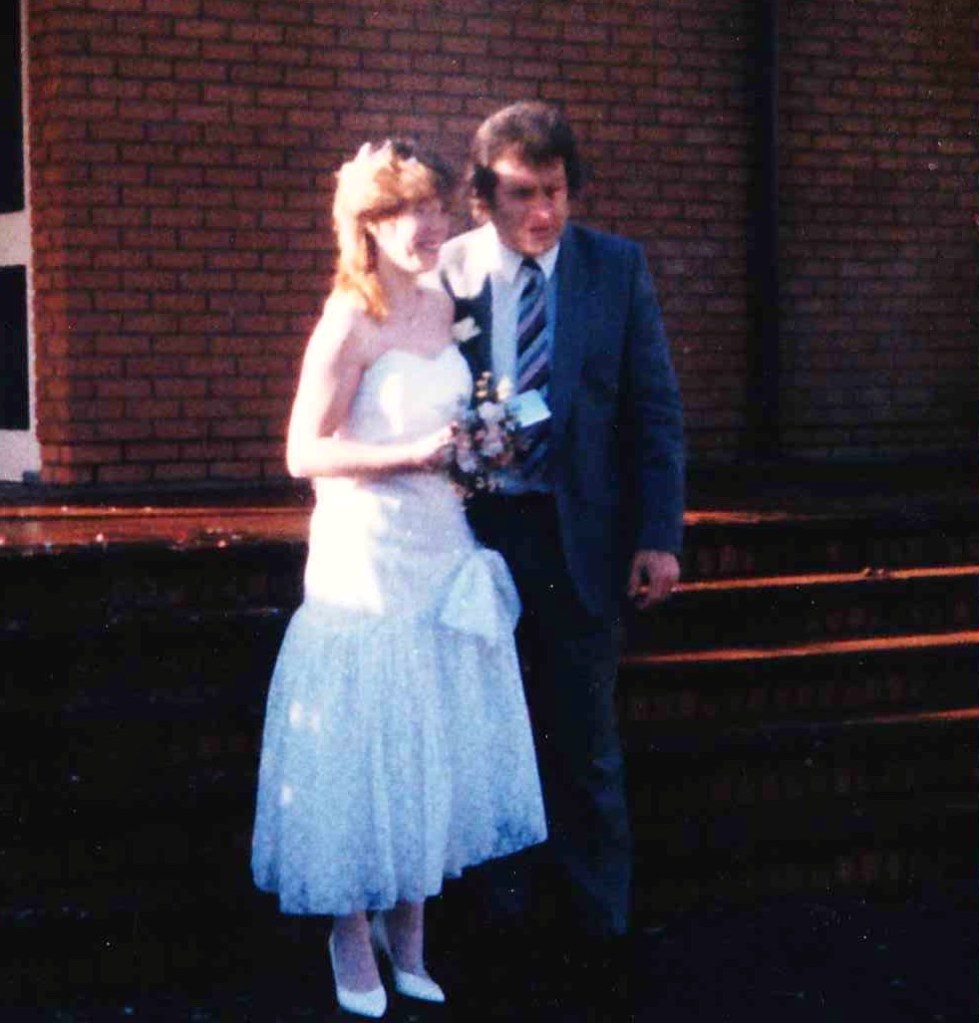
The last time I saw my Dad is a memory that will live with me forever. I had already driven down to see him once that week and he was in quite a bad way- to be honest I thought I was seeing him for the last time. So, imagine my surprise when I received a call from him a few days later asking me to go and see him! I jumped in the car again and drove for another 6 hours and it turned out that he didn’t remember that I had been to see him just three days earlier. As I walked into the hospice to see him looking frail and old, a shadow of the man I remembered, he looked up at me and gave me such a smile, that I would have happily driven for 600 hours just to see that reaction! We spent the afternoon with me wheeling him around the garden talking about cricket, his beloved Sunderland, family and days gone by. When I had to leave I think we both knew that we were saying goodbye for the last time, so I told him, from the heart that I had no regrets and that I was proud of him. I told him that I loved him and he told me that he loved me too. And that was enough.
Copyright Alec Hepburn, 2026.
 A Life More Ordinary
Leave a comment