Looking pensive in my mid-twenties (ish). A little older, a little wiser and a little fatter than I was during the time that covers the next few updates.
I’m not even sure where to start with this part of my story. How does the quote go? ‘It’s better to have loved and lost than to never have loved at all?’
Well, that depends on the circumstances around the loss, I think. Because frankly, some of the losses I’ve suffered I could have happily done without!
Given the nature of my upbringing, relationships were always going to be difficult to navigate. The mental and physical abuse that we went through as children scarred us deeply and as I’ve mentioned earlier, some of us also experienced sexual abuse, which has also impacted those relationships. I don’t intentionally make light of it, but…look, when you find out about sex in the way that I did, it will have leave scars. It hit hard and it never really left me. It was always there and I’m sure that I’ve blocked much of it from my memory. It was traumatic because as a child in a situation where love was not always present, it became very easy to become confused about what love actually was or how it was shown. When you aren’t learning about physical love via the pages of a book or a carefully worded if slightly awkward parental explanation, it can be difficult to understand how people express love and indeed what love looks like to others. Perhaps more importantly, what the other stuff looks like to others too. In that situation it’s easy to confuse sex and love and to be able to differentiate between what is just sex and what is an intimate act between two lovers.
Attending an all-boys school meant that relationships in my early teen years were hard to carve out. Poorly constructed teenage fantasies were bandied around the classrooms as fact, supplemented with florid descriptions that had been gleaned from whatever magazines were doing the rounds between friends and not-so-friends. I wasn’t necessarily in a hurry to experience sex as a teenager, given what I had been through in my early years, but even in my writing, those experiences bled through, sometimes graphically and at other times in a more subtle manner.
By the time the loss of my virginity arrived, or at least the version that I could comfortably accept as so, I was 14 and still very much the shy and retiring type. What little there is to tell would hardly fall under the genre of erotic fiction and I’d love to be able to dress it up as a wonderfully romantic experience or even an overt display of magnificent sexual prowess, but I’ve been honest up to this point and plan to continue in the same manner. I’ll spare you the detailed, if brief, review but it was an underwhelming experience (as I’m sure it was for Anne-Marie, the girl in question who I had known for about two hours before we commenced ‘nocturnal activities’ on a dark, September evening with Home Park just a few yards away). I hope you’ll forgive me for not managing to avoid the ‘he shoots, he scores’ pun!
Home Park, Plymouth, where I first scored in the late eighties. And I’m not talking about football…
After a second less-than enthusiastic encounter with the same girl, I think we both decided that brief, awkward fumbles in public places weren’t for us and we went our separate ways. I’m not entirely sure how I felt after the first time, likely a sense of relief that I had an experience that didn’t have to be hidden from everyone and something that could at least pass as a positive step on the road to ‘growing up’.
After moving to Horsham in 1990, I had a couple of brief flings, neither of which amounted to anything serious and neither furnished me with the love that I was seeking. I was very much a romantic at heart, convinced that there was the right person ‘out there’ for me and that once I met them my problems would magically disappear and together with the love of my life, we’d live happily ever after.
All of which takes me to a few months before I turned 18, to May,1991. Paul Gascoigne borked his knee in the FA Cup final, Roxette’s Joyride topped the charts and Helen Sharman became the first British astronaut in space. In slightly more localised news, I met a girl called Suzanne, who I would have my first serious relationship with.
Partly due to my naivety and insecurity, I found certain patterns from my earlier years repeating themselves. That makes it all sound rather dreadful, which it wasn’t, but I didn’t really know who I was, so trying to work other people out was suddenly a whole lot harder.
We’d been together maybe for a couple of months, enjoying the proverbial but not legally binding ‘honeymoon period’ when she first told me that she was attracted to someone else. Had I possessed a higher opinion of myself, I would likely have wished her luck in her new relationship and stepped away, but I was in love and having found that love, I didn’t want to relinquish it. Indeed, I was so desperate to be loved that I was prepared to accept being loved in such a manner, that it was ok for my girlfriend to find other people attractive and subsequently attempt to act on it. I remember being advised by her mother (who was a very domineering figure within her own family and had by all accounts played by the same rules) that I should allow her to play the field and ‘wait for her’, possibly the daftest fucking advice I’ve ever received, yet in my resigned state, a viewpoint that I instantly subscribed to if it meant that I could still be loved in some way.
Some handsome devil at a party in the early nineties.
During these tormented days, I would often be found working in the card shop, Athena, in Horsham, unwittingly mirroring my mother’s morose existence by (autism alert) playing numerous tearjerkers on the store CD player, much to the frustration of my colleagues I suspect. I would spend far too much time worrying about what Suzanne was getting up to and not enough time working and in all honesty, I must have been a right dour pain in the arse. My managers, Sue (who was supportive but professional) and Kellie (who was utterly lovely and indeed a lot lovelier than I realised at the time) tried to help me see reason and guide me in the right direction, but unsurprisingly to anyone who knows me, I was resolutely stubborn. I wasn’t ready to give up on the love that I thought was mine. If only I’d had the foresight of the saxophone-wielding and raven-haired Curtis Stigers, whose song on his imaginatively titled album ‘Curtis Stigers’, told of a similar situation that led to his similar assumption and subsequent understanding as he crooned among the posters and the t-shirts with ‘I Guess it wasn’t Mine’.
After a couple of weeks of torture, she decided that her new target was either out of her league, not worth the hassle or not as subservient as I was. She returned to me and as ridiculous as it sounds, I was grateful. This would happen four times over the course of our relationship before we finally parted and each time I was expected to ‘wait for her’ until she had decided whether or not it was me that she actually loved.
As for her mother, she had issues of her own to deal with. One particular night, after Suzanne’s father had given us and my mother a lift home in the rain following a game of stoolball, saving us a 45-minute walk, her mum phoned us at home and shouted all manner of abuse at my mother for having ‘sat in her seat in the car’. I had a certain amount of sympathy for her long-suffering husband, who seemed a decent guy but carried with him that same, downtrodden air that I began to recognise in myself.
Like most relationships, it wasn’t all bad and there were times when I think that we were genuinely happy. There were also times when we were challenged by issues other than her possible infidelity, moments that inevitably left their mark on us. But as with so much of my life, I never really felt secure and was always waiting for the next problem to arise. Despite the advice of friends, who could clearly see what I was going through, I stayed longer than I should have which I know I can attribute to my low self-esteem. Some habits are really hard to break…
Birdsong heralded the start of a new day, gently ushering in the chilly, grey morning with a subtlety that was appreciated by all in the house. Gradually, eyelids fluttered open, fingers and toes stretched and alarm bells of the non-panic-filled variety coaxed the more resolute sleepers from their beds. The stillness of the night slowly receded into the furthest corners of the house, where it would watch and wait amid the daily hullabaloo.
The woman flitted about from room to room, silently chivvying the sleepiest heads into action by means of a well-timed flick of the light switch or the opening and closing of a door. As everyone rose, so did the tension in the small, terraced house. Kitchen smells and sounds, the burning of toast and the scrambling of eggs ricocheted around the walls and up the stairs, hastening the brushing of teeth and the painful detangling of ‘bed hair’. Like a carefully crafted scene from a play or a movie, the hustle and bustle built to a crescendo before peaking and falling away as one by one, everyone went on their way.
Somewhere, a clock ticked, marking time. The woman sighed with relief and mentally gave herself a pat on the back. Another morning successfully navigated and that certainly wasn’t easy in this house. Of course, it had helped that he hadn’t been home. God only knew where he’d ended up the night before, probably in the bed of some local trollop sleeping off the mother of all hangovers. Again. Leaving them to fend for themselves. Just like his father had. A memory stirred, incomplete. Something missing, something that she couldn’t quite remember.
She checked herself. Perhaps not quite like his father had, but she could see it coming. She could see history repeating itself. Time going round and round in circles, oblivious to the destruction in its wake, the reiteration of mistakes and life-changing decisions as if to make a point that nobody could ever quite understand.
She was a simple woman, in both appearance and outlook. Pragmatic and certainly not a believer of fairy tales. She’d lived enough to know that happily ever after was a childish concept devoid of any understanding of reality. Her shoulder-length hair hung loose but was well-maintained, her dress clung to her slim, athletic figure devoid of creases or stains. Simple but ordinary and she was happy to be so. She accepted that there were many things that women were not meant to understand and the ignorant, heartless behaviour of some men was one of them. Once upon a time, she had placed all of her faith in God but had long since seen the light.
The morning passed slowly, the ticking of the kitchen clock a constant companion to the otherwise silent atmosphere that accompanied the woman moving from room to room, carrying out her daily routine. Still she couldn’t shrug the feeling that she was forgetting something, that something was missing. Around mid-morning she turned on the old wireless set in the lounge but received nothing but a short, raucous burst of static for her troubles, a poor substitute for Elvis Presley or Patsy Cline. To quell her disappointment and in an attempt to bring a little life to the otherwise hushed aura of the house, she began to hum a tune to herself.
The sound of a key in the lock fifteen minutes later came as an unwelcome intrusion into her day, more so when he barged through the front door reeking of stale alcohol and cheap perfume. He loomed over her, perfectly framed in the doorway, a silhouette against the slate-coloured sky outside. A memory surfaced of primal fear, of vicious whispers and hands closing around her throat. Feeling the panic rising within her, she swiftly brushed past him and padded quietly up the stairs, hoping that he would just carry on doing whatever it was that he had in mind now that he had returned home.
The remainder of the afternoon passed without incident, until the children came home from school, the four of them bundling through the front door as one, an amalgamation of arms, legs, jumpers and bags. At the sight of their father sprawled asleep on the sofa, they fell silent, terror writ large upon their faces as they quietly scurried away, three up the stairs and the eldest, a girl of thirteen with short, blonde hair disappeared in the direction of the kitchen. She reappeared a few minutes later, carrying a cup of tea and a pile of Rich Tea biscuits balanced on small plate as a pre-emptive gift of appeasement in the event of any such necessity occurring in the coming hours.
Back upstairs the woman spent time with the children, watching them with a calm air of sympathy and understanding as they drew and scribbled and played with dolls and occasionally teased each other in a good-natured manner so as not to catch the attention of their father, who remained snoring steadfastly in the lounge. Relative calm reigned until dinner, when the children were summoned downstairs with a solitary holler, hunger causing a rumble in their tummies and a nervous gaggle of excitement as they swept into the kitchen, only to be silenced by a reproachful glare from their father.
The woman made as if to follow them but paused as she reached the top of the stairs, her senses piqued by the ticking of the old, incongruous grandfather clock on the landing. She watched the pendulum swing back and forth almost hypnotically as the melodic chimes signified the arrival of seven o’clock. Again, that feeling of unease, the nagging doubt at the back of her mind. The clock felt important, time felt important. Then the shouting began.
It was hard to tell what started it all off. It often was. Sometimes it was the smallest of things and sometimes it was as though trouble was just waiting to happen, the catalyst was irrelevant. In this instance, the green beans were just slightly overcooked and the gravy hadn’t been stirred quite enough. As the woman made it to the bottom of the stairs, she heard the husband shouting, the atmosphere thick with a tension that was palpable. Two of the children were already crying, the youngest two, while the eldest was offering to remake the gravy in a bid to keep the peace. The woman watched in silence, feeling something amiss. Something that she’d been feeling all day but hadn’t been able to put her finger on. Then she saw another woman sitting at the table, cowering in fear, a bruise rapidly developing across her left cheek. And then she remembered. Terrible flashes of the past crashing across her senses, the same fear that she saw in front of her now spreading its icy tendrils through her veins. A rage unfettered visible in eyes that bored through to her very soul. Hot breath on her cheek as hands closed around her neck, pressure increasing on her windpipe and a terrible, final darkness creeping in at the edges of her vision as she fought for breath, feet flailing wildly and hands clawing at her assailant.
The husband picked the gravy jug up and threw it at the wall. It shattered instantly, showering the table with shards of porcelain and globules of thick, brown liquid. Children scattered as the table was upended, plates of mashed potato and pork chops sliding from the tablecloth to the floor, gravy pooling on the carpet like dark, viscous blood. The man was standing over his wife, who was cowering against the wall, feet slipping from beneath her in blind panic as she begged for mercy over the wailing and the sobbing of their children.
’STOP IT!’ The woman screamed from the other side of the room, picking a glass up from the coffee table and hurling it at the man, missing him by inches before it too smashed against the wall. ’STOP IT, STOP IT, STOP IT!’
Surprisingly, everything stopped. Everyone turned in silence to look at the woman. No, through the woman. They stared at the space that she occupied and the woman realised, with a crushing disappointment that they couldn’t see her. Collectively, their eyes widened in disbelief as she slid a pile of newspapers, magazines and envelopes from the coffee table to the floor. And she finally understood.
Every night she would disappear, her memories slipping through her fingers before she returned to the house in the morning, oblivious to how she had lost her life. Until now. Because this was the house where she had died, murdered by the father of the man who now stood before her, bestowing the same pain that she had suffered upon his own family, repeating the actions and mistakes of his father. She was here to stop him. To stop history repeating itself.
On the far wall of the kitchen hung an ornamental, wooden crucifix holding a silver figure of Christ upon the cross. The woman moved across to it and used all of her concentration to slowly turn it upside down. The children gasped and tried to hide behind the tipped over table, scrabbling among the mess beneath their hands and knees. The rage built inside the woman as she remembered her dying moments, how her husband had squeezed the very last breath out of her in front of his son, her stepson. She focussed, channelled her energy and used her mind to throw the crucifix across the room, hitting the husband square in the face, cutting him just above the right eyebrow. As blood ran from the wound, mixing with the sweat from his exertions, she summoned one final effort to unleash a scream so full of fury that it split the veil between life and death, a deathly cold blast of vengeance and defiance bellowed into his face.
‘LEAVE THEM ALONE!’
The man whimpered, losing control of his bodily functions before hurtling across the room, throwing the front door open and fleeing, leaving the traces of his personal misdemeanours hanging in the air. Silence slowly fell, like fresh snow on a winter day. The sudden quiet, a total contrast from the recent pandemonium, brought with it something else. Relief. And hope.
The children scrambled to their mother, who held them tight as she sobbed, completely bewildered by the unseen intervention. The pile of newspapers on the floor ruffled and separated as a yellowed, aged-looking front page blew towards the devastated family. The mother reached down and picked the paper up, reading through tear-filled eyes.
The lead headline told of the murder of Mary Hepburn by her husband, Thomas. He had strangled her in their bedroom at seven o’clock on the evening of April 30th, 1958, the sounds of the struggle drowned out by the chimes of the old grandfather clock and the music from the radio.
The mother caught her eldest daughter trying to read the article and still had enough of her wits about her to know that it was not a story that should be told this day, folding the paper and tucking it away beneath her. She had read enough to understand and silently offered up a prayer of thanks that caught Mary’s attention as the world around her began to dissolve and disappear from view. It was time to move on. Mary had never believed in happily ever after, but she was happy for her final thought to consider that this was the next best thing.
The husband never returned. But neither did the ghost of Mary Hepburn.
There’s a footnote to this particular story, one that I’ve agonised over sharing and have ultimately come to the conclusion that it’s worth including. I’ve spent a lot of time over the years trying to make sense of my childhood and the behaviour of my parents, in particular my father.
For context, my Dad loved a story. I think that he was ashamed of his roots and following his passing in 2015, I decided to dig into our collective past. He had often alluded to a dark secret concerning his father and on the rare occasions when he talked of his childhood, he spoke more of his mother and grandfather. His grandfather, I believe, was a stern and cruel man and I heard from other people that he had broken both of my father’s legs when he was a child. I didn’t press them for more details, I’m not sure that my brain can cope with that level of cruelty. My father certainly didn’t enjoy a happy childhood (relatable) and would often tell us stories about his past that were fabricated. I think that he wanted to feel important and he wanted us to be proud of him. I don’t believe that he would ever have experienced that before and at times he craved approval. He would often tell us that he had trials for Huddersfield Town or talk about games of cricket where he had scored hundreds but the details were spartan and inconsistent. However, they were also inoffensive, so I never felt the need to challenge him regarding the validity of those tales and I figured that if it gave him a little confidence boost then who was I to take that away from him. I mean, we all tell stories every day, they are an integral part of our social interactions and the basis for many friendships and relationships.
So, as mentioned previously, he often hinted at something in his past but he never gave details. And, it turned out, that was for good reason.
My paternal grandfather was Thomas Hepburn, who murdered his second wife, Mary Hepburn (my father’s stepmother), in a B&B in Sunderland in May 1958. Newspaper reports at the time mention them spending time with Thomas’s children in the days before the incident. Mary was just 35 years old and was a registered nurse. So perhaps it was no coincidence that my father went into nursing when he left the RAF. On April 30th, it seems that Thomas Hepburn senior discharged himself from a mental hospital at Morpeth and booked himself and Mary into a lodging house. The next morning, the landlady found Mary lying on the floor of the bedroom with a pillow over her face. Upon his arrest, he told the police:
‘I did it. She was good to me, very good to me. She was kind to me. There was not any reason. She loved me very much. I felt funny, very peculiar. I remember her being on the floor. I remember her face going blue…she was the finest woman that ever lived.’
Thomas was found guilty and spent the remainder of his life in an asylum before he passed away in the late 1970s.
So when I try to make sense of my childhood and the things that my father did, I have to consider that not only did he grow up with a violent grandfather in a broken home, but he also had to come to terms with the knowledge of what his father had done. Of course, the flip side is that I grew up with similar challenges, exposed to violent behaviour and didn’t follow suit, but I think we live in a more enlightened world these days. Again, I have no wish to excuse the things that my father did but I think that he tried to change as he got older, certainly to the best of his ability and I expect that for all of his bravado, he carried a lot of emotional baggage around with him. Shortly before he died, we spoke a little about what we had been through together, which was very helpful for us both and enabled me to speak honestly at his funeral.
Dad with my eldest sister, Carole, at her first wedding.
The last time I saw my Dad is a memory that will live with me forever. I had already driven down to see him once that week and he was in quite a bad way- to be honest I thought I was seeing him for the last time. So, imagine my surprise when I received a call from him a few days later asking me to go and see him! I jumped in the car again and drove for another 6 hours and it turned out that he didn’t remember that I had been to see him just three days earlier. As I walked into the hospice to see him looking frail and old, a shadow of the man I remembered, he looked up at me and gave me such a smile, that I would have happily driven for 600 hours just to see that reaction! We spent the afternoon with me wheeling him around the garden talking about cricket, his beloved Sunderland, family and days gone by. When I had to leave I think we both knew that we were saying goodbye for the last time, so I told him, from the heart that I had no regrets and that I was proud of him. I told him that I loved him and he told me that he loved me too. And that was enough.
Some ‘handsome’ devil modelling the ‘just woken up’ pose. Note the poster in the background complete with ‘inspirational, religious quotation’ and the commemorative Charles and Diana wedding mug on the arm of the chair. Neither provoke any level of fondness in my memories or would have any place in my adult life.
Around 1992, while England were failing miserably at the Euros under Graham Taylor, Mother made the decision for all of us to move away from Horsham and relocate to move in with a man that she had been seeing for a while, Brian, who was a dead ringer for the guy from the ‘Courts’ advert that was doing the rounds at the time (the song went something along the lines of ‘then I sincerely hope to see you all in Courts’, which, given the area of Southampton in which he lived, took irony to a whole new level).
This led to a tremendous amount of upheaval and involved Mother and my two half-sisters, Lydia and Hannah, moving into Brian’s small, terraced house and me somehow moving in with Brian’s Mum. It was far from ideal and I was really unhappy about moving away from Horsham and having to live with a complete stranger. I was also out of work at the time as unemployment continued to rise under John Major’s Tories and I was struggling to adapt to the changes in my life having navigated two relationships since I’d arrived in Sussex, neither of which were particularly happy, but I’ll reflect on those events a little further down the line. The Queen would refer to 1992 as an Annus Horriblis and I would have found it hard to disagree with her sentiments, albeit for reasons other than the Windsor Castle fire and the various scandals within the Royal Family (such as the Andrew formerly known as Prince discovering that at the age of 32, Sarah Ferguson was ‘too old for him’).
Anyway, Royal ignominy aside, one evening in Southampton, we had a big bust up at Brian’s house, I think because I hadn’t managed to put the lid on a squash bottle properly (which we all know should be classified as a major crime) and then found it funny when Hannah shook the bottle, coating the kitchen and herself in orange flavoured cordial.
I travelled back to Horsham the following day to visit an ex-girlfriend for a few days and arguably stayed a week or two longer at her parents’ house than anyone had expected. Eventually, after essentially running out of money, I phoned Mother to tell her that I would be coming back home. Only to be told that I couldn’t, there was no room for me anymore. Just like that (no Tommy Cooper impersonation intended). I was basically homeless. For once, I sprang into action, driven by a mixture of fury and frustration. I applied for and was given a job at McDonalds and discussed living arrangements with Anita and Adam (parents of my ex), who took me under their wing despite the fact that their daughter and I were no longer dating. In fact, I’m pretty sure that she wasn’t even living with them any more. I am eternally grateful for the kindness that they showed me during the time I was with them and I really regret not staying in touch after moving out. In hindsight, this should probably have been the moment where I turned my back on Mother. To throw me out for no apparent reason knowing full well that I had no alternative option should have been unforgiveable.
Mother and her third husband, Brian.
By the time I married Louise in 1995, my relationship with Mother had recovered somewhat, largely due to the loss of Carole (more to come on that as well, apologies for any chronological confusion). When I left Berkshire in 1998, following the breakdown of my first marriage, I spent some time sleeping on an airbed on Mother and Brian’s landing until I could afford a flat of my own and following that we had what I would describe as an ‘arm’s length’ relationship. After Charley’s birth in January 2000 and my marriage to Sally around eighteen months later, Mother seemed to become more distant and began to make some decisions that I found difficult to understand. I can only assume that Brian didn’t like me and of course, he’s perfectly entitled to his own opinion. I always found him to be surprisingly arrogant with a vacuous personality and the sincerity and charisma of a boiled potato. He was one of those people who was always going to do great things…but next year. Or the year after that and of course, nothing ever came of those ‘great things’. I’d also had discussions with Lydia and Hannah about him over the years and I suspect that one or both of them had used the details of those conversations in order to win his favour. That sort of behaviour has always been prevalent in my family and probably goes some way towards explaining the fragility of some of our relationships over the years.
I was back in Sussex by now and we were living as a blended family trying to adjust to our new responsibilities. Maybe that’s what Mum struggled to understand, that Rosie (Charley’s Mum) and I were capable of having a friendship despite having separated. I think she resented the fact that we were trying to make things work and prioritising the welfare of our daughter, maybe she took it as a personal insult, highlighting what she had been unable or unwilling to do. It was almost as though she was only happy if my life was in the doldrums and I was suffering. I wonder if she thought that pain and misery was our lot in life as a family and that anyone who tried to break free from that was ‘too big for their boots’ and thought that they were ‘better than they were’?
Burgess Hill, where we settled, is a short trip away from Horsham, where my niece (Alison’s daughter), Kelly, was now living. Brian would happily drive to Horsham for Mum to visit Kelly but they wouldn’t come and see us. I think they managed one visit when Charley would have been maybe four or five. For Tristan’s seventh birthday party, I finished shooting a wedding at 10pm on the Saturday night, drove straight to Southampton to pick Mum up and drove home again. Then, following the party on the Sunday, I drove her back to Southampton before turning around and completing the return journey once more. Similarly, she would visit Ellie and her children in Plymouth but not us.
There was one summer when Tristan was selected in the Sussex disability cricket squad and they had a match just five minutes from their home in Southampton. He would have been maybe 10 or 11 by this point and hadn’t seen Mum since his 7th birthday. When I called her to tell her that we were close enough for her to come and see him play, she said that she couldn’t because she was taking Hannah’s daughter swimming, something that she did regularly.
Tris in action for Sussex against Hampshire.
Things were strained after this, but we persevered because I wanted my children to have a relationship with their grandparents and it was unlikely to be forthcoming from my Dad’s side of things. Mother would send them money in a card for their birthdays, totally missing the point. We didn’t want her money, we wanted her time, but it seemed that by now, her main area of focus were Lydia and Hannah, her family that were essentially in her lap in Southampton and that she could conduct a relationship with using minimal effort. The final nail in the coffin occurred when Lydia got married and we offered to shoot the wedding free of charge (I was working as a wedding photographer at the time), which we did and thought that the day had been something of a success.
However, after the wedding, their attitude changed when we sent them the disc of photographs taken. Firstly, the initial disc that we sent got lost in the post (and there was a story in the press a little later about a Burgess Hill postman being arrested for stealing letters and packages) but Mother accused me of lying about having sent the original disc. Then, after sending a replacement disc, we asked them to use the images for personal use only and to ask other guests to purchase reasonably priced prints from my website. We were told that wouldn’t be happening. We had also indicated that we would be putting an album together for them as part of the gifted package but told them that we would have to process other ‘paid weddings’ before we got to their book. However, after the initial problems mentioned above, they began to complain about not getting their book.
I think this was where I reached the point of no return. After years of feeling pushed aside and insignificant, it was a bridge too far. There had been too many disappointments (Mother had missed Tristan’s naming day due to ‘illness’) and it was becoming painfully obvious where her priorities lay. I made the decision to say enough is enough and we haven’t spoken since that day. Do I miss her? No, I don’t think that I do. I miss my idea of what I think a mother should be, but I’m not sure that she was ever capable of being that. Coupled with the fact that I think every time she looked at me she saw my Dad, it was a no-win situation for me, I was never going to be anything other than my father’s son to her. I don’t think that we will ever see each other again and I’m ok with that. She was absent through large parts of my life and has long since made it clear what she wants in her twilight years and she pretty much has that on her doorstep.
I don’t know your thoughts these days. We’re strangers in an empty space. I don’t understand your heart. It’s easier to be apart. We might as well be strangers in another town. We might as well be living in another town – We Might As Well Be Strangers by Keane. Songwriters – Richard David Hughes, Timothy James Rice-Oxley, Tom Chaplin.
One of the things that I was often bemused by, was the way that both of my parents reacted when they felt ‘wronged’ by their children. It was a little too close to ‘victim mentality’ for my liking, attempting to claim the moral high ground while conveniently forgetting their own mistakes or lies they had told over the years. Everyone lies. Big lies, small lies, insignificant lies and huge, damning lies. To suddenly act like some sort of moral arbiter where only your opinion and feelings matter just reeks of hypocrisy. I think that they both conveniently forgot what we lived through at times and again, it comes back to that total and utter refusal to acknowledge that the consequences of their actions were very real and the devastation that they wrought upon us was being lived through, somewhat unsuccessfully, by young people who had been permanently damaged. Those facts alone made their indignation feel cheap and hollow, but they wouldn’t have seen that from their ivory towers of reclaimed purity and truth, their self-righteous absolution freeing them from the sins of their past. People in glass houses and all that…
A photograph with both of my parents from our wedding in 2001. It looks for all the world like a perfectly normal, happy picture. Proof, if it were needed, that Bucks Fizz were incorrect in their assertion that the ‘camera never lies’ back in 1982.
Occasionally, I’m struck by a random emotion or two and I feel a little…disgruntled perhaps, that in many of her relationships Mother was able to forgive indiscretions and mistakes but ultimately I was beyond any sort of redemption and while I was no angel, I’m not sure that I was any worse than others that she bestowed her forgiveness upon. Of course, nowadays I wouldn’t want that forgiveness. I pity the fact that she still seems unable to separate the man I became from the man that she thought I was. I wonder if she was always waiting for me to turn into my Dad. I’m afraid that the failing of our relationship is the thorn in her side of her own making, but I don’t think she sees it that way. That’s her choice and I long ago learned that there are some people whose paths we cannot walk for them. I’m not the only one who has been cast out and I suppose that gives me a little consolation but mostly I feel sad for those of us who have been on the receiving end of her disappointment and general insouciance.
There were moments when we were shared some happiness and I’m sure that there were times when she felt that I let her down…and maybe sometimes I did. But I’m not entirely convinced that she ever truly let me in. And that’s not my cross to bear – I have enough of my own baggage weighing me down I’m afraid.
My relationship with my mother has always been a complicated one. Fundamentally, I think that she is unable to see past me as a ‘male Hepburn’ and as such I am a constant reminder of my father and everything that he did to her. Unfair, maybe? But as I said before, to me in some ways that’s understandable. As I grew older that became more of an issue and for that and numerous other reasons it has now been many years since we had any contact. I have long since grieved for her and I’m afraid that now I occasionally miss the idea of what I feel a mother should have been rather than the mother I actually knew.
That might sound harsh, so I’ll try to add a little flesh to those bones. It wasn’t always like that. I think that I inherited my creative side from my Mum, which means a lot to me. During my childhood, we had some happy times when I visited her in Horsham, endless afternoons playing cricket in a nearby park or evenings enjoying stoolball matches that she played in while I scored for the team. We had a shared love of sport and one summer, her stoolball team, Roffey, were playing in a tournament down in Rustington and the organisers were a team short, so they cobbled together a team of kids who had attended with their parents. I could only have been about nine or ten and at some point in the afternoon, I found myself bowling at a fully-grown woman with years of sporting experience behind her.
To the uninitiated, stoolball is similar to cricket but the wickets are higher, the bats smaller and more rounded and the ball perhaps a little softer, but not by that much. The bowler underarm bowls the ball to attempt to hit a square ‘top’ of the wicket at around shoulder height of the batter and the batter attempts to hit the ball and run/score boundaries. Batters can be bowled, caught or run out (keeping it to the very basic rules here) and after both teams have batted, the team with the most runs is the winner. It’s a great game and I spent many a happy evening at Roffey CC, which is a beautiful ground in Sussex, watching Mum and her teammates play. Anyway, back to this particular Sunday, there I was in my t-shirt and shorts, slowly walking up to the no-ball line, bowling at this woman who towered over me. I bowled the ball and she swung, mightily, connecting with the ball with a resounding thwack. The ball flashed back towards me and I stuck out my right hand, more as a reaction than anything else and the ground fell silent as the ball nestled in my palm. I shrugged as if it was the sort of thing that happened to me every day before the stunned batter walked off towards the boundary.
I genuinely adored those days around the stoolball team. I was painfully shy, especially around girls and women and suspect that during the early years I barely said a word, but as I grew older and moved through my early teens I began to feel more settled around everyone. I navigated a couple of crushes on older women as best as a young, insecure and socially awkward boy could do and there were a couple of occasions where things may have developed if I had possessed a) better timing and b) an understanding of subtlety and feminine wiles.
Roffey Stoolball Club around the very late eighties or early nineties.
There was a woman who played for the club for around half a season, who I got on tremendously well with. I’m not going to mention her name, I don’t think that’s particularly fair on her, but it began with a K. She was really keen and I would regularly turn up before matches or stay late to help her practice after training. She must have been in her early twenties, while I, by now, would have probably turned 16 – at least I hope so or this story becomes decidedly dodgy! I also seem to remember that she had either recently married or was due to take the plunge, probably the former. So, over the course of this particular summer, we spent a reasonable amount of time with each other. Even back then, my ‘coaching’ style was more based around positive reinforcement and encouragement and we started to see her skills developing. There was an away game on the horizon that I think, for some reason, my mum wasn’t able to play in but I still went along to score and got a lift from the aforementioned K. We were very comfortable in each other’s company and if my memory serves me right, there was probably a little flirting going on, even though I usually need numerous signposts and occasionally a map to know when such shenanigans are afoot. After the game, driving back to Horsham, she pulled in to a garage to get petrol while I waited in the car.
She came back to the car, smiling, and dropped into the conversation that they’d asked at the counter why her ‘husband’ hadn’t got out to get petrol instead. We both laughed a little awkwardly and I completely missed the fact that it was probably an open goal in terms of letting her know that I liked her. Just a simple ‘I should be so lucky’ or a little throwaway ‘If only’ would probably have done the trick. And I really did like her, but she was married/getting married and in my head that was totally off limits. I also had ridiculously low self-esteem so the idea of anyone finding me attractive was almost laughable. Even now, I’m not sure I would ever have possessed the confidence to ‘make a move’…sometimes some of us need things spelling out very clearly! So I said nothing and ‘the moment’ passed and she gradually became less present at matches and practice, further cementing the feeling that I had missed the boat, for want of a better expression.
During my later days around the stoolball club, before we moved to Southampton, I was in a couple of unhealthy relationships while being aware of someone who seemed shy, like me. I think, while never taking anything for granted, that she liked me but I was deeply embedded in those situations whenever an opportunity arose. One of the girls I went out with went to the same school as her and I suspect was particularly unpleasant in ‘warning her off’ even though there may have been nothing to be warned off about! The irony of that girlfriend being a flirt of the highest order and ultimately cheating on me wasn’t lost on me at the time. Again, I think it’s unfair to name the other girl in question, L will suffice. L seemed very much the opposite to the girl I was with and I wonder if things could have been different. We would often run into each other and whenever I returned to Horsham, she would inevitably be one of the first people I saw. Fate? I’m undecided, but there was something amiss in the Universe and my timing was clearly horrendous – something I tried to explore in the short story ‘We Let the Stars Go’.
But there I go again, off on another tangent. I should be talking about Mother. After my parents separated, I would go and see her during school holidays once all of the custody battles had ended. These trips involved me travelling by coach to London Victoria on my own (a prime target for noncery, something I was fortunate enough to avoid) where Mum would meet me and we would walk to the train station, red buses and black taxis flashing by in a city environment that was totally alien and a little alarming to me. Once we had navigated the busy streets that had so inspired Ralph McTell, we boarded a train and made our way back to Horsham. I found those trips particularly unnerving, especially given that many of them would have been around the time when IRA activity in the capital was a very real possibility. I would have loved to have viewed those streets as an adventure to be had rather than something to fear, but I was a timid child, full of loss and doubt with a permanent expectation that the worst of times was always just around the corner.
Mother in Teignmouth, date unknown
I’d spend a lot of my time writing while at my Mum’s house, avoiding her second husband, John, as much as possible. Any combination of my siblings and half-siblings would have been present during those days and visits would often produce encounters fraught with emotion and drama.
Carole’s propensity to seek attention would often rear its head along with numerous police visits to inform us that one or more of the girls had absconded from the care homes that they intermittently resided at. On more than one occasion the house would have to be searched, including any personal belongings if the police were looking for Alison, I guess because of her history of addiction. There was also a time when Carole was bathing our youngest half-sister, Hannah, who could only have been two or three at the time. She came running out of the bathroom telling us to phone an ambulance because she’d left Hannah alone for a few moments and had ‘come back’ to a bottle of bleach in the bath with her and was afraid that she’d had a drink from the bottle. Cue the rapid arrival of a couple of paramedics and absolute pandemonium, which I think really pressed Carole’s buttons. If I sound dismissive or unnecessarily harsh I don’t mean to but these things happened regularly whenever Carole was about – there was hardly ever a night out that didn’t descend into chaos or a visit that went by without any drama. She was a product of a violent, failed marriage and of the system into which she was placed to provide ‘care’ for her. Maybe it affected her this way because she was the oldest, but all four of the girls who ended up in care homes struggled to adapt and lead a ’normal’ life. I often wonder how bad things must have been for them and I sometimes think that I’m better off not knowing – it will do nothing to diminish the frustration I feel.
My biggest struggle regarding both of my parents has been the absolute refusal to take responsibility and acknowledge their roles in the difficulties that their children have suffered. At no point am I suggesting that they should have stayed together, I think that particular scenario would never have ended well. But there is no doubt in my mind that the subsequent custody battles were never about the good of the children, merely about point-scoring and running each other into the ground. At no point was the overall welfare of the children considered during the early days of their separation and it was a spiteful, vicious situation. How the hell do you come through that unscathed as a child? I’m sure that there were times when the behaviour of the children was difficult, maybe it even felt impossible to manage but I think you reap what you sow and the troubles that we had to navigate were very much a result of the consequences of our parents’ actions.
Of course, you could argue that there is always an opportunity for individuals to make the ‘right decision’ but some of the abuse and treatment that we had to endure has scarred us forever. It’s not as simple as doing the right thing. Even now, at the age of 52, I struggle to understand why people love me, why they would want to spend time with me. If you are told that you are nothing and nobody often enough you do start to believe it. And that’s not just the direct use of such words, it relates to the whole underlying approach to one’s own existence, being encouraged to remain downtrodden and not even try to better yourself can be as damaging as somebody telling you that you are a worthless piece of shit, that you’re thick and useless and that you will never amount to anything.
‘Now don’t wake me up again Don’t let me feel anything But when you go, let me dream that I go with you So you won’t make my heart ache anymore Leave the light on and don’t shut the door‘
Mother’s Ruin by Kirsty MacColl
I’m very much aware of an attitude towards me from within the family that I ‘seem to think that I’m better than them’. It’s not that at all, not that I need to justify any decisions that I’ve made. I want to be better than the version of me that I used to be. I don’t want my children exposed to attitudes and behaviours that are damaging and at times unpleasant. I also grew up at a time and in a place where racist, homophobic and generally demeaning ‘jokes’ were the norm. Some of my family also seem to have clung to their Tory principles that have now descended into the UKIP/Reform gutter and I will never apologise for dragging myself out of that particular shithole. I have been through a lot to get to where I am today and I have made an awful lot of mistakes to learn what I’ve needed to. I can understand a difference of opinion, although I do struggle a little politically. What’s harder to navigate is a difference in values. If misogyny, racism, homophobia, transphobia…well, any hatred, really is for you, then I neither want nor need that in my life.
My relationship with my mother became more strained after I left Plymouth to move in with her in August 1990. Things were fine at first but she was either in the process of divorcing my stepfather or it was on the horizon and he would spend a lot of time stalking her and following her if she went out for the night. By this point, I think she had developed a selfish streak and at times the priority would be for a bottle of wine over other familial essentials. Maybe she felt she deserved to be selfish after two failed marriages and to some extent I can kind of see that. I can remember one night, being stood on the corner of the road where we live in Horsham, some four or five houses down from our humble abode, just hanging out with (not of) my girlfriend at the time. It was gone eleven o’clock and the lights in most houses were off and I knew that Mum had been out on a date. During a flirty, whispered conversation with my girlfriend, we became aware of a loud (and I mean loud!) wailing sound coming from one of the houses. It took about thirty seconds for us to realise that it was coming from my house and…well, I’m sure that I don’t need to spell it out. I was absolutely mortified. On an on it went and lights in the other houses came on. I didn’t go home that night. It became a regular occurrence and an embarrassing one. I mean, she was clearly enjoying herself, good for her, but…
Around the same time, we ended up working together in a factory in Denne Road, G P Instruments that made the optics, self-measuring drink dispensers for spirits at bars. Mum was involved with one of the managers/directors, a tall, pot-bellied chap named Cliff, who looked a little like Roger Mellie (the man on the telly) from the Viz comics. Anyway, no-one was supposed to know about their affair but of course, everyone did. It was a small factory with only 6 or 7 employees, one of whom, Richard, was one of the funniest people I’ve ever had the pleasure of meeting. We forged a decent friendship for a time, mainly based on trying to make each other spit our drinks out, childish humour and songwriting. On a Friday afternoon, the highlight of the working week would occur when owner, John (Gibbs, I think, we nicknamed him Gibbo, though not to his face, he was a feisty man with a purple face and poor people skills), would tip his skip in the work toilets producing a monumental turd that inspired the game ‘Sink the Bismarck’, where we would have to take it in turns to attempt to flush the obstinate log away.
Roger Mellie, the man on the telly (who says bollocks)
The affair continued for some time and Mum would regularly be let down as Cliff would have to change his plans at short notice and leave her thoroughly miserable at home, listening to the songs of the broken-hearted and guzzling cheap wine to numb the pain of further rejection. He had a partner who was clearly his priority and didn’t treat Mum particularly well at all. I sometimes wish that I’d taken a moment to put him in his place, but that wasn’t for me to do. But he was as responsible for my mother’s unhappiness as anyone who had gone before him. Mother did not have a good track record for choosing men.
A shot of Dartmoor that I took a couple of years ago. Not the bleak wilderness described below…
It’s June 1990 and the torment of the whole GCSE ‘situation’ was coming to an end. Not only had I had to contend with my own shortcomings in the revision/retaining of information/examination processes, but some clown had also decided to schedule the beginning of the World Cup in the middle of the most important exams of my life. As if I really needed any more distractions…
Despite the feelings of disillusionment, abject failure and the ongoing repression of my past, something was changing in me. I wasn’t quite as afraid of my father as I had once been and while I do acknowledge the main reason for leaving Plymouth was the impending doom upon receipt of my exam results, I also began to feel the need to spread my wings. Eschewing Big Fun’s suggestion of Blaming it on the Boogie in 1989, I knew very much where the source of my frustration lay and who I held responsible for it. At the age of 15, almost 16, I felt that I was still treated like a child. I’d had a paper round for several years and had always been instructed to put half of every week’s pay packet into savings. I now realise that it was because my dad had little to no intention of supporting me for any longer than he deemed necessary, so he was encouraging me to squirrel away six pounds fifty on a regular basis so that I could become self-sufficient as soon as possible. I wasn’t allowed to go to Argyle games on my own, yet he wouldn’t take me and apart from running around Central Park with a football on a regular basis, I didn’t do much else. Two years previously, I’d finally ‘broken my duck’, so to speak, in the relationship department, albeit with a tryst that could at best be described as ‘fleeting’ and at worst ‘disappointing’ with perhaps a non-committal shrug of the shoulders too, but I’ll come back to that at some point. The temptation to fly the nest became more attractive as time wore on.
It wasn’t any easier after my exams had finished. I got a job working in the local store, Barbican Discounts, through a family connection and there’s a whole story to unpick there, which I’m leaving well alone for the moment. Suffice to say that anyone who knows their ‘Plymouth history’ will be very aware of the noise and subsequent revelations surrounding that particular establishment. There is one tale worth sharing at this point, however. The work was not overly stressful and I worked in the warehouse with a peculiar band of misfits. I use that term endearingly as I immediately felt comfortable around my new friends and we enjoyed ourselves to the point where we made potentially long days fly by. I still possessed a gob that remained, at times, a little uncontrollable and I retained my uncanny knack of finding trouble.
Royal Parade, Plymouth, where I took on my first job in retail, an industry that I fell into and struggled to escape from.
One lunchtime, our little crew had gathered in the warehouse for lunch when we found a newly installed fire extinguisher. One of the girls I worked with, I think her name was Karen, but I have a vague memory that we had nicknamed her ‘Olive’ (I have no idea why!), had just bought a new jacket and was proudly showing it off when I decided that it would be really funny to pretend to squirt her with a fire extinguisher. In hindsight, I suspect that there was some sort of immature flirting taking place and Karen jokingly threatened that she would deck me if I carried out my threat…so I clamped my hand down on the operating mechanism and pointed the hose in her direction, fully expecting some sort of lock to kick in to prevent it from going off.
There was no lock and it did indeed go off, precipitating a scene that looked not unlike a particular variety of adult movie that I’m told exists…we all stood frozen in absolute horror. Karen recovered her wits first, strode over towards me and absolutely hammered me with a belter of a left hook to the side of my head. I literally saw stars and the ring that she was wearing cut my eyebrow as vengeance and justice were delivered swiftly. I was left sporting a beauty of a shiner for a few days and we all got a slap on the wrist for messing around with emergency equipment. There were no hard feelings between Karen and me; it was entirely my fault and I paid to get her jacket cleaned, an act that made a noticeable dent in my first pay packet.
After three or four weeks of working and still having my finances watched over, I began to realise that nothing was going to change unless I made it happen.
Me with one of the many pets that we owned. We always had animals around when we were growing up, which at least goes some way to explaining why I now have three dogs and twelve cats!
I was already tempted to throw in my lot and move to Horsham, where a room was waiting for me if I needed it. But before that happened, I had the bright idea of running away. To Dartmoor, of all places.
I had this exotic, exhilarating fantasy that I would be able to live rough for a while before finding work at a pub of some sort and carving out a successful and fortune-filled existence for myself, all while making everyone feel terrible for the way that they had treated me. Perhaps it would even change my family; everyone would miss me dreadfully and I would be loved and revered forevermore.
Except, it wasn’t like that at all. In the days leading up to my Great Escape, I plotted and conspired with Ellie, my younger sister, having bought her silence with the promise of a wad of cash from my ‘savings’, which I was going to withdraw from the building society. In my youthful ignorance, I was totally underprepared, not only for the betrayal that would follow but in terms of understanding what I needed to ‘live rough’ and apparently, two bags of shopping from Tesco is somewhat insufficient.
So, the day arrived. Dad and Brenda disappeared to work and I put my plan into action. I swiped my savings book, made my way into Mutley and withdrew all the money that I had. The exact number eludes me, but fortunately, that particular detail won’t detract from the abject failure of my Master Plan. I paid Ellie off, spent a small fortune on tinned goods and a mixture of perishable and non-perishable items. Having already done my research, I hopped on a bus that took me to freedom, out through the gloriously named village of Crapstone and into Yelverton. From there, I walked out onto the moors for about three miles, finding shelter under a thick covering of brown ferns that looked perfect for hiding beneath to avoid detection.
It was a little after two o’clock in the afternoon and with nothing else to do, I settled down to await nightfall. In early June. After about twenty minutes of doing nothing, I became fidgety. These were pre-mobile phone days, so I had no way of knowing if I was already classified as a ‘missing person’ and besides, a problem of a far more pressing nature had reared its head. In my haste to escape my prison, I had neglected to purchase a tin opener. It was a bit like the episode of Bottom, where Eddie and Richie have to camp out on Wimbledon Common for a week to win a bet with ‘Mad Ken Stalin’, only I was neither furnished with a packet of Chocolate Hob Nobs nor indeed a tent. And there was most definitely an absence of Wombles.
A screenshot featuring Rik Mayall and Adrian Edmondson from the episode of Bottom referenced above. In my humble opinion, the finest sitcom ever written.
Still, I consoled myself with the knowledge that I was free to live my life however I wanted, unfettered by unwanted interference and the trappings of everyday life. I’d hopped aboard the last Freedom Moped out of Nowhere City and I hadn’t even told my parents what time I’d be back. It was great. I let out a long, relieved sigh.
Just as it started to rain.
I lasted until about seven o’clock the following morning and to be honest, I think that in itself was quite the achievement. Once the rain began, it refused to abate and within an hour, I had discovered that while the ferns under which I was nestled did obscure me from view, they had all the resistance to water of a cotton shirt. Which was handy, because that was exactly what I had thrown over the top half of my body and it was now soaking. The overhead greyness settled in for the afternoon and the evening, during which a friendly but mischievous horse managed to steal my bag of apples and demolished them with alarming rapidity. Once sated, the horse buggered off, but not before it had emptied its bowels about six feet away from my hideaway, meaning that not only was I drenched, but I now had the constant stench of horse poo for company. I slept fitfully and uncomfortably once darkness fell; every noise was a potential ghost or goblin or worse, someone with designs on my swiftly diminishing store of supplies. Every horror story that I had ever read teased at my brain in its drowsy state, so that by the time the night receded and another grey dawn crept across the misty moors, I was thoroughly and utterly dejected. I sat in the same puddle that I’d tried to sleep in and cried before scooping up my soggy belongings and squelching back to Yelverton. On the way, a woman in her sixties with long, grey hair and a cheery disposition pulled over as I walked along the road. She wound down her window, looked pityingly at me and asked if I needed a lift anywhere.
I no longer had the fortitude to consider my own safety. In fact, if this slightly wrinkly but overwhelmingly pleasant Galadriel figure, beaming at me from behind the steering wheel of her Land Rover, had turned out to be a bit noncey, I may well have sold my honour for the want of a warm bath, dry clothes and a bacon sandwich. Fortunately, she only provided me with the latter and an ear to bend, both of which were most welcome. She telephoned my father, who was suitably annoyed with me and fully informed of Ellie’s version of events, as she had promptly spent the cash I had given her and then phoned him at work to tell him that I’d run away.
The woman was kind enough to drive me back home and after she had deposited me back with Dad and Brenda, long conversations followed that eventually saw them agreeing to my request to move to Horsham. Things were awkward for some time after, as we couldn’t get the move finalised until the beginning of August and perhaps this was what Dad had been referring to when, in later years, he told me that my children would break my heart. It’s a wonder that irony didn’t just keel over and die after that statement and the times that I wanted to point out that he’d broken my heart on many occasions were numerous.
So, it was a time of change, my dear. And it seemed not a moment too soon.
The programme cover of the first Argyle match I attended back in 1987.
Whisper it quietly, but when I first discovered football, I became a Manchester United fan (I suspect to my father’s disappointment, he would have loved nothing more than for me to follow in his Sunderland-supporting footsteps). I have no idea why I followed the Red Devils and perhaps that’s part of the reason why, on February 14th, 1987, I fell in love with Plymouth Argyle. It’s quite the switch, granted, but not one that I have ever regretted.
So, when did football get its claws in me? The first game that I ever recall seeing was the 1979 FA Cup Final, Arsenal v Manchester United. At home in Teignmouth, Cup Final day was quite the thing, watching the build-up and settling down just in time for ‘Abide with Me’. A classic cup final followed with Arsenal coasting into a 2-0 lead before a late United fightback, Sammy McIlroy’s 88th-minute leveller and my subsequent celebrations provoking a falling out with Alison of Rooney vs Vardy proportions. With the scores level at 2-2, it looked like the game would go to extra time until Alan Sunderland popped up to nab a late winner and break my little United-loving heart.
For the next few years, it was all about United. The 1983 cup triumph (via a replay) against Brighton was perfection, given that my stepfather was a Seagulls fan and, of course, two years later, Norman Whiteside was the hero when he fired past Neville Southall in extra time to end Everton’s hopes of cup success. At some point, I was given a birthday card signed by the entire United squad, which I was absolutely blown away by. Sadly, I have no idea what happened to it.
A picture of me wearing an old Manchester United top while sat looking pensive in Mother’s lounge. I’m probably wondering why my hair is still so horrendous.
After moving to Ideford in 1982, Saturdays consisted of a kick about in the frankly humungous garden that we had, trying not to lose the ball in the masses of hedges (mainly because it would be me braving the brambles and thorns in retrieving said ball). At some point during the morning, the newspaper would get delivered along with one of my two luxuries, Champ comic, which contained the magnificent comic strip ‘We are United’, so I would settle down to read that. Around 2 o’clock the ice cream van would make its weekly visit to the village, pulling up at the top of the hill (we lived at the bottom but with only eight houses in the road it wasn’t a huge inconvenience) and prompting a dash to beat the queue for a screwball, my other luxury, vanilla ice cream packed above a rock-hard bubblegum at the bottom presented in a plastic container that doubled up quite nicely as a home-made Dalek once empty and clean.
By 2.45, I’d be in the lounge with Dad, the radio on, him lurking behind his copy of the Daily Mirror, me probably doing my best to try and be as quiet as possible. The next couple of hours would dictate the remainder of our Saturday in a simple equation. If Sunderland won, we would enjoy a harmonious evening. If they lost, Satan and his minions would descend upon number one, Church Road and condemn us to what felt like an eternity of misery and torture. Of course, if Sunderland were playing Manchester United, I’d be willing my team to lose. If they won, it would be entirely my fault and I would suffer the silent treatment until I had made up for something completely out of my control by completing an unspecified number of household chores.
Despite the endless trepidation around the outcome of Sunderland’s matches, those Saturday afternoons were mostly enjoyable. On reflection, it was only really sport that my father and I bonded over and we would go on to spend many a weekend listening to match updates, which, in the summer, would be traded for long afternoons watching either the Test match or the John Player League on Sunday Grandstand. Days like these formed the basis of my relationship with my dad as I moved into adulthood and we only really progressed beyond them towards the end of his life.
By the end of the 1984-85 season, we had moved to Plymouth. I’d been aware of Argyle during their FA Cup run of 1983-84 and despite now living in the city, I’d not made it to Home Park by the time they won promotion from the Third Division to what is now the Championship – although living in Westbourne Road in Peverell, we could always hear when Argyle had scored and none more so than the night they clinched promotion, thumping Bristol City 4-0 in front of ’20,000’ and the rest.
In the Second Division in 1986-87, Argyle hit the ground running and were becoming harder to ignore, back pages of the Evening Herald regularly catching my attention while on my paper round. In January 1987, they were drawn against Arsenal (top of the First Division) in the fourth round of the FA Cup, a game which would see them succumb to a 6-1 defeat against the likes of David Rocastle, Charlie Nicholas, Niall Quinn and Tony Adams.
Two weeks later, my stepbrother, Martin, offered me the chance to join him in watching Argyle take on Blackburn at home.
Once I’d committed to going, the excitement had started to build. My morning paper round had taken a little longer on the Saturday as I scanned every article in the sports pages of every newspaper in search of Argyle-related news. I was paid my week’s wages upon my return to the shop, which was followed by an interminable wait, the hours dragging by until we left home and headed towards Central Park. A quick stop at the pasty van by the entrance to the park yielded beef and potato (and assorted vegetable-based ingredients) goodness and we joined the steadily moving crowd to walk up the hill towards the ground. It was there that I felt it.
It started as a peculiar tingle in my fingers, accompanied by a nervous rumble in my stomach. A tiny, almost imperceptible shiver coursed down my spine as I looked around me, green and white scarves and bobble hats growing in number as we marched on. Half-heard conversations about the possible line-up, grumbles about the previous week’s defeat to Reading and the odd puff of tobacco smoke drifted over my head, We stopped to pick up a programme, the beginnings of one of my many hobbies, before we arrived at the entrance to the old Lyndhurst stand, pushing through the narrow turnstiles and making our way up the slight incline towards the terraces. Once at the top, I was afforded a moment of magic as the Home Park pitch blossomed into view, the grandstand opposite already filling up while the noise from the Devonport End briefly grabbed my attention before the momentum of the crowd carried me into the Lyndhurst stand and down towards the halfway line. Feet were shuffled, the murmur increased in volume and the atmosphere was like nothing I’d ever experienced. It was magical!
The back page of the programme from the Blackburn match.
Out came the teams and within five minutes I heard the Argyle crowd vociferously suggesting that Steve Cherry, who had replaced fan favourite, Geoff Crudgington, in goal for the Arsenal cup tie, may have regularly enjoyed activities that involved one-handed reading and self-gratification. This dissatisfaction with the Pilgrims number one continued for much of the game, even after the 29th minute, when Kevin Summerfield headed past Bobby Mimms to give Argyle the lead. Blackburn were offered a golden opportunity to level early in the second half, when Gerry McElhinney was penalised for a foul on Keeley, with most of Home Park convinced that an equaliser was imminent. Barker’s spot-kick was well struck, but Cherry guessed correctly enough to block the ball with his legs, a chorus of ‘One Steve Cherry’ breaking out among the ranks of the Argyle faithful as the ball was cleared. If anyone ever doubted the fickle nature of football fans…
Blackburn did find an equaliser, but I was hooked. Plymouth Argyle were the team for me and from that day on, I never wavered. For better or worse!
Copyright Alec Hepburn, 2026.
No copyright infringement intended by the inclusion of the photographs from the Argyle v Blackburn match.
One of the few photographs of myself that doesn’t fill me with embarrassment.
Needless to say, at an all-boys school, opportunities to engage with girls were limited. At the time, the premises on which Devonport High School was situated were shared with a mixed school, Tamar High School, which was attended by a few of the students from Pennycross and, of course, the much-maligned apple of my eye, Joanne Kenny. After a lengthy settling-in period, which consisted entirely of keeping a low profile, I casually sought out redemption in the form of a request for another date with the girl I had wronged while taking my first, clumsy and ultimately, spectacularly irrelevant steps in the dating world. That request was politely and gently declined and I was left to conclude that that particular ship had sailed. So, I decided after a short period of time to lick my wounds, to ask Joanne’s friend, Alison, out. Great idea, eh? Nope.
Her surname escapes me, although I have a vague memory at the back of my mind that I’m not confident enough to commit to paper. Well, screen, but you get the gist. The more I’ve allowed my subconscious mind to process this particular part of my story, the more details have inched towards the different part of my brain that deals with what I think are facts. So, I’ll attempt to give an honest, if slightly hazy, recollection of my shortcomings in the dating world of the late eighties.
Alison was very quiet and by some miraculous fluke, I’d managed to appear attractive to someone who was far more shy than I was. Sadly, I was also still a colossal bell end. Armed with knowledge and experience now, I wonder if my failings in these early relationships were something to do with PDA (Pathological Demand Avoidance). It certainly is easier for me to stomach when I consider that I stood Alison up twice. On the first occasion, we had a genuine family emergency and I had no way of getting in touch with her to cancel the date, something which she was remarkably forgiving of. The second time, I had no such excuse; I simply got cold feet. I liked the idea of going out with someone, but I think deep down, I didn’t think that I was worthy of being liked, let alone of provoking any other positive feelings in anyone. So again, it was far easier to back out of the situation than to explore it and find out where it would lead. Once again, I incurred Joanne’s wrath and for what it’s worth, I felt like an absolute shit once I realised how much I had hurt Alison. As someone of limited self-esteem, I should have recognised our similarities and behaved accordingly. I didn’t and it still bugs me to this day. I also hope that I remember things correctly and that I didn’t behave any worse than the winds of time will allow me to recall. Either way, it suggests that when Jim Diamond sang that he should have known better back in 1984, he was absolutely looking into the future at this fourteen-year-old pillock. Perhaps my later relationships, when I was on the receiving end of similar insouciance was my comeuppance for these misdemeanours. What goes around comes around, don’t you know?
Sport at DHS was plentiful but missing cricket, much to my disappointment. In my five years at the school, we played one proper match, an inter-school friendly in the 1st year that I remember little about except for a leaping, one-handed catch that I took at square leg to dismiss arguably the best cricketer in the year, Scott Drawer. Scott and I had come to DHS as the only two students from Pennycross and he was the only person I knew upon starting my new school. We also shared the same birthday and for a time we got on well and were friends. He was a very good, all-round sportsman and was clearly driven to succeed and I suspect that ultimately the difference in our work ethic would prove to be a factor in us going our separate ways.
There was also a cricket tournament that the school entered at what is now the site of Harpers, owned by Plymouth Argyle, which I think was where Plymouth CC used to play. My solitary memory from that tournament was bowling at an opposing batter who drilled a straight drive high to my left. Seeing the ball straight off the bat, I flung myself full length in my follow-through and plucked a one-handed catch out of the air that slapped neatly into the palm of my hand! I always loved fielding and was fortunate enough to possess at least the basic skills that enabled me to pass as a half-decent fielder. Whatever my other limitations, I had that to fall back on!
During my fourth year at DHS, two or three of us were invited to take part in a county cricket trial, held at Plymouth College. We had maybe a handful of nets with one of the P.E. teachers, Mr Hayman, who was really enthusiastic about our attempts to get our skills up to speed in time for the trials in the ‘nets’ that we had available to us. This was the first time I had ever received any coaching (everything up to this point, including the switch from right to left-handed batter, was entirely self-taught) and I was thrilled to have someone who took the time to pass on a little advice. When we duly turned up to the magnificent facilities at Plymouth College, I suspect that we were somewhat overawed and while I don’t think any of us embarrassed ourselves, it was clear that we were out of our comfort zones. I would later gain my ‘revenge’ on the ‘posh boys’ in a club game and I hope you’ll indulge me when I recall that game a little further down the line.
Rugby never appealed to me; I was neither fast nor built like the proverbial brick outhouse, so focussed my time on football. While not always a regular starter, I suppose I was reasonably versatile playing in many positions over the years. I spent two years in goal at club and school, which was arguably my best position, but while a half-decent shot stopper, I was reluctant to throw myself at the feet of onrushing strikers. My solitary goal for the school came in a big win against an opposition whose name escapes me (unusually given my love of stats), where fellow midfielder, Tim Robinson and I rotated our positions to alternate forward roles in our attacking play, despite protestations from the manager. I got on the end of a forward pass, turned inside a defender and as the ball ran away from me, slid in to hook the ball beyond the oncoming goalkeeper and into the net.
Our school football team at DHS. I don’t recall the exact year, but I clearly possessed the worst hair on the team.
The other issue that I had in retaining a place on the team was, I suspect, my inability to keep my gob shut and not take the piss out of the teacher running the school team, Mr Skinner, who was also my biology teacher during my final two years at school. I would regularly overstep the mark in classes. Nothing necessarily outrageous, but irritating and I’m not particularly proud of the way I conducted myself at DHS – self-sabotaging my education was a particular skill, but knowing what I now know about autism and PDA, I think there was probably more to it than labelling me a ‘badly-behaved’ child. In hindsight, I was fortunate to play as many games for the school team as I did. I certainly wouldn’t have picked myself with the knowledge and experience that I now possess!
One of the biggest issues that I faced during my time at DHS was that there was little support at home and the conversations around my progress were something along the lines of:
‘Have you done your homework?’
‘Yes.’
In truth, I struggled with most subjects due to a chronic lack of self-confidence and I masked that by trying to be funny. I felt destined for failure with most tasks that I undertook and if I’d managed to ask for help at home, I’m reasonably certain that it wouldn’t have been forthcoming, so I lied about having done my homework and did my best to fudge my way through school. I probably needed more help than I realised, but from year three onwards, I was reasonably confident that assistance at home was not really on anyone’s radar. In five years at DHS, I can only recall Dad attending one parents’ evening, which would have been during that first year when I was quiet and not so much of a gobshite.
That might sound like an unfair criticism. Things had become much less fraught at home after our move to Plymouth, although Dad clearly still had a temper on him, the embers of which would occasionally threaten to ignite something more spectacular. I’m not sure that Dad ever really ‘got’ what being a parent meant and as time went on, I certainly began to feel like an imposition on his time. I get it, work was important. He had ‘his own’ life to lead, but for much of my time under his roof, we felt to me like individuals all co-existing together. I don’t remember us doing much together as a family and during the five years I spent at secondary school, I can only recall one occasion where he came to watch me take part in a sporting fixture, a club cricket final where we lost to Saltash and I received an absolute howler of an umpiring decision (again, more to follow later).
I think there was also an expectation for me to be ‘ok’ with everything, perhaps because some of my sisters were arguably seen as having ‘bigger’ or more significant problems. While I was quieter, with issues that went under the radar most of the time, I probably just didn’t really get noticed. Even when we were in Ideford and Teignmouth and times were much more difficult, I was just expected to carry on regardless. Maybe I accepted that role and played it too willingly. I’ve always felt that my life has contained an element of self-preservation to some extent, obviously more so when I was a child and the next outburst or punishment lurked unseen around every corner. It’s part of the reason that I always choose my seat carefully in pubs and restaurants. I like to know when trouble is coming my way. On the rare occasions that I head out with friends, I am always on alert, listening to peripheral conversations and people watching. Anticipation was my most valued asset as a youngster and my experiences taught me to read people.
I saw this on social media just after publishing this post, so have edited to include it. It sums up much of what I was trying to get across in this update.
I loved my Dad; it’s important to state that before I go any further. I loved him despite everything that happened in my childhood. I do, however, think that he was quite a selfish person and that may draw criticism from some quarters, more so given that he is no longer here to defend himself. Some would say that he gave up work to look after me after he and mum separated, while I would argue that I gave up my childhood to look after him. We never had a family holiday that I can remember and once we moved to Plymouth with Brenda, his focus was on his new relationship. Again, given his life up to that point, I can understand that, in some ways, but I remember one conversation, years later, when discussing being a parent, when he ‘advised’ me not to love my children too much because they’ll ‘break your heart’. More than a little hypocritical in my eyes, but incredibly revealing about his state of mind. Neither of my parents were ever really able to accept responsibility for the way that their own children’s lives had panned out and it was somehow pitiful that my father’s takeaway from it seemed to be that he was the wounded party. In addition to the lack of emotional and educational support, he would regularly tell me that once I was 18, I was no longer his responsibility. I don’t think that he enjoyed the responsibilities of parenthood at all and I suspect that he was preparing for and looking forward to that moment for some considerable time.
Similarly, I also recognise and respect what Brenda did for him. There is no doubt that he changed after they met, generally for the better, and if they hadn’t crossed paths I’m not sure what would have happened to him. She was able to make him happy and for that I am grateful because I don’t think that he was a particularly happy person. Happiness for me is…difficult to achieve. I can’t remember if I’ve written this elsewhere on my blog, but contenment is far more attainable. It’s also less of a fall from contentment than happiness if life goes horribly wrong. It doesn’t mean that I don’t experience ‘happiness’, more that I’m less inclined to label it as such.
In year three at DHS (year nine in new money), Dad and Brenda took a two-week holiday. Very nice for them and while I probably sound a bit resentful, I didn’t begrudge them that – I guess that they wanted time away for themselves and didn’t want me tagging along and spoiling the atmos. I forget where they went, but it’s not terribly relevant. Italy? Greece? Somewhere far more exotic than the rows of semi-detached houses in deepest, darkest Peverell. What is relevant is that at the age of 14, I was suddenly alone in the house for a fortnight. Which at first was brilliant, but the novelty soon wore off. My stepsister would call in occasionally to check on me, but most of that time was spent on my own. No parties, I wouldn’t have been brave enough and in all honesty, I barely knew enough people to hold a conversation with, let alone a social gathering. It also wasn’t like I didn’t want to go abroad or on holiday, I was just never given the option. My holiday each year was visiting my mother in Horsham and substituting one dysfunctional family situation for another. But I guess they felt that maybe they had earned the right to make those choices at that stage in their lives and who am I to challenge that? Did it affect me? Yes, it did. Can I do anything about it? Absolutely not, but these moments, tiny or huge, have all combined to make me who I am today.
‘Every decision creates ripples, like a huge boulder dropped in a lake. The heavier the decision, the larger the waves, the more uncertain the consequences’– Ben Aaronovitch, 1988.
The same situation occurred in Year Four and perhaps most tellingly, in Year Five…right in the middle of my GCSEs. I wasn’t aware of things such as revision timetables during my exams; I had no structure, no guidance. No support. Maybe some of it was there and I simply didn’t access it, but by this point, I had buried my head in the sand and was blindly believing that I would somehow fluke my way to some adequate grades. In truth, that was never going to happen. I was constantly overwhelmed by the sheer amount of work required to succeed and aghast at the volume of knowledge that I was expected to retain across multiple subjects. English became my safe haven, my great hope because it was more about creativity and opinions, neither of which I have been short of over the years. I should have done much better in Biology, History and French as I didn’t depise the subjects or teachers and perhaps with a little encouragement or guidance I could have achieved more. Everything else, however, was very much a lost cause.
At sixteen years old, on the cusp of joining the ‘real world’, I was out of my depth in an education system that I didn’t really feel a part of. I sometimes wonder if the immaturity that I displayed during this time was a product of the loss of my earlier childhood. Was I subconsciously trying to claw back those lost years? Was I emotionally and socially underdeveloped and incapable of approaching my GCSE’s with clarity of thought and an understanding of consequences? Or had the expectation that I was ‘ok’ about everything just become a coping mechanism for me? I’d love to be able to let these thought processes go and perhaps in time, having told my story, I may find some peace. I hope so.
It’s no wonder that I never considered staying on into the sixth form and certainly no surprise that all I obtained with decent grades were my two English GCSEs. I’m not shifting blame; I didn’t work hard enough, I loved making people laugh and I was more interested in playing football and cricket. But I was unsupported, disenchanted and struggling with both my past and an undiagnosed disability. I felt horribly alone and lost for two weeks during the most important exams of my life. It was tough and many nights were spent in a state of panic, crying as the realisation of my lack of preparation descended upon me. Those feelings have never really left me.
While my early days at DHS were a bit of a mixed bag in terms of discovering who I was and ultimately who I wanted to be, an unpleasant memory surfaced recently that I’m hesitant about sharing…but this is supposed to be a look back on all that I remember, warts and all, so to speak.
I’ve already considered the fact that I had a gob on me when I was younger and there were occasions during my time at DHS where I earned a well-deserved whack or two from my peers as I traversed the fine line between being funny and being a complete tosser. However, there was one time when I was arguably worse than that, when I crossed paths at our local bus stop with a cheery-looking first year (my gap-strewn memory tells me that he was called Michael Hughes, who we also nicknamed ‘Smiley’ on account of his optimistic and innocent outlook on this new world that he had entered). I don’t remember a huge amount of detail about our encounters, but nothing that I did covers me in any sort of glory. One morning in particular, I was in a bad mood about something (probably impending trouble for not doing my homework) and Smiley turned up at the bus stop looking far too happy for my liking. So, I asked him why he was looking so ‘fucking happy’ and yanked his tie, like many had done to me on a daily basis, which sounds like I’m trying to make an excuse for my behaviour. I’m not; it was a stupid, unkind thing to do and completely uncalled for. I thought little of it at the time, but it upset young Smiley to the point of tears. That should have been the point where I realised my error…
Of course, the fact that I’m writing about this makes it obvious that no such moment of self-discovery took place. In fact, over the next couple of weeks, I probably made Smiley’s life particularly unpleasant. To this day, I couldn’t tell you why. Even the most amateur of psychologists would tell you that I was probably deeply unhappy with myself, which I was. You certainly wouldn’t need any qualifications to work that out if you’ve read this far. But what possessed me to take it out on a random twelve-year-old lad who never did me any harm? I obviously lacked the maturity to have those thought processes back then and I am deeply embarrassed and ashamed of my behaviour. You will be pleased to hear that justice was swift and effective.
I soon got wind of the fact that ‘Smiley’s Dad’ was after my blood. I had already clocked him from Smiley’s first few days of catching the bus, walking with his son on his new, big adventure and seeing him off to school safely, which, with the benefit of age and wisdom, I now see as a wonderful thing to do. To a group of gobby teenagers, however, it was a bit weird and overprotective. None of my business in the grand scheme of things though.
But back to Smiley’s Dad. He looked, through the hazy reminisces of time, a bit like the maverick Aussie fast bowler, Merv Hughes, but with longer hair that was flecked with wisps of grey that suggested he was clinging to middle age despite Father Time’s best efforts. He also looked like the sort of man that you really didn’t want to piss off, so by the time I discovered that I had done exactly that, there began a cat-and-mouse situation where I would avoid taking the bus, instead making the mile-and-a-half journey to school on foot.
Australian cricketer, Merv Hughes
After about two weeks of this, I lost patience and let my guard down, convinced that everything would have calmed down and that, in the grand scheme of things, it hadn’t been that bad anyway. What I didn’t reckon with was the fact that Smiley’s Dad was infinitely more resolute than I was. Sitting on the top deck of the bus, I was horrified to hear the excited cry of ‘It’s Smiley’s Dad’ from below stairs and even more terrified when the parent in question came snarling towards me like a hungry wolf who had finally cornered his prey. He grabbed me by the shirt collar and dragged me towards him as my arsehole threatened to expel my breakfast.
‘Think it’s clever to pick on someone younger than you, do you?’ his eyes bored into my very soul as I shook my head vigorously, any bravado that I had previously possessed failing to put in an appearance for good reason. I genuinely thought that he was going to hit me and I’ll be honest, I wouldn’t have blamed him if he had. The tirade continued and he made it very, very clear what would happen if I so much as breathed in the direction of Smiley from that moment on. I nodded furiously when he asked if I understood before he pushed me back against the window of the bus and strode away, through the crowd of silent onlookers. I said nothing, dwelling on the stupidity and cruelty of my own actions. I had well and truly got what I deserved and even after all these years, I can’t make a case for my behaviour. Suffice to say, I didn’t go anywhere near Smiley for the remainder of my time at DHS and on the few occasions that I saw him, he would give me a smug, knowing smile. Fair play to him.
I think that perhaps we don’t realise the implications that our words and actions can have during those difficult teen years. I’m certainly not trying to justify any form of bullying, there was an awful lot of it around at school, some that got dismissed as ‘banter’ and some that was far more serious.
Back then, I suspect that many incidents of that nature were dealt with in a similar way, which was obviously incredibly fruitful in terms of putting a stop to the behaviour. Did it educate me? No, it simply put the fear of God into me to make sure that I wouldn’t do that sort of thing again. Some might say that was education enough and they may be right. In time, however, what has been far more effective is the understanding that I made somebody feel exactly the way that I was made to feel during much of my childhood. It’s relatively easy to make light of the interaction with Smiley’s Dad, to laugh it off as ‘one of those things’. What doesn’t go away is the shame of having behaved like I did – even after thirty-odd years, so I suppose that there are short-term and long-term punishments. Either way, those were not my finest days.
At the risk of sounding incredibly old, it’s relevant when I say that at DHS, these were the days of blackboards and heavy chalk dusters, the wooden ones. It will surprise nobody to learn that even back then, riddled with insecurities and nervousness, I was partial to the odd chat or two. I received a detention (one of many) along with three or four others and the punishment was being overseen by the fearsome Mr Borbon, who lacked all of the sweetness and associated qualities of the similarly named biscuit, instead ruling classes with a stare that could curdle milk at a thousand paces and a temper of volcanic proportions. He also possessed, it turned out, a surprisingly accurate throw as I was soon to discover. Mid-conversation, I saw a movement in my peripheral vision and was fortunate to realise in an instant that the chalk duster was travelling rapidly towards my head. I was so, so lucky that I caught it, inches from my face, as it could have caused some serious damage. However, my lucky escape and sharp reflexes only served to enrage him further and he marched over to the table and dragged me from the classroom, depositing me unceremoniously on the floor outside and unleashing upon me the mother of all bollockings.
I reckon this was taken around 1986, so I would have been thirteen. Not sure what’s going on with the hair…
All of the above probably makes it sound like I was the sole perpetrator of misbehaviour in my classes, but nothing could be further from the truth. We could be quite brutal as a group and the entertainment that we conjured up during wet break times was violent, bordering on barbaric. I have no idea who came up with the idea for ‘Death Trap Alley’, but it was horrific.
The basic idea was that we would drag two rows of tables to face each other, leaving an ‘alley’ about three feet wide that we would have to fight our way through from one end to the other, while anyone who had already navigated the ‘alley’ would take their place on one of the tables and kick the living shit out of the next participant as they tried to battle their way through what was basically group-perpetrated physical assault. The trick, and by using the word trick I am by no means trying to make light of the process, was to get through as early and as quickly as you could. The longer you left it, the more people were involved and the number of injuries available to you would thus increase.
Similarly, we’d have games of Pontoon (also known as 21), but the losers of each round would have to cut the cards and whatever number was on the card that they uncovered would dictate the number of times that they would get hit over the knuckles with the full deck. If you drew a red card, you would receive relatively gentle hits, but a black card…well, the Kings of Clubs and Spades were feared for very good reason. This game, if I recall correctly, was known as ‘raps’ and would regularly lead to injured hands and bleeding knuckles.
Birthdays were no less traumatic and one of the few areas of my life where I could count myself ‘lucky’, as during four of my five years at DHS, my birthday fell during the October half-term. Those less fortunate than I were ‘treated’ to the bumps (face-down) before being thrown joyfully down the steep bank towards the playing fields. Some way to celebrate!
Despite my predilection for landing myself in hot water, there were a few teachers during my time at DHS who would occasionally offer support and encouragement. I recall enjoying French lessons, not because I had any particular affinity with the subject but because the teacher in question, Mr Jones, seemed like a really decent guy. He didn’t mind the odd joke if it didn’t go too far and he was thoughtful in his explanations – I’d say he was ahead of his time in understanding the differences in learning in individual students. Compared to my French teacher in my first year, Mrs Pierpoint, who called me out immediately in front of the whole class for daring to find humour in the pronunciation of the word ‘droit’, Mr Jones was a gift that seemed heaven-sent. I can still recall Pierpoint’s disparaging voice even now:
‘Ha, ha (she actually said the words ‘ha, ha’), very funny. Hepburn thinks that the word ‘droit’ sounds like twat.’ I did, and after that particular incident, I thought of a few extra words that Pierpoint might be a translation of.
I’ve always loved History and although I didn’t excel at it, I would try to do my best and enjoyed lessons with Mr Almond, who, if I remember correctly, was also involved in the Drama department and gave me the starring role in the 1st year production of A Christmas Carol. I’ve retained a love of looking back into the past and could have done far better than I did in History with the proper guidance and support. It remains a source of frustration that I didn’t manage to apply myself better.
I was fortunate enough to never have a bad English teacher and although I ended up in the bottom set, Mr Bowden was probably the best teacher for me and the one who allowed me to express myself most. I would regularly turn in lengthy (no surprise there!) essays and poems full of the most fantastic and outlandish ideas and always felt supported in his lessons. The best piece of work that I ever presented, a poem about winter, was marked at 92% and although I no longer have a copy of it, I remain incredibly proud of it. Probably sounds daft, doesn’t it? But as a perennial underachiever, who generally thought that everything they did was shit, that piece of work was my hope. My future.
The one thing that overshadowed every lesson that I took part in was an absolutely horrendous lack of self-belief, which I still carry with me to this day. I would sit in class dreading being asked questions and even in situations where I was confident that I knew the correct answer, there was no chance that I was ever going to raise my hand to issue forth my thoughts. In the classroom environment, I always felt small and insignificant and I’d rather sit quietly and let people assume that I was stupid than run the risk of being right. Being wrong would have been far, far worse, although so many of those fictional scenarios played out in my head would probably never have taken place. But I guess that I was a ‘safety first’ person and deep down, I suspect that I still am.
I had a natural antipathy towards figures of authority, likely fashioned from an existence where I was constantly being reminded that I was nothing, but two teachers managed to buck that trend, albeit occasionally and on a temporary basis. Deputy Head, Mr Faulkner, who could regularly be seen dashing along corridors, black cape flying behind him like an educational superhero, always speeding off in search of the next problem that needed a solution and occasionally fearsome yet always fair, Mr Burrows, who I recall possessed a moustache that would have made a Walrus proud and a wicked sense of humour. When I inevitably ended up sent in the direction of either teacher, they recognised that reason over rage was the best way to appeal to me and I’m sad that I never got the opportunity to thank them for their efforts – ultimately, my decision to leave Plymouth straight after my exams was hastened by the knowledge that I had underperformed and that once my father realised quite how badly I had done then I would be unavoidably in for the high jump, and I’m not talking about athletics. When you’re not necessarily one of the shining stars at a high-achieving school, it’s easy to just become a number. Worse still, if you are deemed to be difficult, you can feel lost, all at sea in a broiling ocean of uncertainty. I’d like to think that Mr Faulkner and Mr Burrows recognised that and did what they could to keep me afloat.
That performance of A Christmas Carol that I mentioned is also something that I was really proud of. With more confidence and support, I think I would have pursued an acting career, but the emphasis was always on getting a ‘proper job’. In my first major foray onto the stage (my only previous experience was as a wise man during the nativity play at Inverteign, carrying myrrh for those who might be wondering!) I somehow landed the role of Ebenezer Scrooge and I loved it! It’s my favourite of all Dickens’ works and I really threw myself into the role. I learned my lines obsessively, to the point where I didn’t make a single mistake during the entire performance and fully committed to the costumes, one of which was an old nightie that belonged to my younger sister, Ellie that I had to don during the ghostly visitations. ‘Scruffs’ at DHS weren’t generally well thought of; fewer still would earn the appreciation of their elders, but at the end of the performance in front of the whole school, we received an enthusiastic ovation and for a few weeks after, I would get the odd nod of approval while scurrying beneath the colonnade in direct contradiction of the ‘no running’ rule. The opportunity to be someone else for just a few minutes was something that hugely appealed to me; I could cast off my inhibitions, my insecurities and my past. I don’t have many big regrets, but I suppose this might count as one. Hi-diddle-dee-dee. An actor’s life could have very much been the one for me.
A recent image of the playing fields at Devonport High School
My first year at Devonport High School (where all first-year students were affectionately and more often than not less-than-affectionately known as ‘scruffs’) was arguably my most productive in terms of output and behaviour. I was keen to get on and experience what would be my first taste of prolonged stability in an educational establishment. I had planned to keep my head down as much as possible and try my best in all subjects and I more or less succeeded in this aim, save for a few ‘minor’ incidents. At the same time, this determination was coupled with a desire to avoid the treatment that I regularly saw meted out to other ‘scruffs’ in bustling corridors or less well-populated toilet cubicles.
I was quick to work out which subjects interested me. English (no surprises there), Biology, French, History and P.E. all produced varying degrees of success in that first year, but Chemistry, Physics, Latin, Maths, Geography, Music and Religious Studies were tedious and in some cases entirely unnecessary in my opinion. During that first year, we were ‘treated’ to an extra lesson, once a week, where we would read classic Greek tales aloud while overseen by the school headmaster, the hour-long experience imaginatively named ‘Headmaster’s lesson’. The head at DHS at the time, Mr. Peck, was a stern, upstanding citizen of a very definite type of moral fibre while not possessing a particularly puerile sense of humour (which he had no reason to, being an adult over the age of 50!) nor an understanding that most 11 and 12-year-old boys would inevitably find something amusing among the classics. Unfortunately, I would be the one to discover this absence of compassion.
I’ve always been a quick reader with the ability to skim ahead while taking in information as I’m going along. On this particular afternoon, early in my secondary school life, Mr Peck came gliding into the classroom, as was often his way, long, black robes trailing behind him, his silver hair following suit, catching the light of the early autumn sunshine that was shining in through the large ground-floor windows of C Block. Peck, whose quiet authority hid beneath fearsome eyebrows and an imposing stare, was not big on emotions and was clearly a believer in discipline being an effective form of communication and as such, interactions with him and instructions from him were often few and far between. A handful of us were convinced that he was a robot, put in place by the powers that be to cover up his entirely fictional classified death from perhaps a freak boating accident. But I digress.
Sadly, time prevents me from recalling exactly what we were reading aloud from, but I was already dreading my turn, not exactly brimming with confidence in my new environment, but as sure as eggs is eggs, as the saying goes, the finger of fate finally pointed in my direction.
I began to read, timidly, my voice laden with uncertainty, my eyes following the steady progress of my finger across the page while I also scanned what was to come. At this point, I feel it necessary to remind you that we were a class of 11-and-12-year-old boys, the reason for which will become apparent when I tell you that halfway down the page that I had recently begun reading from, the word ‘bosom’ leapt out at me. Next to me, on my right shoulder, Patrick Pollard, full of mischief and barely suppressed joy, had already clocked the impending embarrassment and mirth, attempting to hide his glee at what was inevitably going to descend into disaster. My heart sank to my stomach as Patrick, his mouth hidden behind his hand, began to excitedly whisper ‘bosom’ over and over again. By the time I reached the damn word, I had no chance, and ‘hilarity’ ensued as I lost what little control I possessed and began to giggle.
That giggle gradually descended into chaos and spread around the classroom like a Mexican wave as I tried repeatedly to complete the sentence. Carnage ensued as everyone took full advantage of the opportunity to misbehave on the watch of the most senior figure in the school and Mr Peck decided I was ultimately responsible for it. With tears now streaming down my face, struggling to contain hysterical laughter that I was powerless to hold back, I was sent on my way to wait outside Peck’s office for the subsequent bollocking, which in hindsight probably wasn’t much of a bollocking at all, but when you’re 12 years old and feel like a tiny fish in an enormous pond, things can often seem very different. And let’s face it, ‘I’m sorry, sir, I just found the word ‘bosom’ extremely funny,’ isn’t really much of a defence, is it?
While that should have been the end of it, a one-off, unfortunate mistake, the following week I was picked out to read again (first up at the start of the lesson and directed to read the exact same passage that had previously troubled me, which shouldn’t have been a surprise) and, seated next to Patrick once more, I discovered how exceptionally adept he was at whispering the word ‘bosom’ and remaining undiscovered as the perpetrator of my distraction and subsequent humour. I didn’t even get anywhere near the troublesome paragraph as I struggled from the off, thanks to my peer’s sly shenanigans and the almost electric air of anticipation inside the room. In years to come, I would liken these moments to the scene from the Life of Brian, where Pilate and the Centurion are discussing ‘Biggus Dickus’ and the guards are slowly losing their battle to contain their obvious mirth. This particular scene of mine would replay for a further two weeks before I finally managed to get to the end of the section I was reading without interruption and aching ribs, aided by the absence of one Patrick Pollard.
Physics was fun, said no one, ever. We had a teacher, Mr Gibson, who was absolutely off his trolley and terrifyingly unpredictable. If in later years he’d been arrested for mass murder, I wouldn’t have batted an eyelid. He clearly loved his chosen subject (well, you’d have to, wouldn’t you?) and would randomly become over-enthused about many of the finer points in and around the physics world while his hair would mirror the wildness in his eyes. In our first lesson, he decided in his wisdom that the ‘p’ in my surname was in fact a ‘b’ and called me ‘Hebburn’. I unwisely decided to correct him and he disputed my claim that I knew my own surname better than he did and subsequently spent weeks calling me by my newfound moniker and nurturing an unhealthy aversion to me. Until, that is, I took to calling him Mr Gibbon, at which point we undertook an uneasy truce. You get my name right and I’ll do the same for you, you strangely excitable madman.
The following year, in the same subject, I would inherit the giant of a man who was Mr Harrington, who would despise me in a similar manner while breathing coffee fumes over me and plotting my demise. Always dressed in a brown suit with a nose that would glow in varying shades of red and purple, we took an instant dislike to each other that would have two years to develop into a substantial loathing. My grasp of the finer points of Physics was feeble to say the least, but it always felt as though he would save the most difficult questions for me and then savour my struggle, feeding off my pathetic as I attempts to explain whatever it was that I clearly didn’t understand. If I asked for help, it was never forthcoming and eventually I just gave up. At the end of Year 3, I could hardly drop Physics fast enough.
Of the three sciences, Biology was the one that appealed most to me, but even that interest was sporadic. After that relatively successful first year, I discovered that I possessed an exceptional talent for not being able to keep my gob shut and pissing off teachers with uncanny ease. Some teachers were more patient and thick-skinned than others and on the odd occasion, my attempts at humour raised a smile and an eyebrow or two. Looking back, I think that was one of my biggest issues, the fact that I loved to make people laugh and if I thought of something ‘funny’ to say, it was more of a struggle not to let it escape from my cavernous maw. Essentially, I was probably a nightmare to teach and I think I can say with relative certainty that if ever my name was mentioned in the staff room, it would have been followed by the words ‘little’ and ‘shit’. I do regret my inability to apply myself in certain situations and I’m certainly anything but proud of how I behaved at school. I was by no means the worst, but I could have been so much better and maybe if I had been, it wouldn’t have taken me forever to work out what I wanted to do.
On reflection, and there has been a fair bit of that over time, I think that I was looking for positive interactions and by making people laugh, I was certainly getting that. The problem was that it was at the cost of my own education and reputation. I can remember hearing Geordie comedian Ross Noble, saying that if you thought of something funny to say but didn’t say it, it was the equivalent of committing a terrible crime. I imagine that I was subconsciously having that internal struggle without the social skills to determine when it was the right time to chip in with my observations and opinions. The surge of pleasure that I would get from making others laugh essentially outweighed any potential punishment.
Back on topic, Chemistry bored the living daylights out of me, despite the use of Bunsen burners and various chemicals. For three years, I ‘enjoyed’ a fractious relationship with Mr Sanders, a bespectacled disciplinarian with a neat combover, who didn’t suffer fools gladly. He was swift to mete out punishment to anyone who would misbehave and his favoured method of retribution was to demand the production of ‘two sides’ of lines upon the subject of one’s transgression by the start of the next lesson. The call of ‘two sides, four sides, double it, double it,’ was often heard during our lessons and even more often mimicked as we scurried away from the chemistry lab after the bell had signalled blissful release from our temporary incarceration. If the aforementioned ‘two sides’ weren’t produced by the villainous scum of 3S (if my memory hasn’t failed me), then the punishment would be doubled and demanded by the start of the next lesson and so on.
And so it went:
‘Hepburn, have you done your two sides?’
‘No, sir.’
‘Four sides, then. Double it, double it!’
I had no desire to ‘take on’ or beat the system and realistically, this should have been the point where I accepted my punishment, however unfair or ridiculous it might have felt at the time. For some reason, however, I made a different choice. Looking back, and knowing what I now know about parenting children and young adults with autism, I wonder if there was a degree of PDA around many of the choices I made (and in some cases deliberately avoided making) during my time at DHS. I’m not sure whether or not a diagnosis would have made a rat’s arse of a difference, but it was not something that was ever discussed.
The following week would once again see the tediously repetitive exchange take place once more, Mr Sanders slowly cranking up his levels of frustration and displeasure to the point where I thought he genuinely may have considered setting fire to my blazer while I was in it.
‘Hepburn, have you done your four sides?’
‘No, sir.’
‘Eight sides, then. Double it, double it!’
It took until the point where I reached 128 sides that were by now horrendously overdue, along with several threats of missing break times, lunch times and anything else that mattered to me, before the following exchange took place at the end of a lesson once everyone else had vacated the lab.
‘Hepburn, have you done your 128 sides?’
‘No, sir.’
A pause and a long, drawn-out sigh from Mr Sanders, who looked very much to me as though he was questioning many of his life choices. Primarily, teaching.
‘You’re not going to do them, are you?’
‘No, sir.’
‘Why not?’
‘Because I don’t want to, sir.’
Strangely, after that, we wordlessly agreed to a truce. I’d keep my mouth shut during Chemistry lessons and he’d leave me alone. I suspect that we were both relieved when my options came around and I chose Biology as my science.
I’ve been trying to collect my thoughts before moving on to the next part of my story. Walking through my early years has left me feeling bruised as I have uncovered more memories than I expected and reliving the times when I was on the receiving end of violence or worse has saddled me with a deep, cloying sadness that I am unable to shake off.
The thing about the physical violence is…after a while, it loses its shock. You can begin to see it coming, anticipate it. Recognise the signals. For me, it was always a reaction to something, so I learned to watch my father and to try to keep one step ahead of his anger. There were times when this worked and many others when it didn’t. Essentially, I was a child trying to learn adult strategies and implement them into my life. To this day, I still select where I sit in rooms with half an eye out for trouble on the horizon, giving myself both the best line of sight to anticipate any problems and the best chance of dealing with them.
Of course, I was by no means a saint and there were times when it could be argued that a ‘punishment’ of sorts was justified. Whether or not that punishment should have been physical is obviously up for debate and one particular occasion sticks in my mind to this day.
I must have been about seven years old, still attending Inverteign Junior School in Teignmouth, so we’d have still been living at Kingsway. I was no stranger to adult life; we were regularly exposed to bad language and sexual content, some of which, the swearing especially, was often a hot topic of conversation in the playground. During one of these conversations, it was suggested that if I wanted to make my father happy, which he obviously wasn’t during this time, I should share with him a particular phrase which he would find hilarious.
I was intrigued. Was this the much-sought-after magic solution that would lift me from those darkest of days? Could it ease my troubles and set me on the path to a ‘normal’ life?
Well, no, it couldn’t. Because unbeknownst to me, I was being totally and utterly set up and I bought it completely. As the school day came to an end, I merrily trotted through the gates and made the short walk home. As I reached the back door, I knocked and waited, butterflies in my stomach as I prepared to solve all of the problems in my tiny, pain-filled world. My Dad pulled open the door and looked at me.
‘Dad,’ says I. ‘I learned two new words at school today.’
‘Really?’ Came the reply. ‘What were they?’
I paused for maximum effect and braced myself to be showered with love and to be raised high upon his shoulders as some sort of saviour.
‘Fuck off!’ I proclaimed, proudly, and watched as his face turned slowly purple and the same fury that had led to the ‘cricket ball in the face’ and the ‘falling down the stairs’ incidents descended swiftly.
With my heart breaking, I made the seemingly wise yet ultimately futile decision to leg it. Down the steps, up the garden path that I had been well and truly led down, out of the gate and beyond. I would probably have been better served by taking my punishment there and then. Instead, he was left with time to stew on my misdemeanour. When I finally returned home after about three hours of freedom, I was dragged up the stairs, given a hiding and had my face shoved in a sink full of water while my father shoved half a bar of Palmolive in and out of my mouth. And the worst part of all of that? I still had no idea what I’d done wrong.
I know that it was ‘the way of things’ back then. But what exactly did it teach me?
I think it taught me that I couldn’t trust anyone. It taught me that soap doesn’t taste very nice, either when it’s being forced down your throat or when it’s on the way back up afterwards. It left me bewildered and confused. I was told this was a good thing, but it clearly wasn’t and in amongst the shouting and the hitting, there was no explanation. So I had to draw my own conclusions and more through luck than anything, I resolved to stay away from the phrase ‘fuck off’ for a considerable amount of time.
What was beyond my father at that time was the ability or perhaps the inclination to educate me. Would it have been more effective to sit me down and discuss what I had done and why I shouldn’t have done it? I don’t think that I was unreasonable as a child and I honestly believe that I would have responded far better to reason than I ever did to his more ‘traditional methods’.
On reflection, however, at least I knew where I stood with the violence. It was straightforward, even if I didn’t always understand why I was taking a pummelling. It was obviously because I’d done something wrong, I just had to work out what that was and not do it again.
The other stuff was far more confusing because it wasn’t so easy to anticipate and sometimes it came from nowhere. Or worse, it came out of love. Or what we thought was love back then and let’s be honest, it wasn’t like we were inundated with good role models in our family.
I think that I must have spent a large part of my childhood silently raging at the injustice of my world. I was always a thinker and, I suspect, always a worrier, but I worked out very early on that there was something very wrong about the way that I was being parented and that if I ever got the opportunity to be a father myself, I would never repeat those mistakes. Of course, I say that I was silently raging because there was no benefit to voicing my anger and my frustration, as it would only provoke the inevitable reaction. I wonder if that’s why I’m vociferous against perceived injustice these days, having been so quiet for so long; it’s quite the revelation when you finally learn to make a stand. And I can still remember the day that I made a stand against my father and strangely enough, I’m reasonably sure that it was around the time that I became a father myself. Twenty-six years ago.
We were visiting my Dad and Brenda at their house in Plymouth and he was trying to wind me up to get a reaction from me. I think we were watching something on television that I was interested in, but he wasn’t and he kept prodding and poking my leg. Small-time stuff, but it was really irritating. Eventually, I got to my feet and stood over him.
‘If you do that again, I’ll fucking lay you out!’ I said, having to check that it was my voice saying those words. I braced myself, suddenly seven years old again and waited for his response. He tried to make light of it, saying that he was just messing about, but the Universe shifted in that moment and I would never be made to feel the way I did when I was a child again. I had made my stand and that was enough. If only it were that easy to exorcise the ghosts of my childhood.
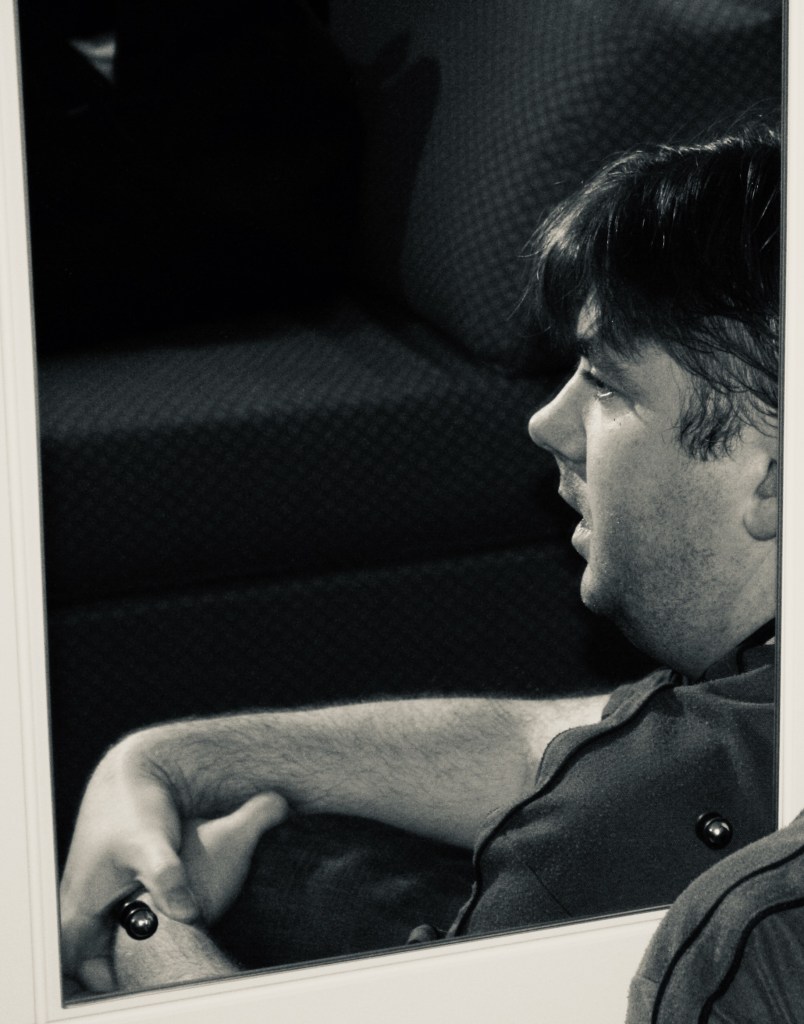

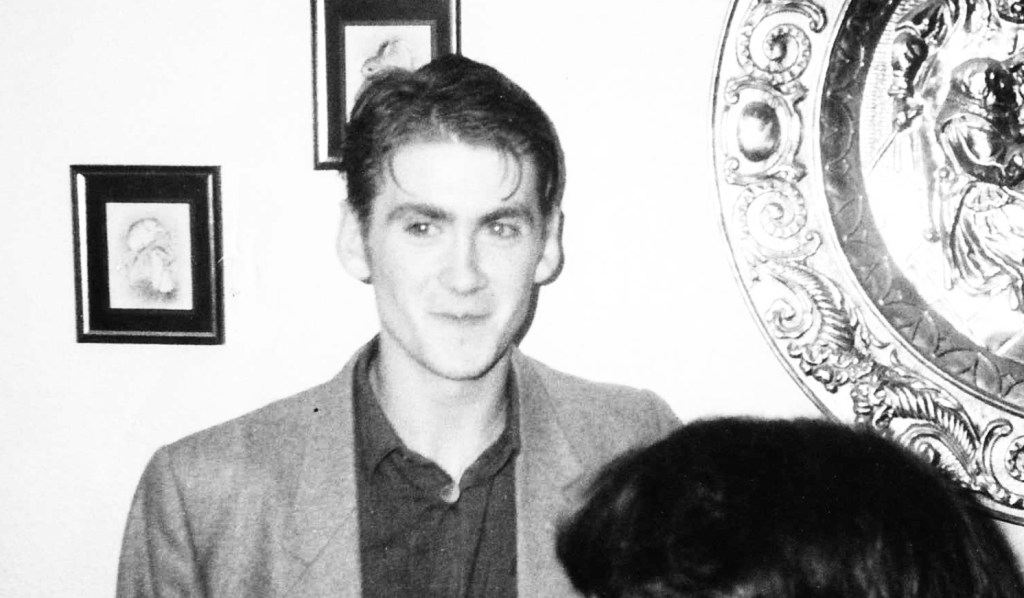

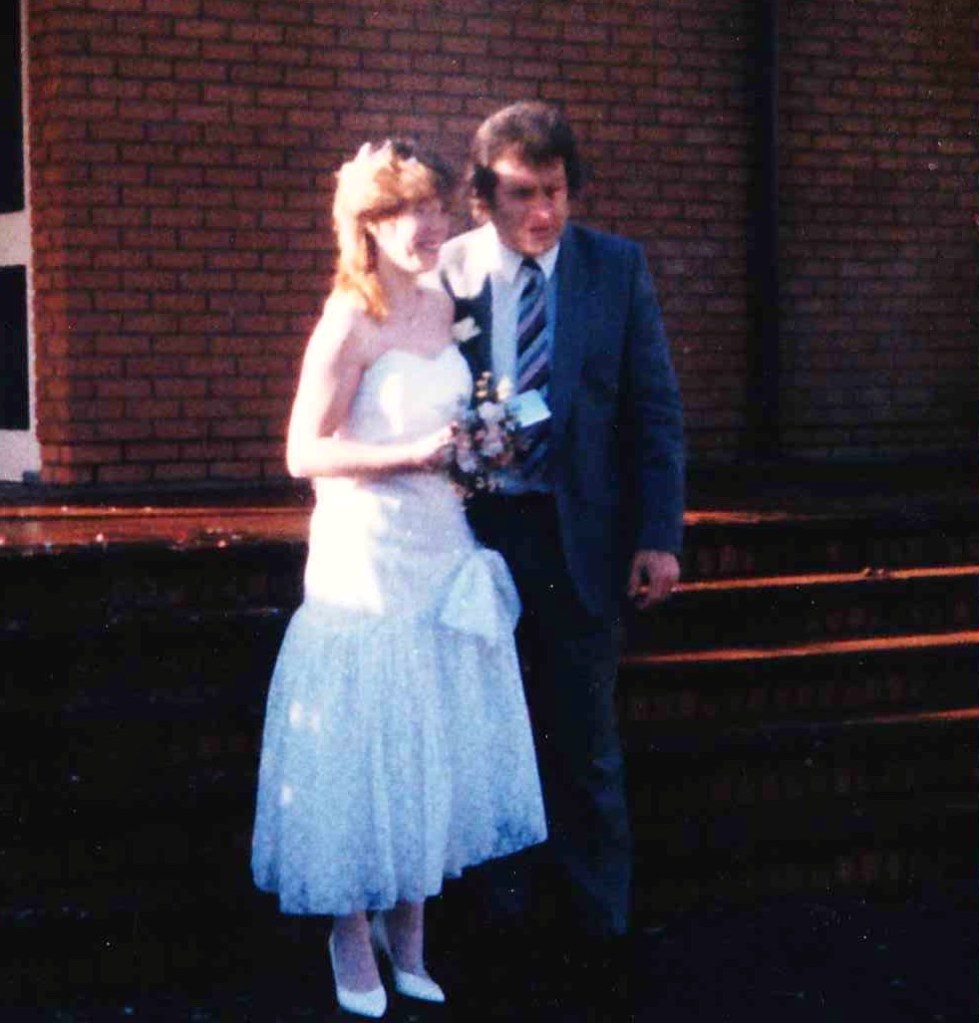
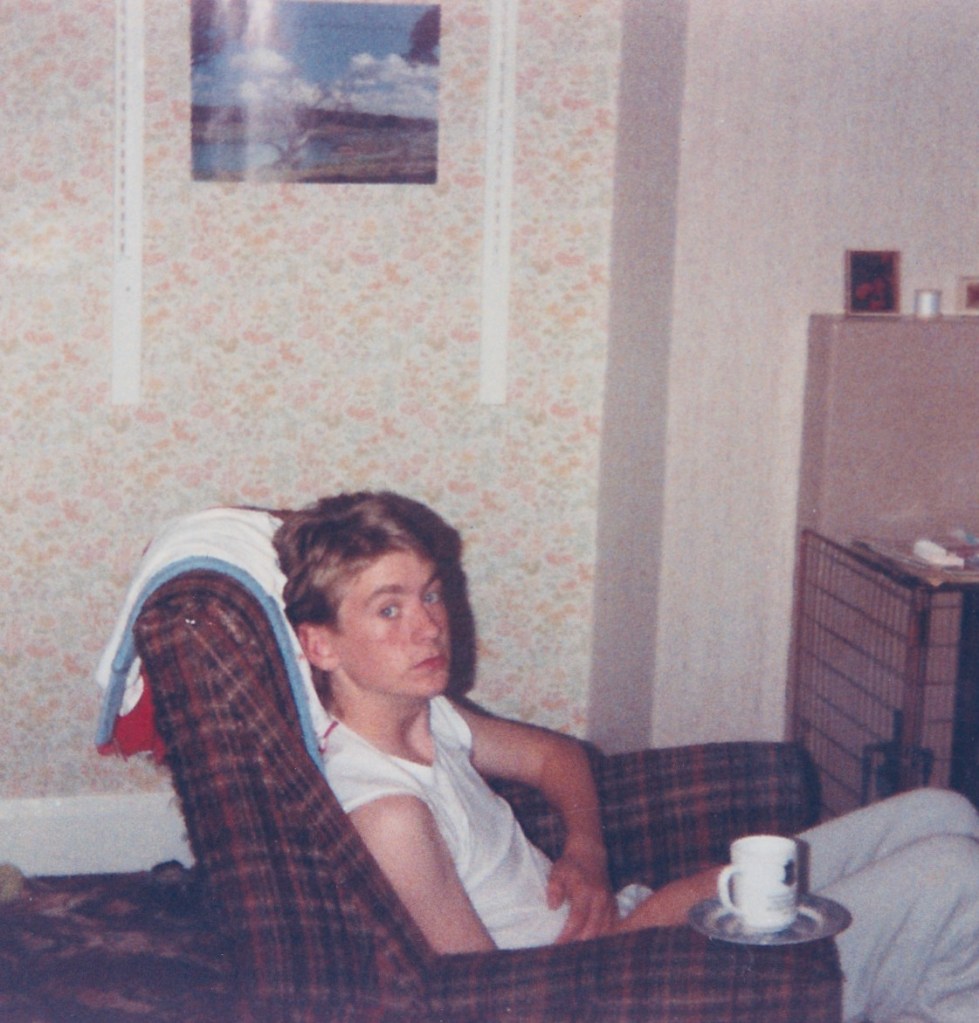
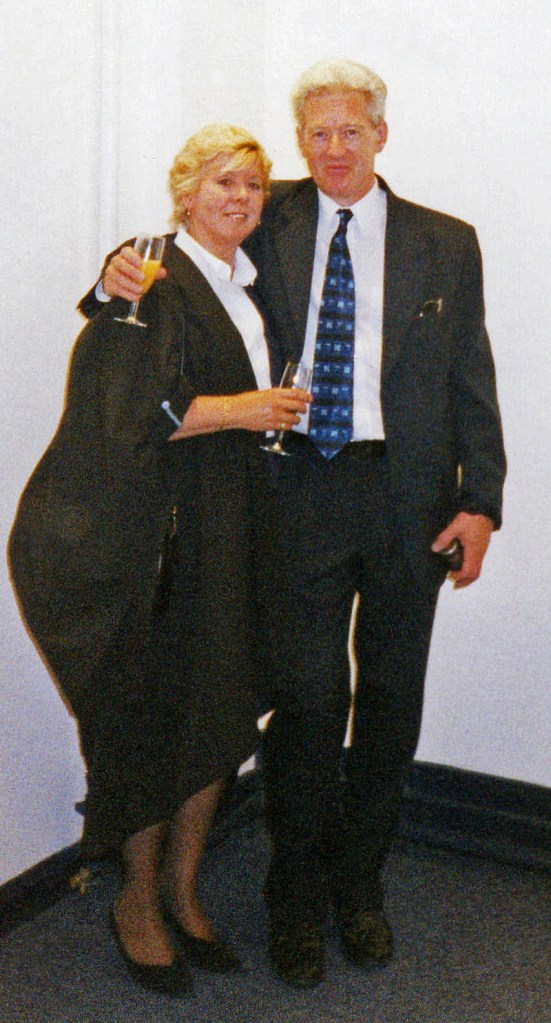
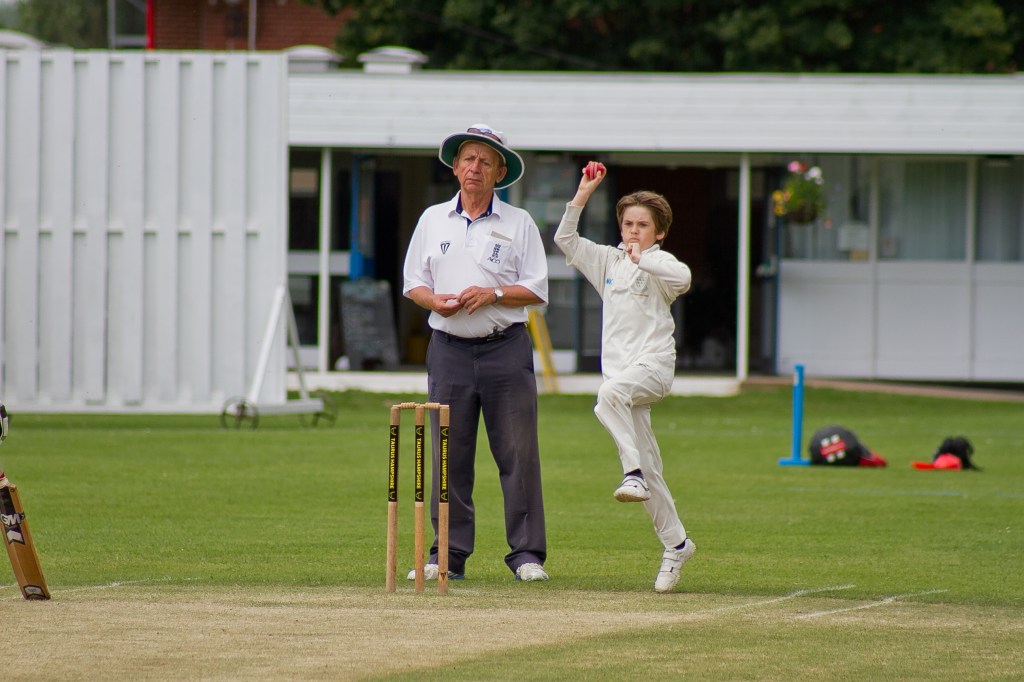
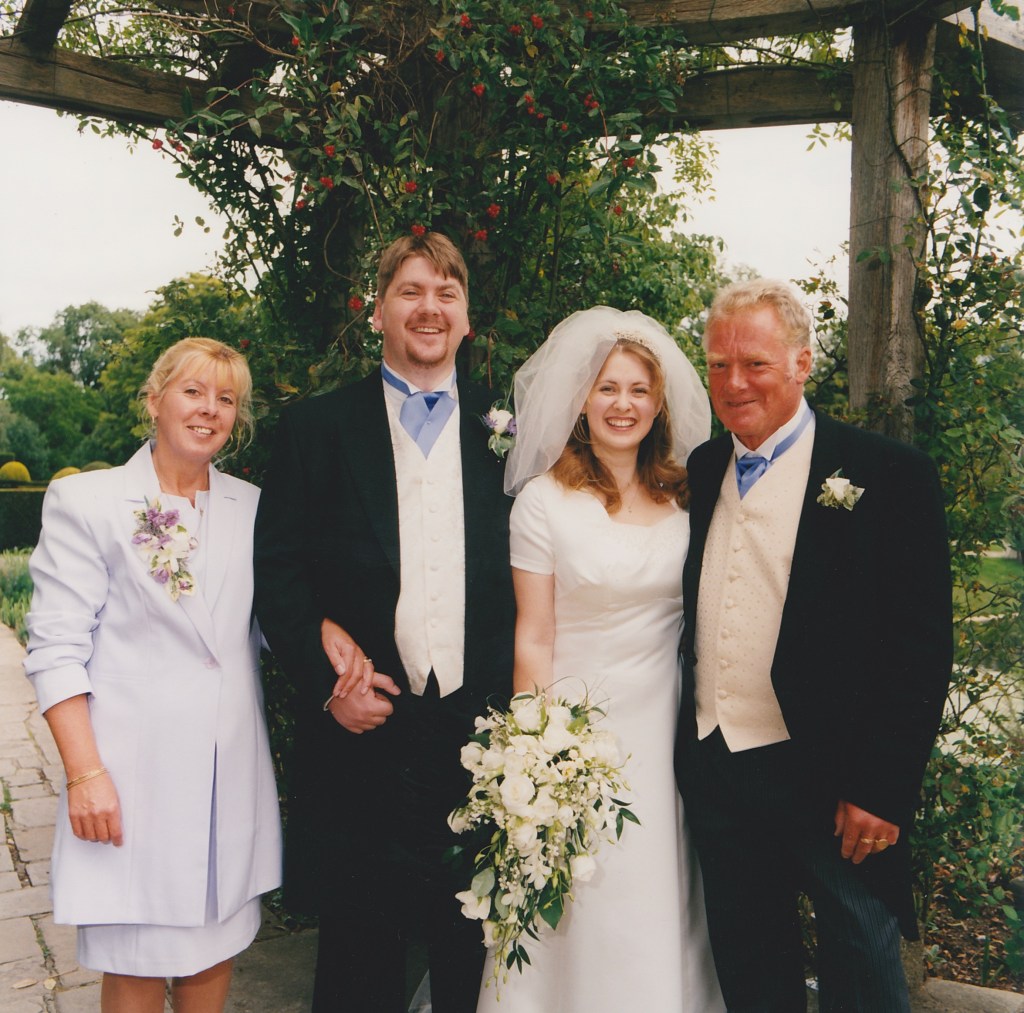
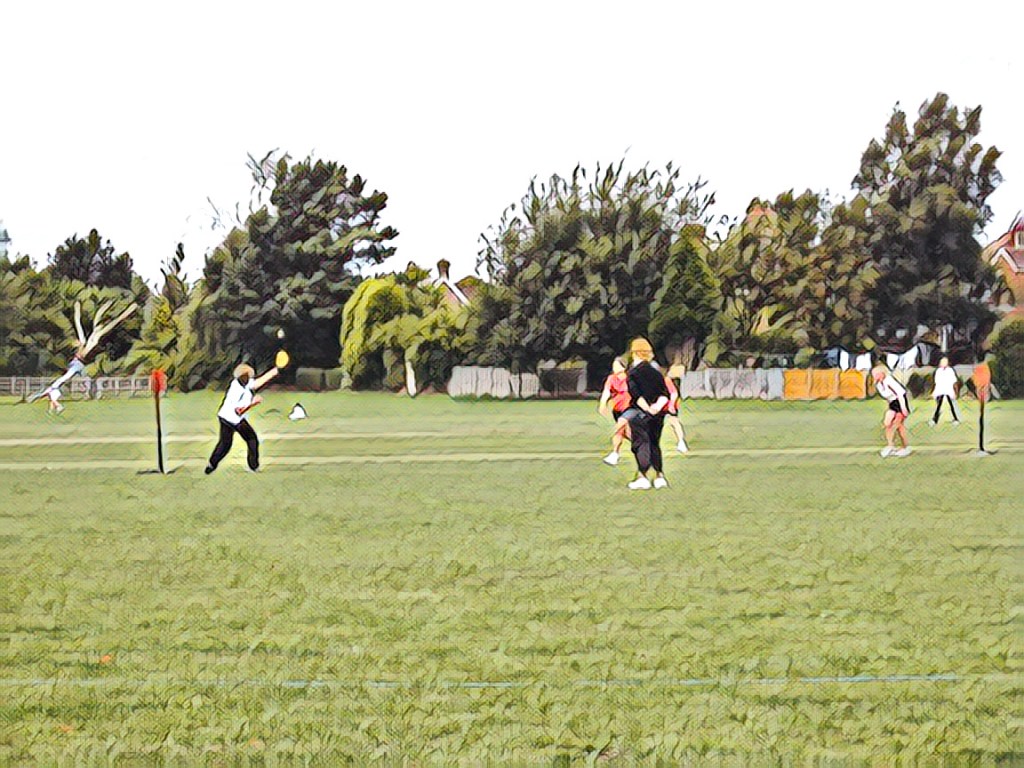
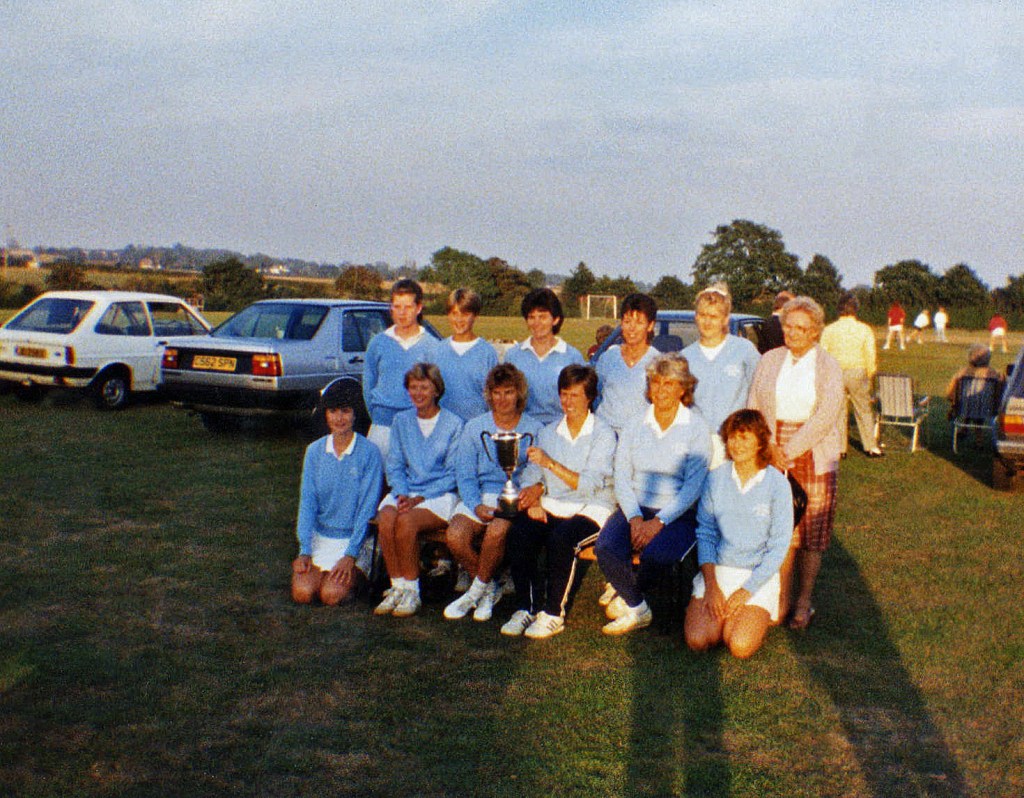
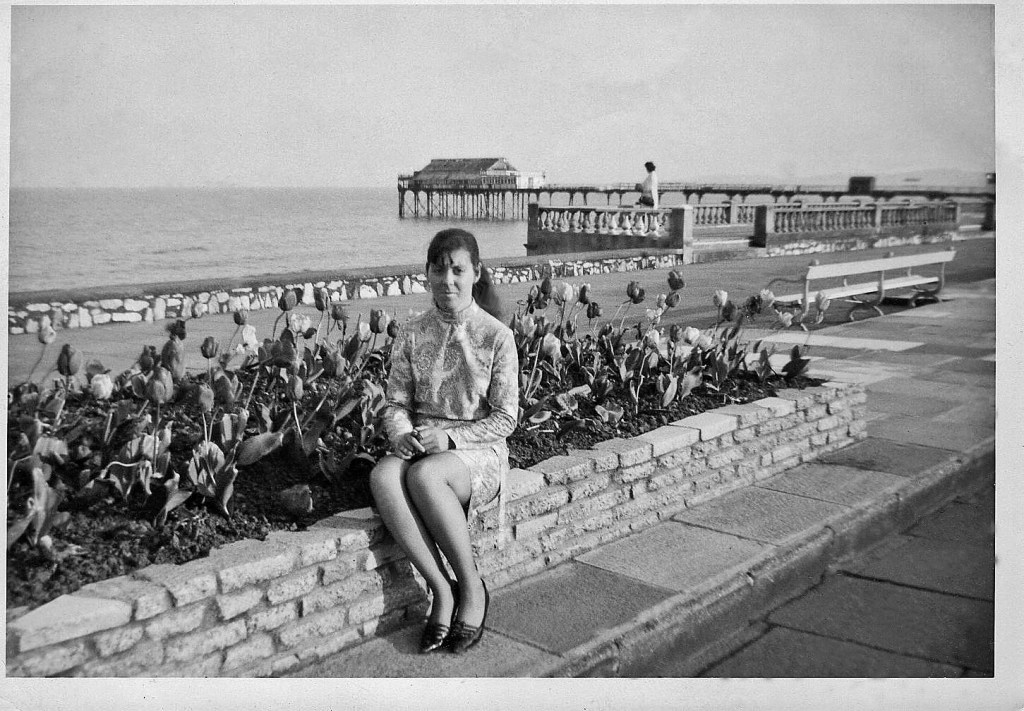

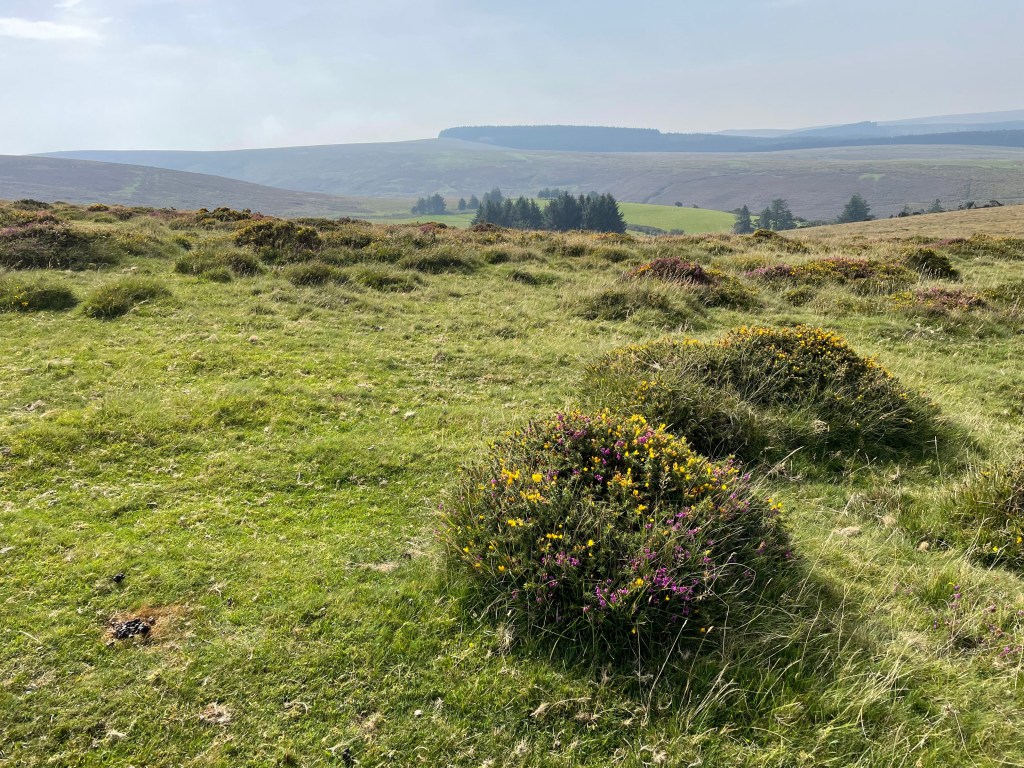
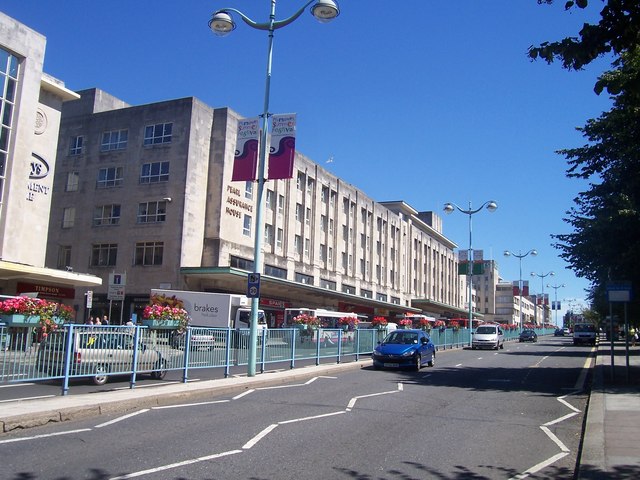
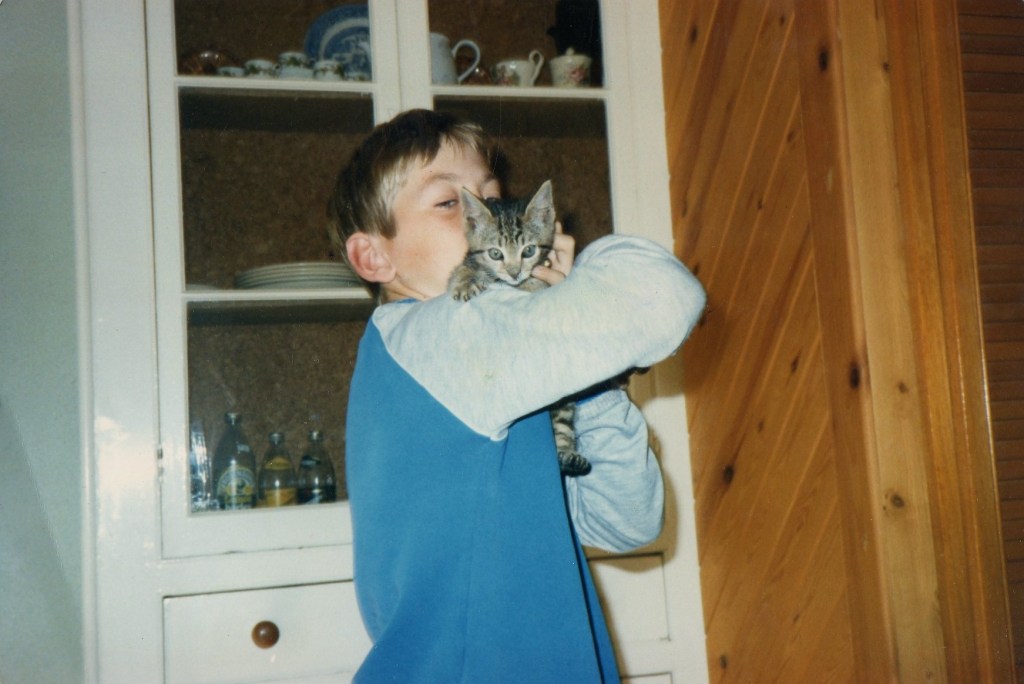
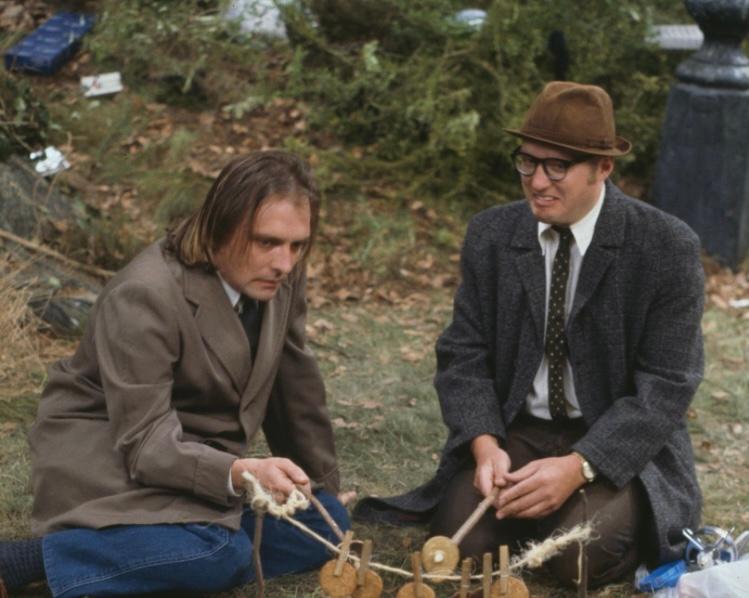
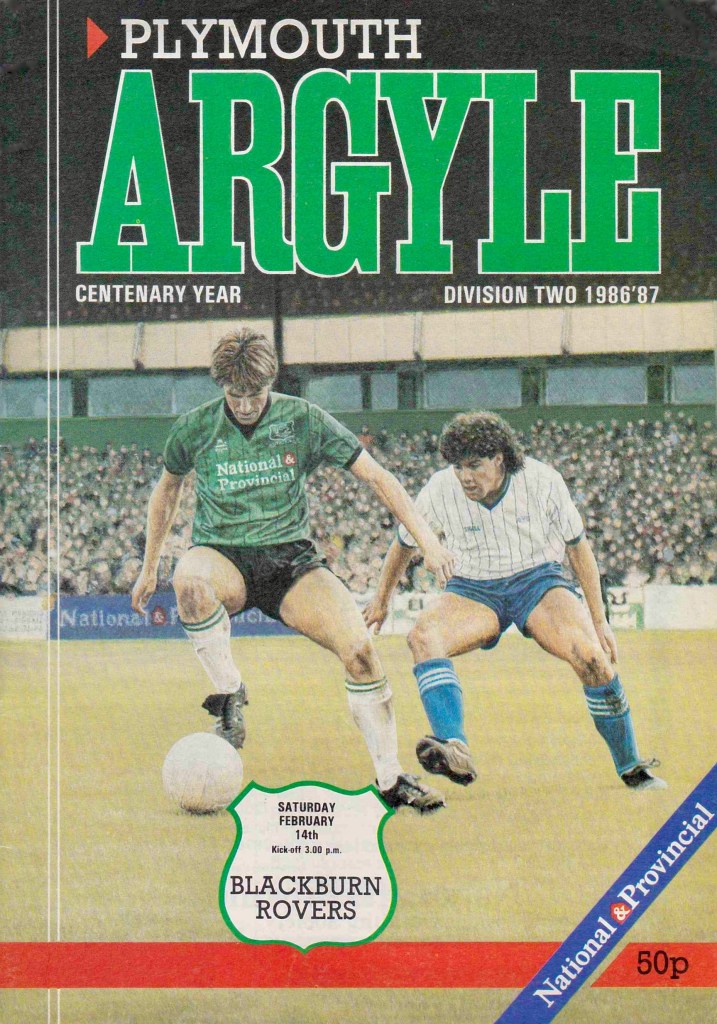
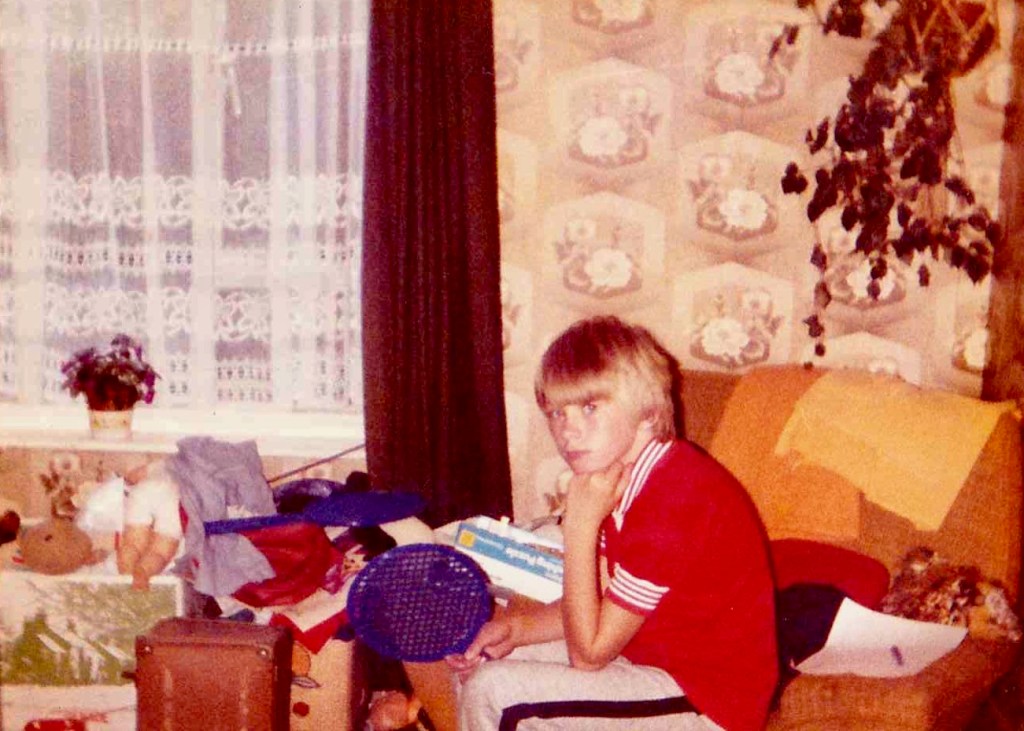
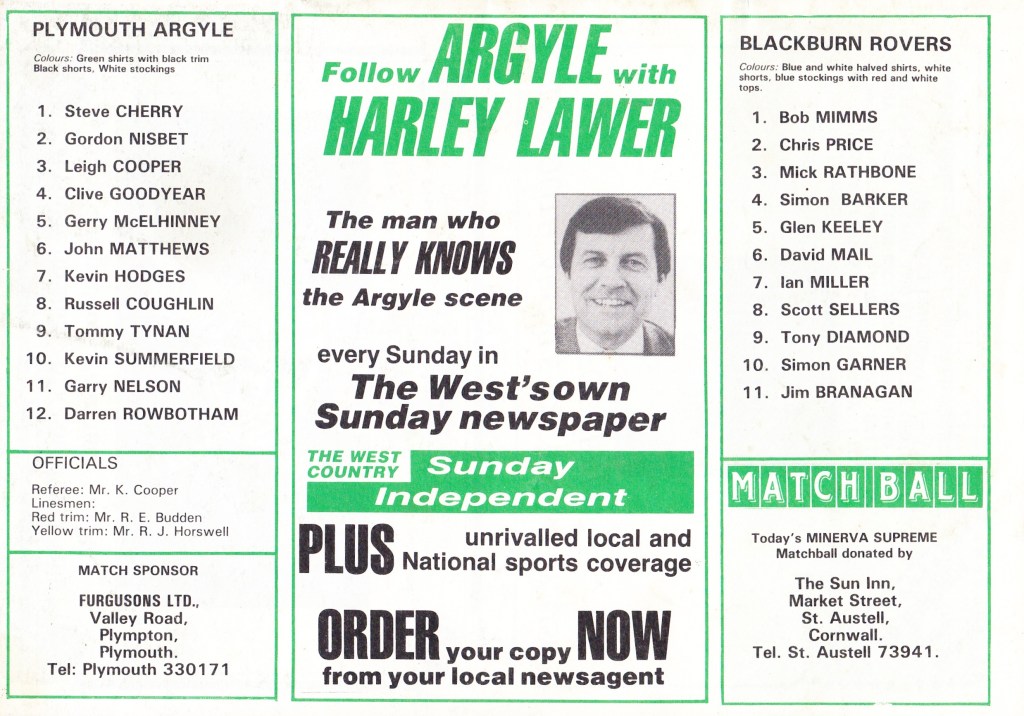
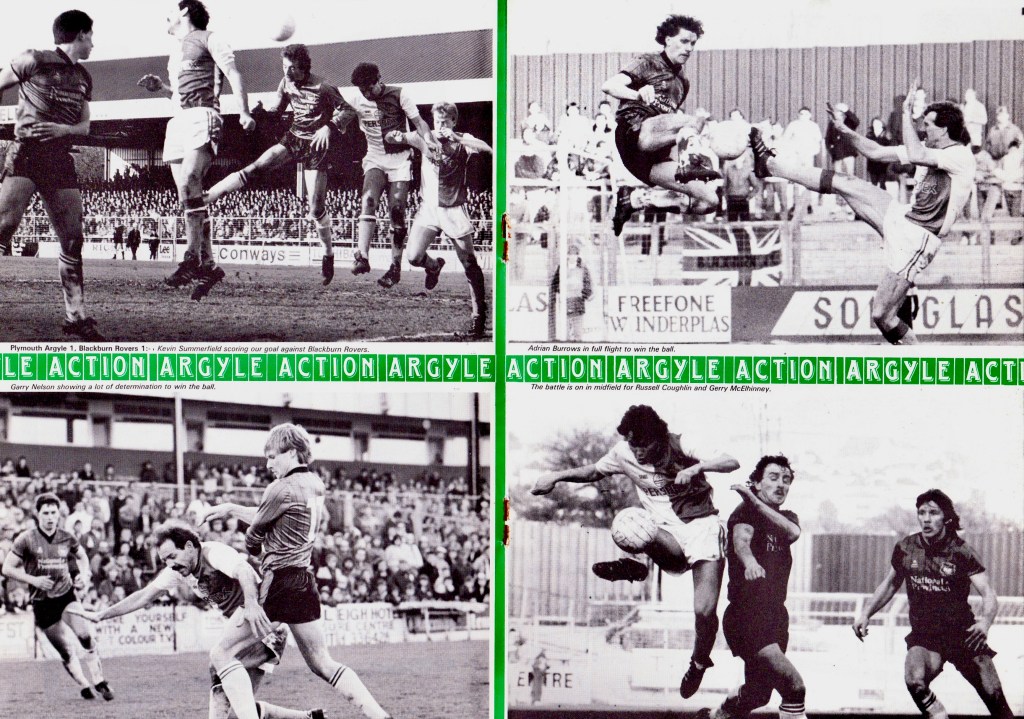
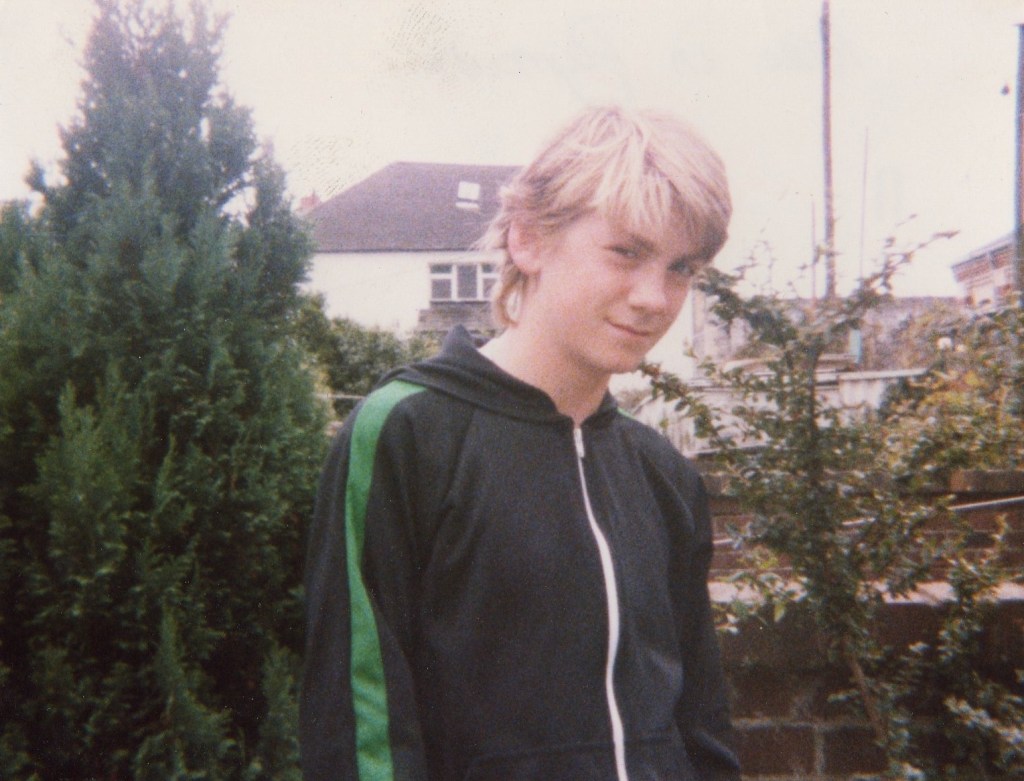
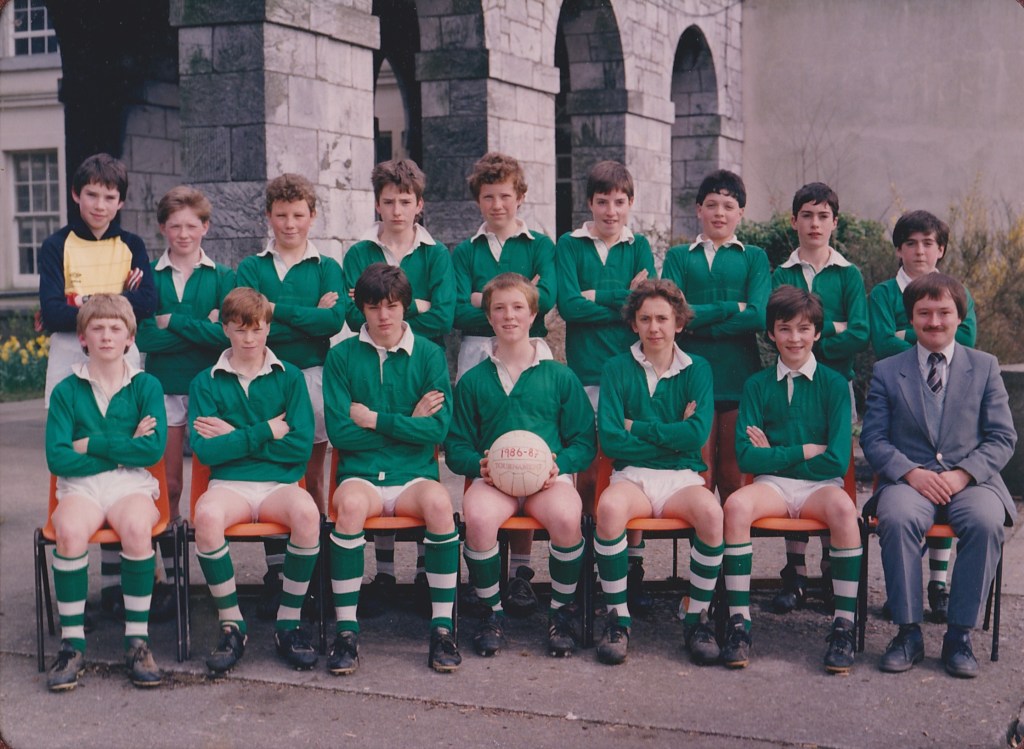
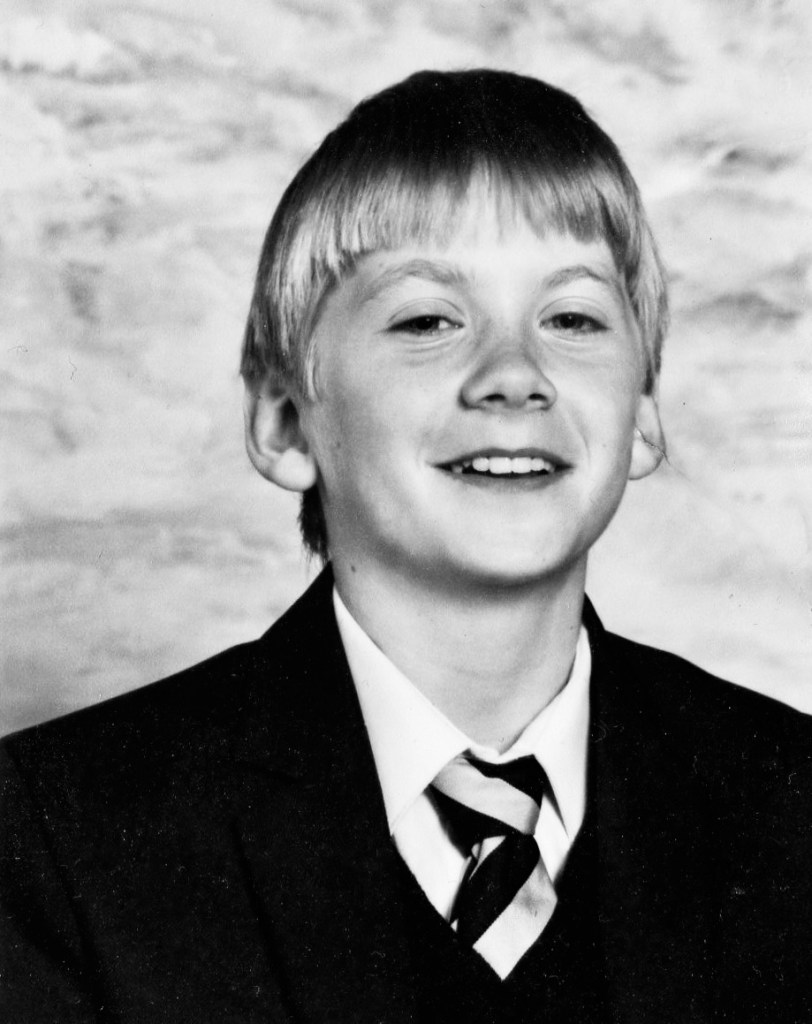
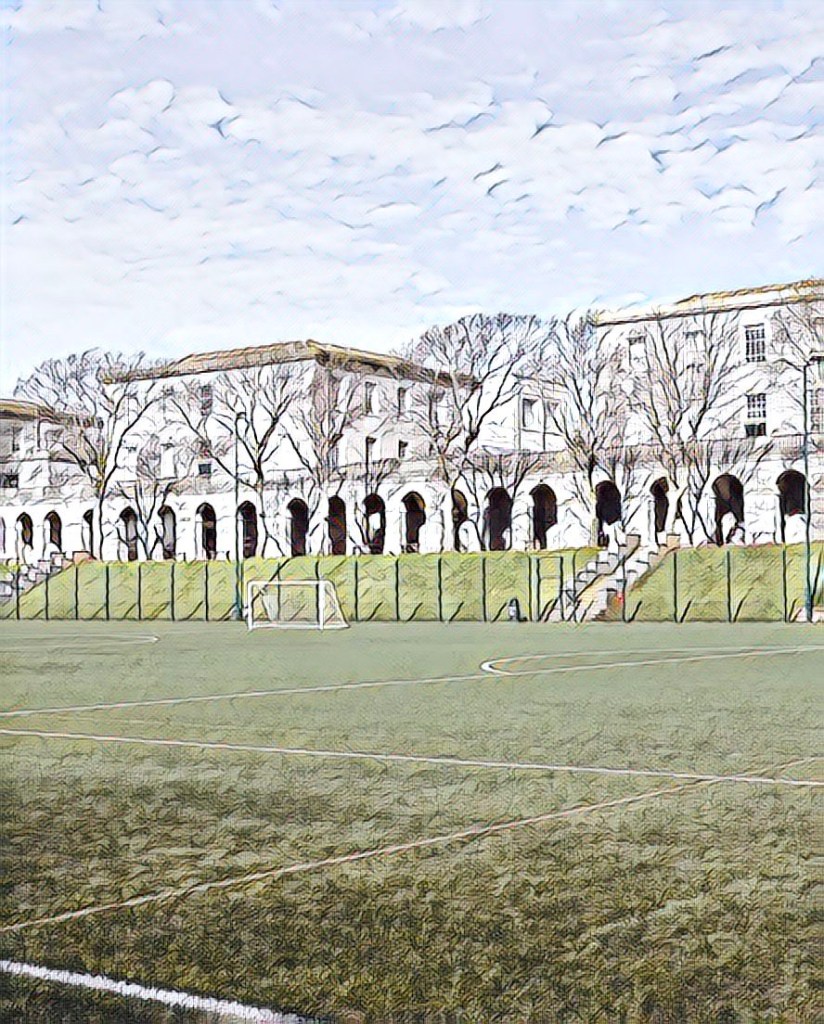

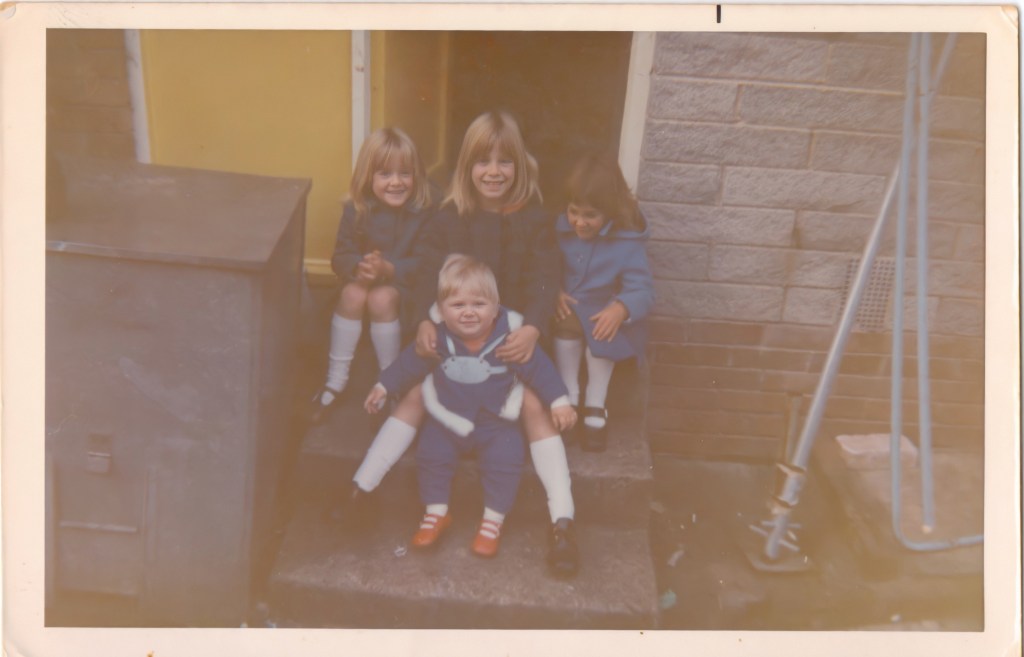
 A Life More Ordinary