Once, there was a girl. Her beginning was simple as beginnings often are, born into a family with an older sibling and parents who, while troubled themselves, were doing their best to stumble through a world that had hurt them long ago.
As she grew, the girl learned about the world around her. Through the bluest of blue eyes, she saw beauty in the ordinary and discovered a fierce strength and determination to rail against injustice and prejudice. Something, she was never entirely sure what, ignited in her heart, coursing through her veins and shining a light into the darkness. She discovered a passion for performing, for sharing her thoughts and her dreams that grew from the smallest of hopes, the tiniest of possibilities.
On her seventh birthday, she woke to find her mind filled with such wonder and joy that she broke into song with a voice that could charm the birds from the trees and hold eternity in an hour. Thrilled by her discovery, she crafted performances to enchant those around her, to share the fire in her heart that had been ignited within. She would perform for her parents, who found that they barely had the time to waste on such frivolities and each new request for attention drew a harsh and unexpected response. For the first time in her short life, she felt a cooling of that fire within but brushed it away with the innocence of youth.
Undaunted, the girl approached her siblings, who now numbered four in total and at first they watched her perform, laughing at her jokes and encouraging her dreams. In her mind’s eye, she could see a day where she could be the brightest movie star or the biggest name on Broadway. But gradually, her brother and her sisters lost interest in her dreams, consumed by thoughts of their own paths to walk and by the destruction of their family unit, punctuated by acts of physical violence and infidelity. The girl’s heart ached, the fire within cooling without the nourishment of the sharing of her dreams. Instinctively, she knew that the fire needed feeding, needed to be nurtured and loved just as a child should be. The fire needed hope, it needed sustenance and most of all, it needed an audience.
As she moved through her school years, her emotional and physical landscape in turmoil, she found little to protect and encourage her dreams. Her peers were inconsistent in their appreciation of her aspirations, while in order to protect her heart, she developed a quick tongue and a robust, physical approach to those who would subdue her. The fire within raged out of control in the absence of hope, of stability and of love. Unable to bear the pain of rejection and shattered dreams any longer, she ran. She ran and she ran, the transition from child to adult a turbulent shift. Robbed of a safe environment in which to grow, to understand, she struggled to control the fire that was once full of joy and optimism and a million could-have-beens.
The lines between childhood and adulthood blurred, the understanding of the complexity of relationships stunted by broken promises and a deep, deep feeling of loneliness. She needed something to cool the fire, to numb the pain that she felt.
Which was when she discovered winter. The winter brought forth relief, an escape from the darkness and the fury, a blanket to subdue the feeling of bitterness and the fragility of life. The fire within was cooled by a euphoria so absolute that for a little time at least, she felt nothing, the dissenting voices inside quietened, the ghosts of her past slipping their moorings and drifting away. Winter froze everything, for just the shortest time.
After the freeze came the thaw, rivers of tears running freely, the dam of her brittle resistance bursting, overflowing with regrets and righteous anger. She sat in the ruins of her once blissful existence, the memories of sunshine days clinging to her body. The dreams that had once inspired her were now an unfulfilled promise, a vain hope in an ocean of uncertainty and disappointment. She no longer felt the sunshine, no longer saw the joy in autumnal colours tumbling to the ground or the first signs of life reborn as winter reluctantly turned to spring. Instead, she sought out winter more often, the relief from the ordinary becoming a necessity. The love that she longed for transformed, grew out of the shadows to become a monster that could only be managed by the snow.
Relationships came and went, people breaking through the barriers that she had carefully crafted only to discover that she either wasn’t what they thought she was or that she wasn’t what they wanted her to be. She became a mother, finding purpose and an opportunity to create love where there had been none. But winter had other ideas and the snow returned, the only familiarity in a constantly shifting landscape. The rage that winter suppressed now burned more fiercely in the cold light of day. Sacrifices were made and love was lost, her identity slowly slipping through her fingers like running water.
There were periods of lucidity, cherished in a life where nothing was normal. Hope resurfaced, many times before the world froze over once more, the person who she longed to be trapped beneath the ice in a lake of dreams. She clung to fragments of her shattered existence, each hint of optimism suppressed by the snow. She sacrificed yet more in the hope that she might one day break free from the shadows of winter.
Those shadows revealed their true nature as she came to understand her flaws, her frailties. Demons, some said, of her own making, while others sat silently, hoping for an absolution that never came. She tried to build bridges as some did around her to craft an escape, but more demons surfaced, some disguised but others throwing off the pretence of normality and taking hold of her slowly, piece by piece. The enemies that most of us have known, loneliness and self doubt, fear and shame now walked with her wherever she went. Sometimes they followed in her footsteps. Sometimes they led her down the path of least resistance. Where she had once craved the love of those who could, she now expected little but disappointment and the familiar smack of abandonment.
Slowly, the fire that had burned so brightly, that had sparked the dreams of an innocent girl back in the mists of time, began to flicker out of recognition. Her hope in people died to be replaced by faith in a higher power, a light that would shine like a million matches in the night and furnish her with guidance where so many had failed. A belief that there truly was something better than the cards that she had been dealt. And still, even then, she could feel the winter chill.
Time appeared and stopped, followed by mortality, the enigma of her existence thrown into sharp relief. Comforted by her faith, her only defence against age-old scars, she continued to rage against the past. Against the choices that others had made. Against the choices that she too had taken.
Outside, autumn leaves drifted to the ground. In the distance, a dog barked and somewhere between here and there, a melancholy melody whispered through the nameless streets.
Which was when the fire went out.
And somewhere, way back when yet not so long ago, that seven-year-old girl took one last look around her. She flexed her fingers, flashed a last, lingering smile and parted the curtains. She drew in a deep breath and felt the years of pain falling away. She basked in the light, where dreams come true and when the world knows your name.
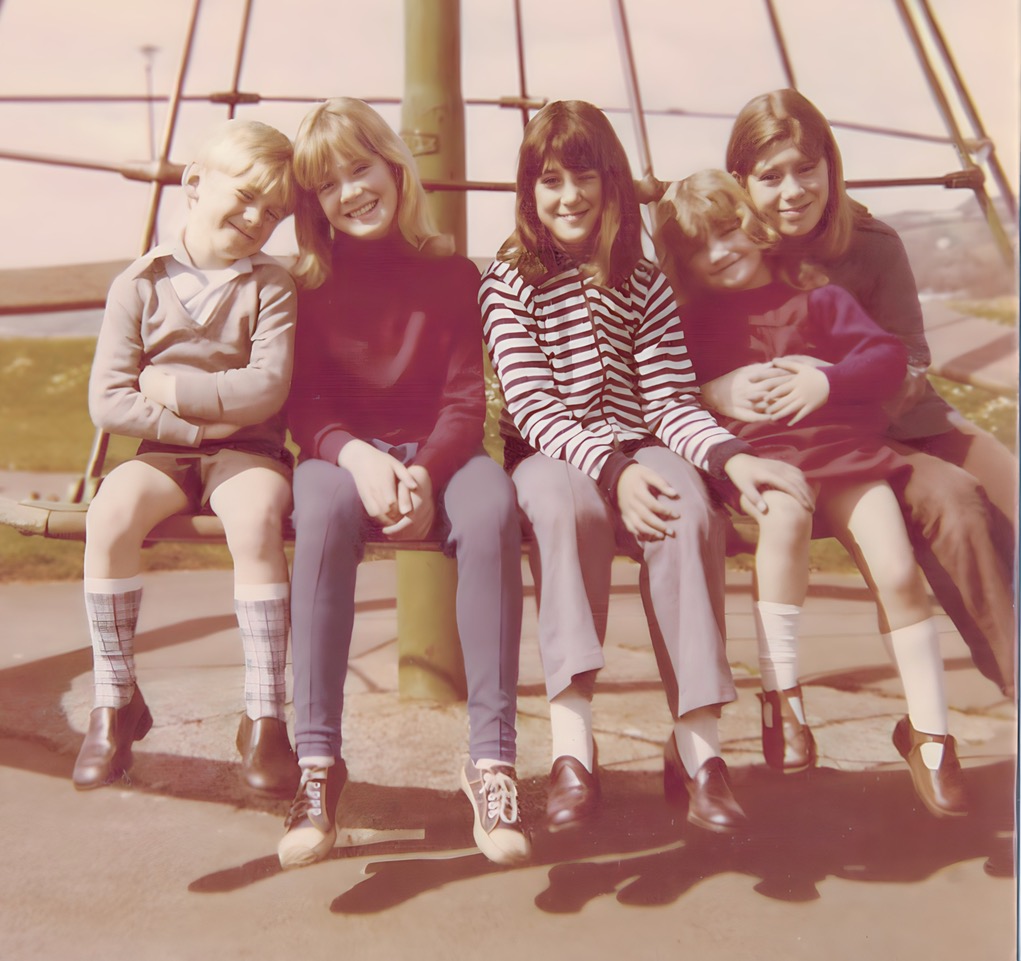
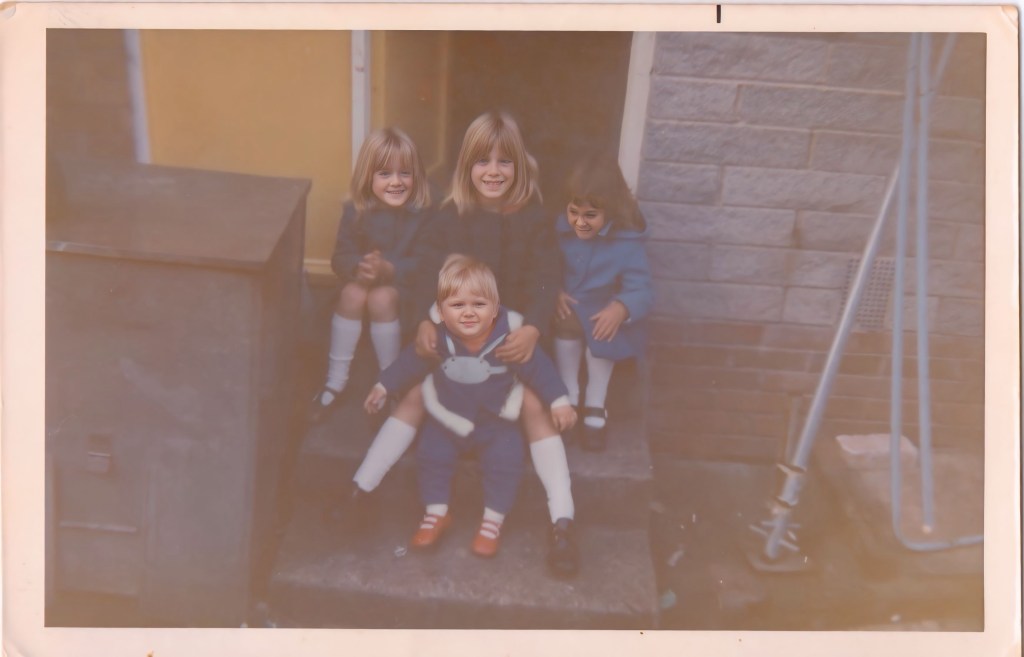
A picture of me with my siblings. Alison is next to me.
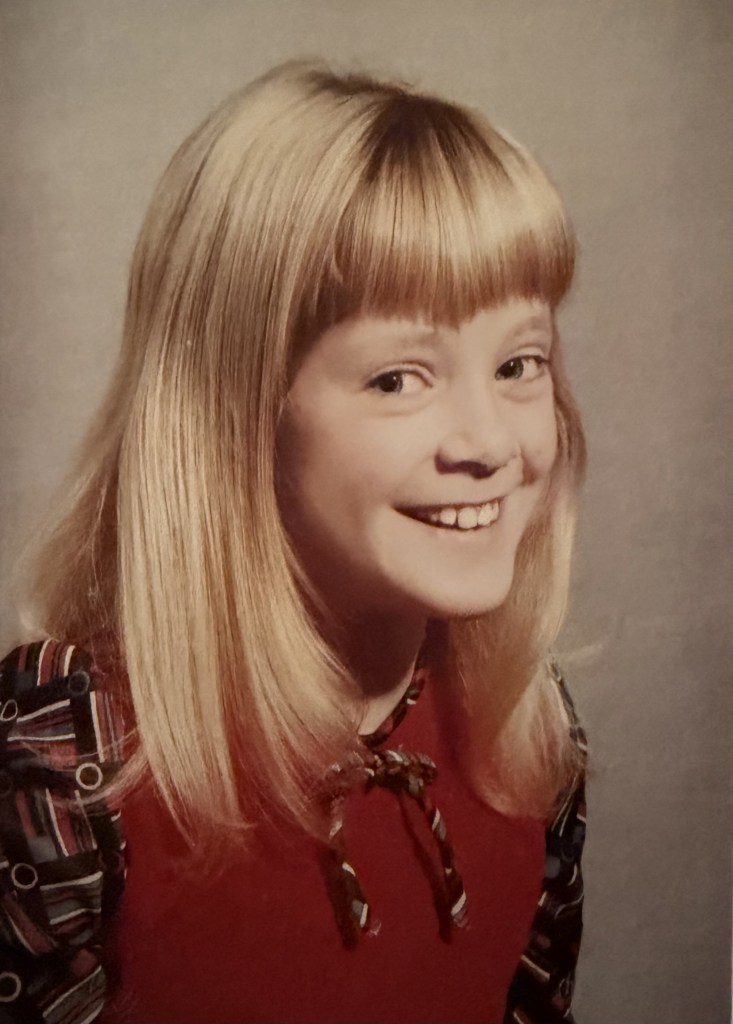
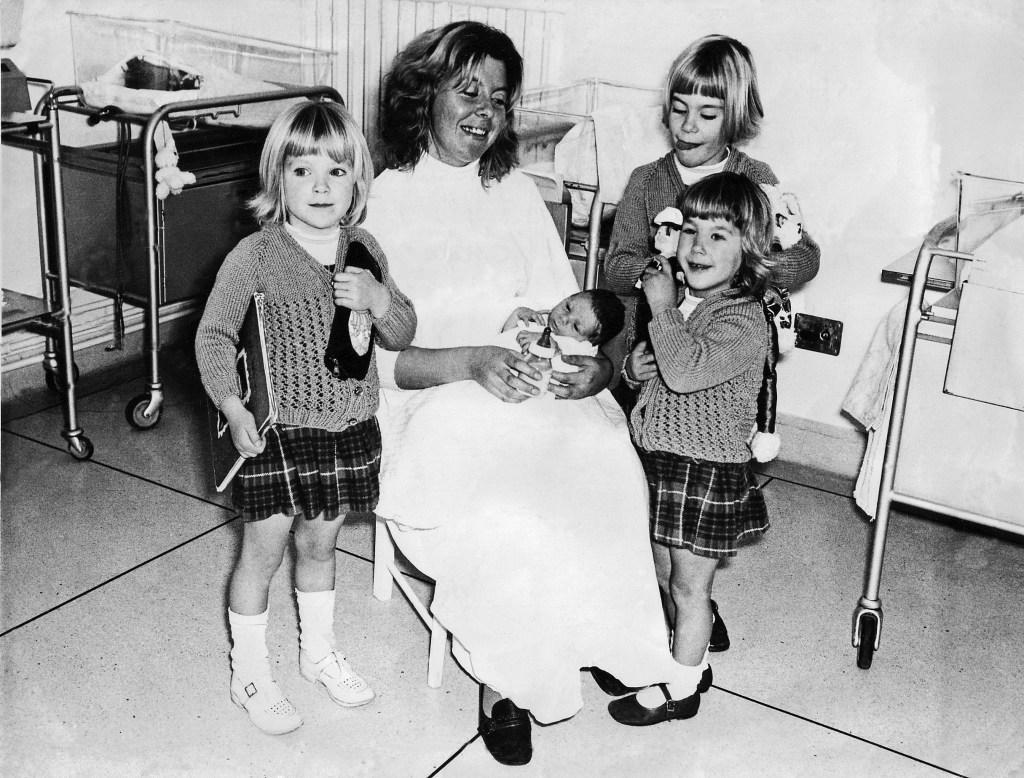
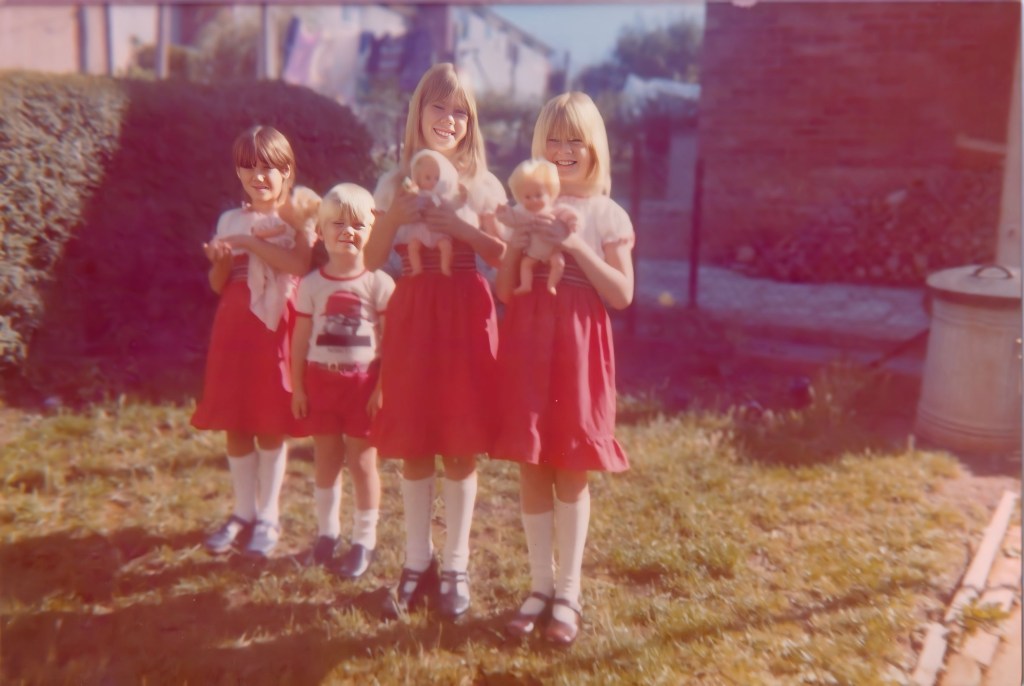
This is the story of my sister, Alison Marie Jane Hepburn, who died yesterday aged 57. She had a long and troublesome history of addiction issues and suffered a heart attack before passing a short while later at Derriford Hospital in Plymouth. By all accounts, she was made as comfortable as possible in her last hours even though she knew that the end was near. I had already started to plan the long drive down to try to say goodbye when the message came through that she had gone on her ‘awfully big adventure’. I suspect that she went out as she lived much of her life. Fighting and alone. I know that she was afraid at the end and I must console myself with the thought that nothing I could have done or said would have eased those fears for her.
I don’t believe that she deserved the life she lived. Neither did she live the life she deserved. Of course, that is based on little more than my own memories of our childhood and snippets of information that I have heard over the years. What makes this loss particularly difficult is that I hardly knew the woman that she was. I think that the last time that I actually saw her was at Carole’s funeral, almost 32 years ago. What memories I have of my sister are few and far between. Some I may have shared elsewhere on this blog, so apologies in advance for any repetition.
Alison was the toughest of us all. She would be the last one standing if we were in trouble, defiant and raging at the injustice of the punishments that we would endure. She would be the child telling our father that every smack that he delivered didn’t hurt, even when she had tears in her eyes. She was fierce and independent. I recall, way back in the mists of time, that she had an early interest in all things American (she may even have wanted to be an actress) and in some ways I think that her life displays all of the hallmarks of the fallibility of the American dream. She wanted to achieve the impossible when she was younger. In the end, she reached the stars with little to show for her time on this soggy globe save for years of heartache and poor decisions.
Legend has it that my father once caught Carole, Alison and Rachael smoking his cigarettes when they were younger. Typically, the punishment dished out was disproportionate to the crime and he purchased three packets of cigarettes (one each) and demanded that they sit in front of him and smoke them all, one at a time. Rachael bailed very early on, tobacco-induced vomiting the cause. Carole followed shortly after. Alison, in all of her reckless glory, sat there and smoked twenty cigarettes, staring my father in the eye as she crushed each one out in the nearby ashtray. Legend, I suspect, would also suggest that her defiance earned her a hiding. I sometimes wonder if that was the spark (no pun intended) that ignited her addictive personality.
If we took the time train (what do you mean it’s not a real thing?) back to 1979, you’d find us gathered in front of the television on cup final day, Alison cheering on Arsenal while I was rooting for Manchester United (this was obviously long before I saw sense and transferred my loyalties to the mighty Argyle). In the Devon-based version of the Amityville house, where Uncanny’s Danny Robins would have a field day, Arsenal had earned themselves an early 2-0 lead before United clawed their way back to parity with two late goals. Sammy McIlroy’s equaliser gave me a dose of misguided confidence long before I understood how the sporting gods worked and I confidently declared that United would now go on to win the tie even if it went to a replay, just as Alan Sunderland slid in at United’s back post to bury a winner for the Gunners. Sure enough, Alison bit back and I completely deserved her joyous riposte.
After leaving Teignmouth, we moved to the village of Ideford, where the only source of entertainment was the local church and graveyard, which we would regularly dare each other to run through with our father safely ensconced in the Royal Oak. Often, we were forced into gardening during the summer holidays, an activity that none of us enjoyed but were too afraid of the consequences to ever consider voicing our displeasure. One sunny afternoon, Alison hit upon a cunning plan to get herself out of the heat and back inside the house. She positioned the large fork that she was using so that it was on top of her wellington boot taking care to line up the prongs with the gaps between her toes. She confidently pushed down, breaking the rubber of the boot whereupon she began to scream theatrically, pointing at the offending gardening tool and faking injury with all of the skill of a modern day footballer. Dad rushed over to her, pulled the fork from her boot and carried her inside the house as we all dutifully followed. What Alison hadn’t considered, was that at some point Dad would check her ‘injuries’ and discover that he’d been duped. Frankly, dear reader, if you’ve been following my memoirs you’ll know what happened next and as sure as eggs is eggs, Dad made that discovery. After the inevitable beating, she was handed a fork from the cutlery drawer and spent the rest of the afternoon using it to prepare a decent-sized area of earth for potato planting.
She also had a wicked sense of humour and even though this particular memory is rather niche, it even made my Dad laugh at the time. It’s not a classic anecdote (in the words of Spike from Notting Hill), but I have very few to call on. The daily walk from Ideford to Teignmouth was at least a six-mile round trip and a particularly hilly one at that. Around the halfway mark, there was a bench where we would occasionally be permitted to rest our weary bones to gather ourselves for the last leg. This must have been around 1982, when a cover version of Rock the Boat hit the charts and as we collapsed on bench, exhausted from the walk, Alison knelt up and started to rock the whole bench back and forth, all while singing the aforementioned Forrest hit. A simple gag that would probably have raised little more than a smile outside of our family unit, but we laughed like drains for a good couple of minutes and laughter was rare during those days.
Fast forward a couple of years to my 11th birthday, which I was spending Horsham with mother. We were moving house on the same day, away from Roffey and across the town to Eversfield Road. Alison handed me a card that contained 50p (which research tells me would be worth £2.09 today) and a Manchester United ring that she had bought with her own money. It’s my earliest memory of a gift, except for the bicycle that was given to me off the back of a lorry, which I’ll come to as Christmas approaches. That card and that ring meant more to me than anything else I’d been given up to that point in my life. I now possess neither item, but I wish that I still did.
I think that the older girls would all have been in care homes by this point. Alison would regularly abscond before being returned and I have many memories of hushed telephone calls and police visits in both Sussex and Devon. Alison also discovered drugs and would go on to spend the next forty years of her life battling addiction to numerous substances. Sometimes she would manage to get clean but ultimately her demons couldn’t be tamed. When Carole passed away in November 1994, she came to the funeral. We all made promises at the time that we would be unable to keep. Recalling how she looked back then, it’s a miracle that she made it to 2026. It doesn’t make it any easier knowing that we waited over forty years for the message that came yesterday. In many ways it makes it worse. There have been many rivers that have flowed under many bridges in that time, too many opportunities to try to make a difference and not enough taken. However, Alison was not an easy person to help. The damage that our traumatic childhood and her fragmented existence caused her was deeply ingrained. She was suspicious. She was manipulative and I’m sure that she did some terrible things. She was also the mother of four children and there lies an incredibly complex tale. She was complicated and broken. But she was my sister.
We had contact a few years ago, messages exchanged on Facebook for a few weeks. Before too long, it became difficult to stay in touch. A lifetime of abuse, of disappointment and of paranoia ultimately left her unable to conduct healthy relationships. I fully accept the consequences of not being strong enough to help her and that is my cross to bear. But there are others out there who failed her far more than I did. There are others, some still here and some long gone, who could and should have done more, including those who failed her as a child, who failed all of us as children. I am sad for days that never were and I am angry for a life full of fear and loneliness that replaced a life never lived. Alison, more than any of us, was a product of her environment. I wish that I had known the person that she was and the person that she should have been. Instead, I have the words on this page to scrabble around in and to try and pull together a way to mark a life that should have been filled with love and joy. If my journey has taught me one thing it is this: Be prepared to fail as a parent, but don’t ever be prepared to give up. Failure should keep us honest, hope should light the way.
I should be telling stories of family Christmases, of hope, of certainty and of love. But I have half-remembered tales of squats, of needles and a little bit of snow. Of fear and paranoia, of doubt and self-destruction. Nobody deserves a life like that, yet Alison is one of many, failed by those who could and should have done better. She lived her last few months in a hostel and her fifty seven years of life barely amount to a hill of beans. I am angry as well as sad. There should have been another way.
Since you went away the days grow long And soon I’ll hear old winter’s song But I miss you most of all my darling When autumn leaves start to fall
July 1981. There was, as the song says, panic on the streets of London, thousands of UK citizens fighting with police in Liverpool, Sheffield, Birmingham, Hull, Preston and Manchester as racial tension heightened and inner-city depravation hit the headlines. Elsewhere, the country prepared to celebrate the wedding of Prince Charles and Lady Diana Spencer, street parties were planned, bunting was hung and cakes were baked. The riots passed me by as a seven-year-old boy living in the seaside town of Teignmouth in a family fragmented by fears, fights and fornication. These were the days of three tv channels and being in bed by seven o’clock and not resurfacing until morning. Doing as one was told, which was very much the way of things back then.
I was aware of the game of cricket by now. I’d watched a little of the Sunday afternoon coverage of the one-day game (white clothes, forward defensives and poor running between the wickets), essentially because in 1981 there was very little else to do on Sundays. I’d played a little too, in the tiny back garden that we had and had been introduced to hard ball cricket through the medium of a ball in the face that hurt mightily after being made to field at silly mid-off following a delivery that I’d snuck through my father’s defences to hit him on his unpadded shin. None of those early moments had been enough to put me off the game but neither had they led to an unbridled passion where I could envisage my future self standing in a field for hours on end and trying not to fall asleep standing up.
On Monday 20th July, everything changed. England v Australia, the Ashes, had largely been transmitted to me through a series of disappointed mutterings littered with hitherto unheard profanities from my dad. Actually, I say hitherto unheard, that’s probably not true, he was a Sunderland fan after all – perhaps these particular utterances were even more heartfelt than usual. After all, England had lost the first Test and managed a barely creditable draw in the second, a game that had cost skipper Ian Botham his job. Headingley loomed like another failure on the horizon, a defeat in waiting to add to the gloom that held the UK in its vice-like grip.
The third Test hadn’t started well and I had struggled to retain interest, Australian wickets taking a long time to fall and England’s first innings efforts mustering a dismal 174 in response to Australia’s 401 for 9 declared and despite the rejuvenation of Botham, who claimed 6 for 95 and scored 50 in his first dig since losing the captaincy, it felt like cricket was one of those things that grown-ups understood and enjoyed, like beer or cigarettes or being able to eat things out of the fridge between meal times without being told off. I felt disenchanted with a game that promised so much but failed to deliver.
England were asked to follow on and at 135-7 in their second innings, the game was all but gone. Sure, Botham was still there but he was one man against a tough side who had the scent of victory and England’s tail hadn’t fared well previously. As formidable as Beefy was, surely even this was beyond him. The bookies certainly seemed to think so having offered odds of 500-1 on an England win, much to the amusement of Lillee, Marsh and the Australian team coach driver, who in the days before match-fixing was front page news, took the decision to, as they say in betting circles, ‘lump on’. England still trailed by 92 when Graham Dilley joined Botham at the crease. Hopeful but not optimistic cheers had preceded Botham’s arrival along with one commentator speculating about what a triumph it would be if he were to still be batting at ‘6 o’clock this evening’. A conversation between the two English batters in the middle ensued, with Botham apparently suggesting ‘Come on, Dill. Let’s give it some humpty’. And humpty, they gave. A powerful straight drive got Botham underway, yet still talk of a draw let alone a victory seemed fanciful. Dilley, blonde hair poking from beneath his blue lid was initially the aggressor, throwing his hands at anything with a hint of width and clattering the ball away to the ropes.
The partnership was not without alarm either, Botham guiding the ball to point and teasing the Australian fielders with the prospect of a run out only for an errant throw to race away to the square leg boundary. At tea, England were 176 for 7 with Dilley almost outscoring Botham. England still required another 51 runs to make Australia bat again. Meanwhile, I was knelt at the coffee table in the lounge, checking scorecards and generally being boring. Some might say that not much has changed.
After tea, Dilley played a sumptuous square drive off Lillee, as pleasing to the eye as the combination of their names was to the ear, Dilley’s minimal foot movement would have had purists wincing into their scones, but this was no longer for the purists or the faint of heart as a sense of the theatrical descended upon Headingley and in lounges all over the country. Dilley carved Lillee away once more to bring up the fifty partnership as the roars grew in intensity and the first stirrings of belief were, well, believed. Botham took on Alderman with a little good fortune to go to his second 50 of the match and Dilley continued to flay the ball to the boundary, going past his previous highest Test score and then reaching his maiden Test 50. Suddenly, Australia would have to bat again. Now if England could somehow get a lead…
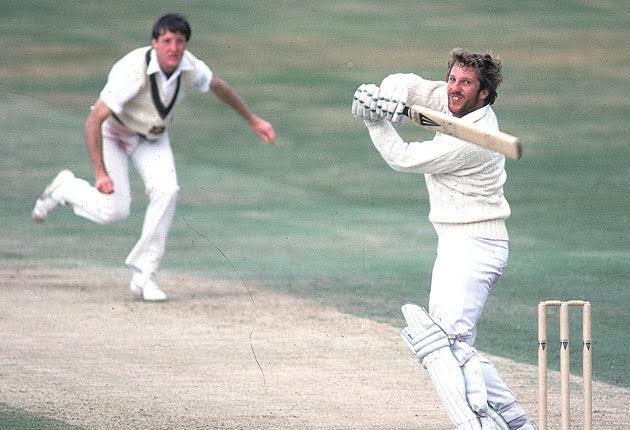
Alderman finally cleaned up Dilley for 56, the partnership worth 117. Old joined Botham, who launched Alderman, in the words of the master of commentary, Richie Benaud, straight into the confectionary stall and out again and that shot along with those words were the equivalent of flowers and chocolates on a first date between cricket and me. This was exciting, edge of the seat drama, the stuff of heroes. Better still because it was from a position where defeat was a nailed-on certainty. I was whooshing an imaginary bat in my lounge, swirling like an evil dervish smashing invisible balls into equally invisible confectionary stalls. Lawson came into the attack and was smashed to the ropes for four, nobody cared where the ball went or how it got there as Botham reached his century and Leeds (and one small boy in Devon) went wild.
Old kept Botham company in unorthodox fashion before Lawson yorked him with the score on 319/9, Old having contributed a vital 29. Still Botham flashed, hoiked, drove and clubbed as the close of play arrived with England on 351/9, a lead of 124, Botham himself unbeaten on 145. When Willis fell the following morning, Botham was stranded one short of 150. England finished their second innings with a lead of 129 but still the Australians were in the driving seat. So much so that my dad went off into Teignmouth to do the weekly shopping, certain that the Aussie victory would be completed by the time that he arrived back home.
I was not so certain, declining the offer of the shops in favour of the possibility of a miracle. Times were tough and even at the age of seven I somehow needed this to happen, I needed to believe in miracles and I needed to see the proof with my own eyes, not read about it in the papers the following day. The sun was shining and the Australian openers began comfortably enough, finding the advertising hoardings with relative ease. Botham struck, Wood nicking off as the ball nestled in Bob Taylor’s gloves. In terms of alarms, that was it though as Australia made it to 56 for 1 without further cause for concern. Enter RGD Willis. Bob. ‘Uncle Bob’ as my dad had nicknamed him. Surly curmudgeon, long hair blowin’ in the wind, he produced a brute of a delivery that climbed out of nowhere and hit Trevor Chappell’s gloves as Taylor raced in to claim the catch. Willis turned, ignoring the celebrations of his teammates and stalked back to his mark. Something changed around the ground, a whisper of what was to come blew among the trees and the badly dressed spectators.
Kim Hughes, wearing the look of a man who had poked the beast and now feared what he had woken, could only guide a short delivery from Willis into Botham’s hands at third slip. 58 for 3, Hughes departing with a shake of his blonde curls beneath his baggy, green cap. Yallop fended a bouncer to a gravity defying Gatting at short leg, prompting a ‘super catch, that!’ from Benaud as the ball was clung on to stubbornly in the same way that England’s hopes of winning this match were refusing to yield to the inevitable. 58 for 4 at lunch.
Dyson battled as Willis beat the edge after lunch, still bowling like a man possessed. At the other end, Border chopped Old onto his stumps, caught in two minds as he appeared to misread the length of the ball. 65 for 5. Dyson gloved a hook at Willis which Taylor snaffled, the tall, fast bowler finally accepting the congratulations of his colleagues. 68 for 6. England now favourites, surely. But this was all new to me and of course, it wouldn’t be England without a twist of fate and a flicker or two of doubt.
Marsh, moustache bristling with intent, hooked at Willis sending the ball high into the Leeds sky. Dilley lurked at fine leg, perilously close to the boundary rope, close enough to give him something to think about other than just the ball. In the circumstances, he took an exceptional catch, a hurried look behind him confirming that he was safe as the crowd erupted once more. Dilley smiled a sheepish smile and Willis threw off his grouchy persona momentarily to celebrate with his junior bowling partner. He smiled again as Lawson edged him behind to become his sixth victim. ‘A little before this time yesterday, English cricket was being buried’ opined Peter West from the commentary box. It was now alive and kicking.
Bright and Lillee countered. Lillee ramped Willis over the slips, decades before it became a cool shot in T20s. Old dropped short and Bright clubbed the ball to the midwicket boundary. 96 for 8. More runs followed, a leg side flick from Bright and a guide through the slips from Lillee. The Aussies inched closer. My disbelieving father returned home. Fingernails were bitten. Carpets were paced along. Prayers were offered up.
Lillee cut Willis hard through point. 110 for 8, 20 to win. Willis changed his length and Lillee miscued to a tumbling Gatting at mid-on. Surely now, the game was over? Old dropped Alderman at third slip off Botham. Twice. Groans were groaned and dreams were spilled, flailing hands like Old’s grasping desperately at what could have been. Had England blown their chances?
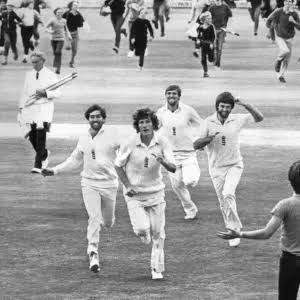
Willis charged in down the hill and produced a delivery that was both full and straight, knocking Bright’s middle stump out of the ground to secure the unlikeliest of wins. Willis finished with 8 for 43. It was only the second time in the history of Test cricket that a side had won after being asked to follow on. Not only did I love the game of cricket now, I was captivated for life, under a spell of wonder and enthusiasm that would only occasionally drift away before returning like a Bob possessed.
And of course, there are lots of reasons why I shouldn’t love cricket. I’m the first to admit that it can be horribly dull. On the plus side, there are generally good teas, although post-Covid it’s become a rarity. One can wait an entire afternoon to do nothing. One can wait an entire afternoon to do something and fail so miserably at it that one wonders what the point of it is.
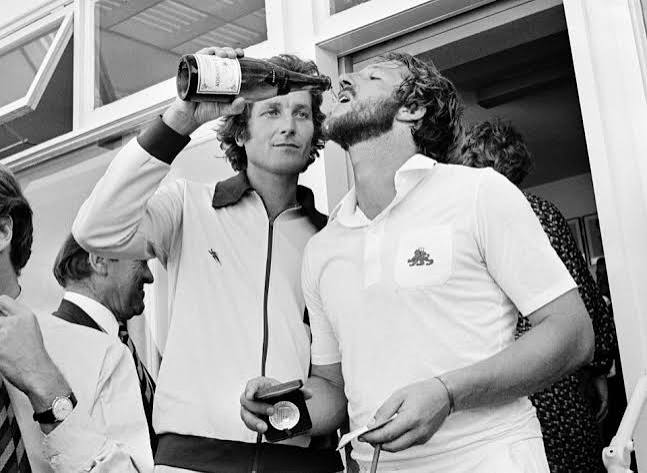
But some days, you’ll fluke a fifty, pick up a wicket with the filthiest delivery you’ve ever bowled or cling on to a diving one-handed blinding catch and get so drunk that by the time you remember it the following morning not only is the catch the stuff of legend but so are all the celebrations afterwards. And for me, somewhere in the recesses of my memory, there is a seven-year-old me who still dreams of being Ian Botham (or as I got older and more left-handed in my batting, Graeme Fowler). There is still that belief that the most ordinary of cricketers can be heroes. And I think that’s why I fell in love with cricket. Botham and Willis helped, of course, they inspired me. Sadly, Willis left for the great clubhouse in the sky but remained Forever Young and Botham’s personality and political leanings eclipsed the cricketer I once adored. But maybe all heroes are temporary and I suspect that the best are also fallible.
Heroes and match-winners aside, it was the complexity and the endless possibilities of the game that bound me to it forever. To be ordinary and magnificent at the same time is as much of an enigma as the minutiae of the game itself, for in those moments we discover things about ourselves that we either never believed possible or took for granted. Ordinarily beautiful or beautifully ordinary. I can’t decide which. We become vital parts of stories that will be told in pavilions and local pubs and now in WhatsApp groups long after the dust has settled. The stuff of legend.
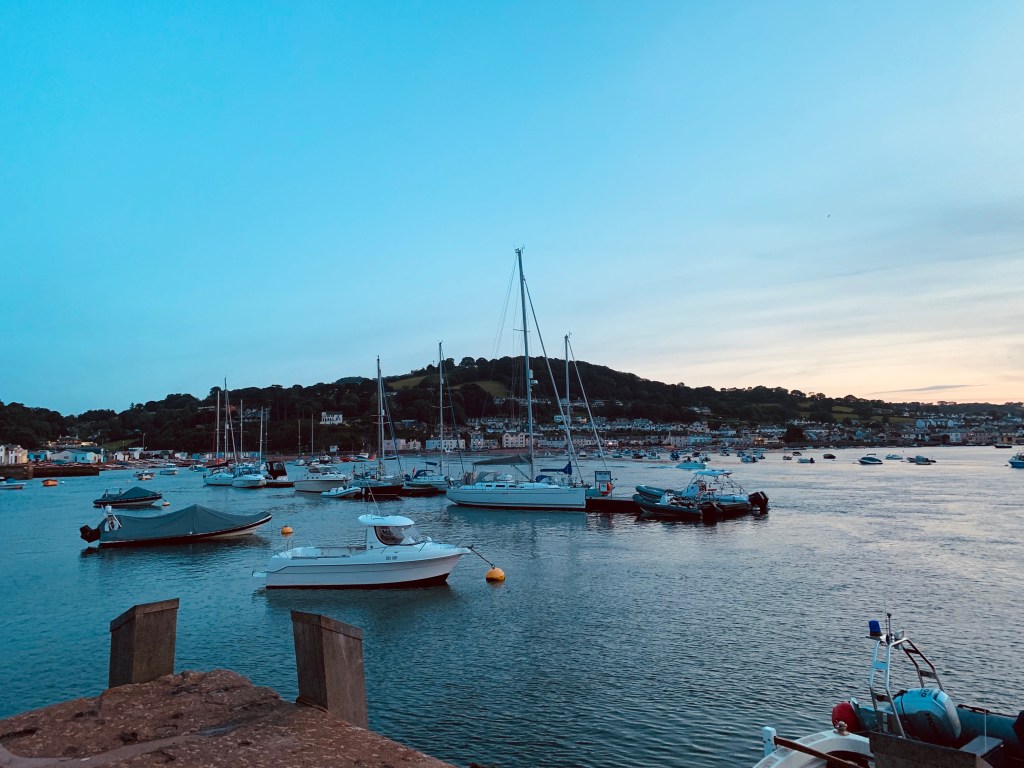
An image shot from the back beach at Teignmouth in 2019, one of my favourite places to visit.
Time, as has often been noted, is a peculiar beast and it feels like an opportune moment to take a brief detour from the main narrative and slip forwards in time from where we were and take a short hop back from where we are…confused? Yeah, it’s a bit like being in my head.
One of my main drivers in life is understanding people or being understood. I think that when I step out of the present, I tend to dwell among the streets of endless possibility, the decisions that we never took and the moments that were never ours to own. I think a lot about what has never been and the reasons behind that almost as much as I consider the choices I have actually made and the path that I have walked during my time on the surface of this world. Often, those thoughts revolve around relationships, from my own perspective and that of others. There have been times during my life when my desire to understand has led me to cross lines that I otherwise wouldn’t to try to feel how others feel and I try to explore this is my next few posts.
I have a very clear memory of seeing an interview with lyrical genius, Paul Heaton, where he discussed the topics that he covers in his music. He spoke of the different types of heartbreak and how, as a nation, we’re often obsessed about what relationships look like when you’re young and in love (to inadvertently quote the Flying Pickets song), comparing them to what people might go through when they are older and their worlds fall apart, opining that it’s essentially a different type of heartbreak that we tend not to analyse because the reality is almost too painful.
I think what he was getting at is that it’s easier to love and lose when you’re younger, when you still feel that naive immortality that comforts you almost subconsciously if your world falls apart. When you are in your fifties or sixties and you suddenly find yourself alone, perhaps through no fault of your own, it’s harder because you don’t feel that you have your best days ahead of you. The wrinkles and the tighter-fitting clothes, the emotional turmoil tells the story of your past and makes the days to come harder to find, let alone navigate.
That’s what I’ve tried to capture in ‘All Our Broken Yesterdays’ told from the perspective of a wife, a mother who has given everything that she had, forfeited all of those roads less travelled for a man who she thought was ‘the one’, only for her world to fall apart when ‘middle-aged’ sets in and her husband’s infidelity cheapens her entire existence. It’s like the scene from Love Actually, where Alan Rickman’s character’s deceit is revealed to Emma Thompson’s character and you can feel the pain of her whole world crumbling around her. It’s beautifully, tragically played and I can’t watch it without feeling incredibly uncomfortable. Perhaps because I think in that moment, I can understand how she feels. Maybe my own pain of my first, failed marriage has stayed with me, even though it happened when I was relatively young or perhaps it’s just a combination of that heartbreak and my past that have left me with…an ability to feel the pain of others in certain situations? I don’t know, my mind is probably off on one of its many brief sojourns as I try to make sense of my own existence! It happens. Anyway, here are the aforementioned lyrics, written in November 2024.
All Our Broken Yesterdays
You shouldn’t have said forever if she was waiting in the wings Your voice like broken glass, just dressed up like blackbird sings
You shouldn’t have walked me home that night or listened to my heart Your stories shone like diamonds, lured me in to play this part
You shouldn’t have set me dreaming about the people I could be A multitude of futures yet I’m just a shade of me
Just like every other sad song that’s been penned It takes you from initial spark to unexpected end Turns smoothest skin to wrinkled and blondest hair to grey And years of conversations into nothing left to say
Just like every other sad song that’s been wrote It takes you swiftly sinking, where previously you’d float Turns all your dream to nightmares and turns hope into despair And years of welcome home to empty house with no-one there
You shouldn’t have said forever if you craved someone else’s kiss Frightened off by middle-aged that was born from wedded bliss
The photos haven’t aged so well, just echoes lined with dust Like all your empty promises that turned from gold to rust
Go find your young and pretty and your life that slipped away While I pick up all the pieces of our broken yesterdays
Just like every other sad song that’s been sung It takes you from the mountain tops to ladder’s bottom rung Turns beautiful to ugly, years to come to ancient news Leaves you stumbling down roads paved with gold, dressed up in clown’s shoes
And just like every other sad song that you’ve heard You’ll listen to it on repeat, learning every word Turns happily ever after into thirty wasted years Sat among our broken yesterdays with broken hopes and tears.
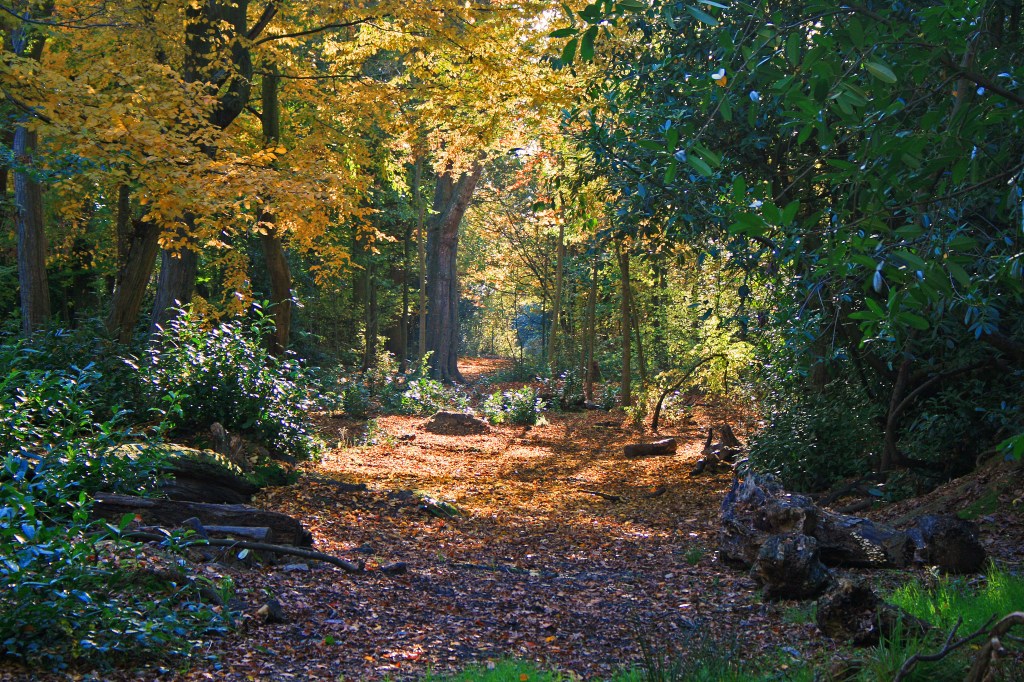
An image that I shot back in the mid-2000s. I find autumn a bit of an enigma. It’s an ending and we all know that I don’t like endings…but it’s also full of beauty. I adore the colours and the sense of anticipation that I feel as the days begin to shorten. Halloween is around the corner and then Christmas. A time of misty mornings and melancholy strolls. A time of hope and a time to hunker down after a busy summer and try to finish all of the things that I’ve been too busy to do during the cricket season. I can almost feel the change from autumn to winter, it gives me a grounding and a sense of my place in the Universe. It brings me peace and a feeling of belonging.
Things happen for a reason, that’s what I’ve come to believe. A few years back, a long time after I had moved on from previous events, I was at a loose end on a Friday morning. Can’t remember why, but that’s not really the important bit. However, for some reason, I decided to take a trip to Horsham from Burgess Hill. Maybe I had a bit of cash to splash and was looking to fill a couple of non-existent gaps on my already bulging DVD shelves. Even so, it was an unusual decision for me to take but I guess that I made my way there after dropping the children off at school. Once safely ensconced within the walls of Swan Walk, long before they had issues with glass roof panels, I nipped into WH Smith and again, completely out of character, decided to purchase a copy of the West Sussex County Times. Still not that unusual, is it? Hardly the stuff of legend. And neither was the rest of the morning but once I was done I drove home and settled down to lunch with my newspaper spread out on the table before me.
Now, as a writer of horror and imaginings of all things dark and foreboding, you might think that what I did next was standard fare. But it really wasn’t. For some reason unbeknownst to me, I turned straight to the obituaries and began to read. And what I saw on the page, in black and white in front of me was the announcement of the passing of Todd Vincent Russell. Louise’s brother.
By this point in my life, Louise and I had gone way beyond ever being able to claw back anything resembling even the faintest hope of ever conducting a civil conversation with each other (spoilers!), but I wrote a card to Marti and Clive, her parents, who replied to me a few days later before we had a brief but perfectly pleasant phone conversation where we completely avoided the subject of their daughter. After I ended the call, I suddenly recalled my words to Louise way back in 1998 and a shiver ran down my spine as if someone or something in the depths of time was also acknowledging the coincidence. I wonder if Louise ever experienced a similar moment.
Back in 1998, we stumbled through the early months of the year, a mass of confusion and conflicting emotions. I became even more insecure, if that was even possible, while Louise became more distant from me, almost belligerent in her desire to become more outgoing while still not finding whatever it took to end my agony. At this point, I was still blissfully unaware of the situation between her and Paul, blindly clinging to the belief that our marriage meant something to her and that anything I felt was amiss was merely the product of my overactive imagination and a by product of the fragmented childhood that had shaped me to this point in my life. It wasn’t though.
One Spring afternoon, I returned home from an early shift to an empty house, as expected as she was working. What I didn’t expect to find though was a piece of paper left on the lounge table where she had been practicing her signature…of her maiden name. It was like being punched in the guts, another hammer blow to my already fragile self-confidence. Taken on its own in isolation, I could maybe have laughed it off as just a daft way of spending a boring morning. Realistically, given everything that we had been through of late, it was almost the final nail in the coffin. When she arrived home later that evening, I simply passed her the piece of paper and told her that she must have forgotten to throw it away. Her face dropped and as much as she tried to pass it off as nothing I was almost running on empty, emotionally.
The last rites were almost upon us and about a month later she took a trip to Japan to compete in a Sports Acro competition. It was about now that I chose to have my most stupid moment in our entire relationship. She would be away for a week and set off on a Friday afternoon, meaning that the gym was short of coaches and in need of a little help. Naturally, I volunteered and turned up at the gym, blissfully ignorant of the fact that they were also missing one other coach. Paul. What I didn’t know at the time was that the looks that were thrown my way by Anne and Sarah Pope and the other coaches present were looks of pity. Everyone but me knew what was going on and I still had no idea.
I sometimes wonder if it was wilful ignorance on my part. I was desperate to try and save my marriage because I think it felt at the time that it would just be one failure too many in a life full of shortcomings. A life where I had fought so hard for what I thought was happiness that I couldn’t let go once I believed that I had found it, even though I was more miserable than I had ever been. To have a taste of something so…I hesitate to use the word amazing, because ultimately it wasn’t and perhaps to Louise it never was. Perhaps fine would be more apposite. There were times when it was fine and it maybe suggested that it could be so much more, but it grew dark and gradually extinguished its own flame to die in the darkness.
Ellie came to stay for the weekend and her visit gave me a bit of a lift, including one moment where we were watching Independence Day and one scene in particular caused her to throw her drink up the wall and we laughed until we cried. I had very little contact with Louise while she was away, she found the time to give me one quick, two-minute phone call over the entire week. If she was trying to tell me that my time was up without actually saying it, she was doing a bloody good job. Once Ellie left, I sank into a deep depression and for the first time in my life, I considered suicide.
I had reached rock bottom. I had fought so hard for my dream and I was about to lose everything. I sat on the sofa, in a soup of cats (Eddie, Lily and Molly (Mog)) and I cried as I stroked and hugged them, pouring out my feelings in the loneliest place that I had ever been. I’ve never told anyone this before, but in the early hours, fuelled by alcohol, I opened three full packs of paracetamol and lined the tablets up in front of me, fully prepared to work my way through them. I felt numb and broken, empty. I felt like a failure. I didn’t want to hurt anymore and I was ashamed that I was going to lose everything. I loved Louise and in my confused and bewildered state, that should have been enough. But it was painfully clear that it wasn’t. I cried myself to sleep to the sound of purring cats and when I awoke I cleared away the evidence of my accidentally aborted plan.
When Louise returned from Japan the atmosphere in the flat was thick enough to cut with a knife. I think we managed a couple of days before things came to a head and she finally put me out of my misery but still didn’t respect me enough to tell me the whole truth. She said that she couldn’t go on like this anymore and that it was over between us and my heart absolutely and completely broke. We agreed that I would move out to stay with friends for a while once I’d had time to process what was going on. I think we stayed in the flat together for another couple of weeks, but it was horrific. She would come and go as she pleased and I wasn’t allowed to ask any questions. After all, it was none of my business anymore. It was also agreed that she would keep the cats as I wouldn’t be able to take them with me until I had a place of my own. I’d recently started a new job, training as a Deputy Manager for PetsMart, but frankly it was a distraction that I could have done without, even though it turned out to be an entirely necessary one.
The night before I moved out, we agreed that we would have one last night together, for the good times, to quote the Bill Nash song from 1968. We shared a non-romantic, romantic meal and drank plenty before heading off to bed together for the last time. In hindsight, it probably did more harm than good, the act of sleeping together ended up feeling perfunctory as she was clearly not emotionally invested as she hadn’t been for some time. In the middle of the night, I crept away into the spare room, unable to bear the pain and anguish any longer.
And just like that, I was suddenly single once more. A broken man with no idea how to start again and barely even the will or desire to do so.
It took time to adjust and I think for a while I resented having to leave behind the home that we had made for ourselves. I’d finally found somewhere where I thought I belonged and had built up an environment where I was comfortable. I’d left behind people that I considered to be friends, although some would show their true colours in years to come. Louise settled into her new job much more quickly than I did (I’d met her new employers briefly, namely Bob and Anne Pope, who seemed pleasant enough), although I was hampered by a lack of assistance given that my deputy manager was a young lad who was incredibly inexperienced and was very nervous about being left on his own to run the shop if I wanted to take a day off. Living above the shop also made it very difficult to escape the shackles of work and I would regularly get phone calls when I tried to step away, even on lunch breaks. One such phone call led to a potentially damaging situation.
The young lad in question, Luke, would ask the same question every time that he phoned me. ‘Is that Alec?’
Yes, Luke, I would think to myself. Of course, it’s me. You know it’s me because you’ve just dialled my number for the umpteenth time today! As you can probably tell, I found this whole situation incredibly wearing on my patience.
On this particular day in question, I’d obviously had a stressful morning and had popped upstairs to share lunch with Louise, who had come home from work as she often would during the day. The phone rang and I snatched up the receiver to be greeted with the inevitable question…
‘Is that Alec?’
‘No,’ I snapped, ‘it’s the fucking Pope!’
Silence met my response, mercifully followed by laughter.
‘It’s Bob Pope, from the gym club, I was hoping to speak to Louise. I guess you’re not having a good day?’
I was mortified and I’m not sure that I’ve ever been more apologetic in my life. Fortunately, Bob saw the funny side, but he could easily have taken umbrage at my mistake and I’m not sure that I would have been easily forgiven by Louise if that had been the case.
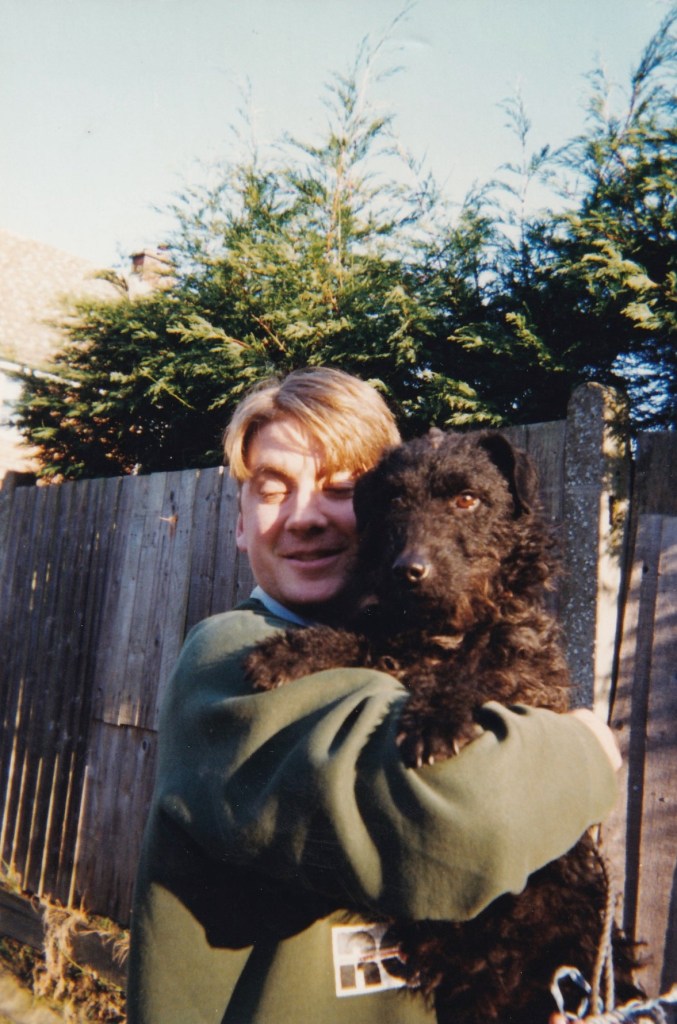
A few weeks later, with a pregnant cat about to give birth, a scruffy-looking dog was abandoned outside the shop. He was in a terrible state and was terrified of everything. We took him upstairs to the flat, gave him a bath (which he hated) and fed him. We had hoped that given time, he might overcome whatever trauma had befallen him and become part of our family. Sadly, he couldn’t settle and work commitments dictated that neither of us could be around to give him the attention and support that he needed. After a week or so of trying to help him we made the difficult decision to take him to a rescue centre. To this day, I think about him and I hope that he found a family that loved him as he deserved.
Help at work finally arrived in the shape of a new Deputy Manager, Lara, who after a short settling in period, seemed very keen on trying to take over at every opportunity. During my time in Crowthorne, I struck up a friendship with another manager, Stefan, who ran the Sidcup branch who we reported directly to. Under a new area manager, I found it difficult to find my feet and Stefan would regularly become my sounding board. Worse still, we shared a similar sense of humour and the aforementioned area manager had a very high-pitched voice…so Stefan and I would regularly call each other and imitate the area manager to try to catch each other out. Both of us were rather successful in our impersonations, which led to many awkward phone calls. My friendship with Stefan essentially developed into one, big practical joke to the point where, after Molly (the cat who became Mog) had given birth to a litter of kittens, I sent a tiny but perfectly formed kitten poo, gift-wrapped to him in the post, blissfully unaware that it was a criminal offence to do so! Realistically, it should have been pretty obvious! Those conversations and exchanges were a bright spot during an unsettling time for me personally.
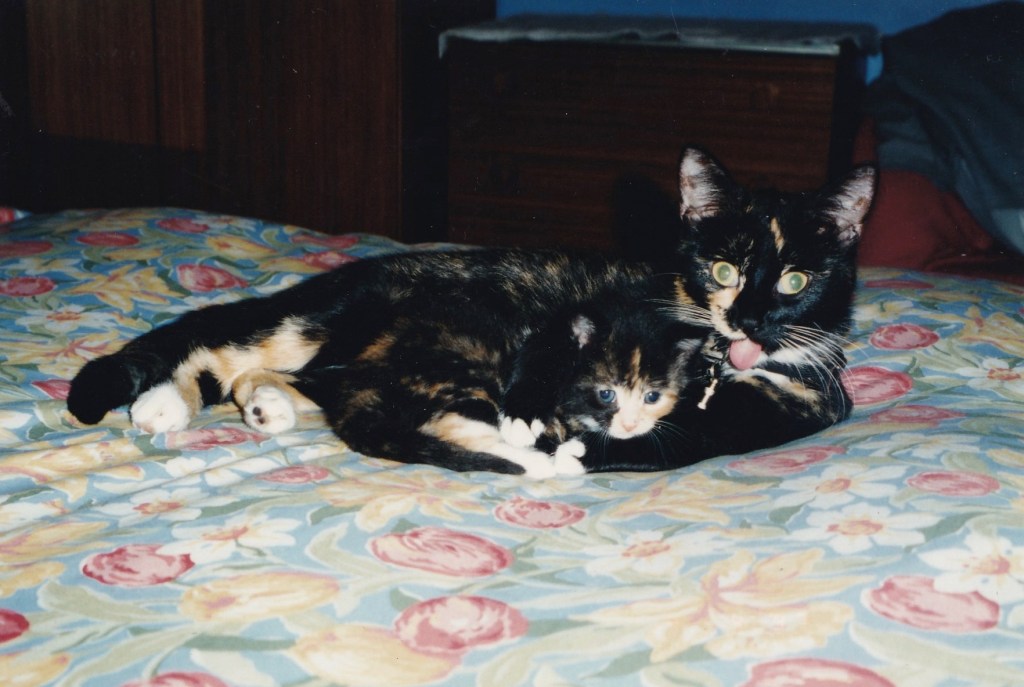
Mog with one of her four kittens.
My relationship with Louise was ok at this point, although she began to spend more time at work and got involved with competing at Sports Acrobatics. I would occasionally find myself asked to cover other local stores and one Saturday evening I was faced with a situation, the likes of which I would steer well clear of these days. I was running the store in Bracknell and had pretty much just finished cashing up the lottery till, depositing the money in the safe. A young lad, maybe no older than fifteen, walked into the store and went straight to the till area, where he lifted a collection pot for one of the local charities. Bold as brass, he was and strolled straight out of the store as if nothing was amiss. Something snapped inside me and I called after him, at which point he ran.
When I say that I’d steer well clear of this situation these days, it’s partly because I wouldn’t stand the slightest chance of catching him and also because of the increasing likelihood that he might be carrying some sort of weapon. However, in my early twenties I was reasonably fit and healthy, so I set off after him, fuelled by outrage and indignation. He was fast, but I kept up with him, following him through housing estates to the point where I had no idea where I was. Surprisingly, after a mile or so, he began to tire and as we rounded another corner he stumbled slightly. I launched myself at him and wrestled him to the ground, bringing his right arm up behind his back and pushing his face into the dirt. Just as two men walked past.
‘Help!’ The thief screamed and begged for mercy, calling out to the two new arrivals that he was being attacked and assaulted for no reason. I suddenly worried that I might be in a whole heap of shit.
Fortune smiled upon me, however. The two passing gentlemen were off-duty police officers, who upon closer inspection, recognised the young lad who I’d apprehended. Apparently he’d been on their radar for weeks. One of them took over from me and together, we made our way back to the shop where the miscreant was arrested and then carted off while I gave a lengthy statement and studied my various cuts and grazes.
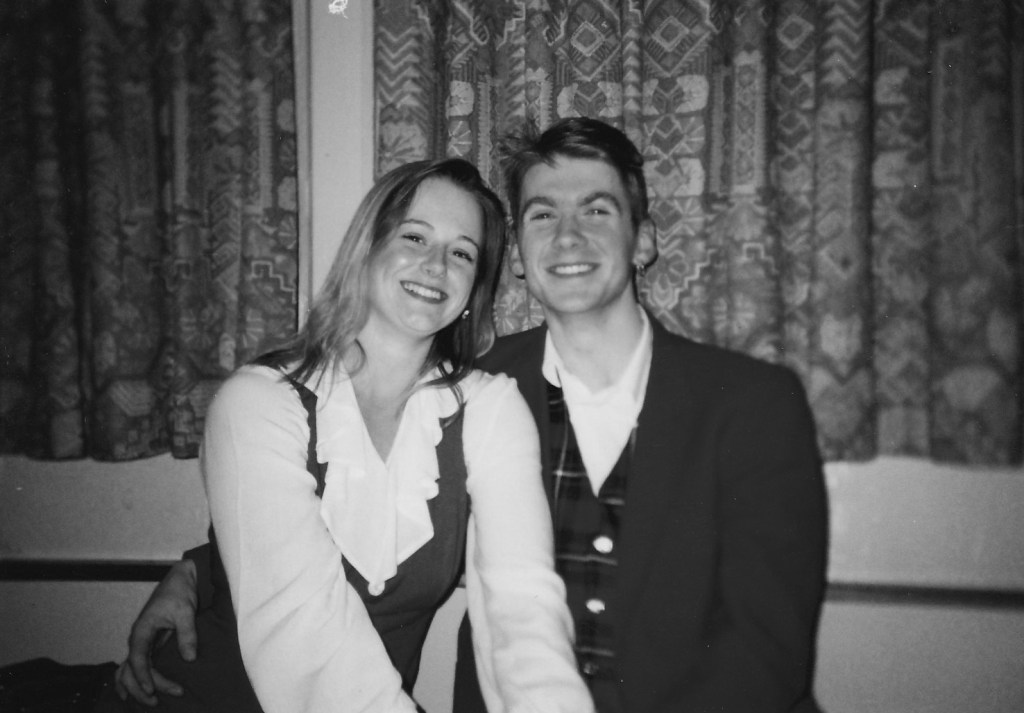
During happier times…
Christmas 1997 came and went. Tamagotchis conquered the Christmas market, while Kate Winslet and Leonardo Di Caprio were thrust into the public eye with the release of James Cameron’s Titanic. The Spice Girls topped the UK charts as they churned out their sixth consecutive number one, ‘Too Much’ and irony may well have died across the British Isles. Argyle were once more in the doldrums, on a run of five defeats, which included a 4-1 thumping at home to Fulham on Boxing Day. They would end the season suffering relegation to Division Three.
For those who have never experienced Christmas in retail, it was a busy time of year that essentially resulted in one day off and I still couldn’t shrug the feeling that something wasn’t quite right. My insecurities resurfaced and I spent a lot of time worrying about the state of things, to the point where my concerns probably resulted in some sort of self-fulfilling prophecy. If I wasn’t at work I was spending most of my time asking Louise if she was okay or if she was happy. I’m pretty sure that she began to spend even more time at work to avoid the constant questions. Definitely not the most wonderful time of the year!
As 1997 braced itself for the transition to 1998, I found myself ‘celebrating’ at a party back in Horsham at the very same place where Louise and I had met in August 1994. What now felt like a whole lifetime ago.
I’ve never particularly enjoyed New Year. Some people are able to look at it as a new beginning, whereas for me, it’s more a reminder of everything I’ve ever lost, which won’t surprise anyone who knows me or perhaps has reached this point in my story. As the evening wore on and I withdrew more and more into my melancholy self, I began to feel like the butt of a joke that everyone else was in on. I was still grieving for Carole and had never really addressed what I had been through when she had passed away and this would often rear its head around Christmas and New Year. And this night was to be no different.
Midnight rolled around and from somewhere in Horsham, fireworks went off as Jools Holland tickled his ivories and everyone at the party joined arms and did the weird ‘Auld Lang Syne’ song and dance. Apart from me. I knew what was coming, so I had removed myself from the party and saw in the New Year on my own in the garden, a slight chill doing its best to usher me back inside as I let go of my emotions in solitude. Eventually, I felt a presence at my shoulder and turned to see Louise stood next to me. I was raw and hurting and in need of comfort. None was forthcoming as her face screwed up with rage and she declared through tears that she couldn’t do this anymore, turning on her heels and leaving me alone once more.
I was crushed. I knew that things were bad, but she’d never done this to me before, she’d never turned her back on me when I was at my most vulnerable. When I needed her. Ordinarily, I might have followed her inside, chased after an explanation, but I sank to my knees on the cold concrete and cried. I felt abandoned and humiliated. I would never have walked away from her if she had been in the same state as me, but she did so without a second thought, making me feel guilty for grieving for my sister.
At some point, I made my way back inside, once my tears had dried and I had regained a modicum of composure. I felt eyes following me at every turn and I still wasn’t really a drinker at this point, so I couldn’t lose myself in the realms of drunkenness and pretend that it hadn’t really happened. We must have left the party at some point, I couldn’t tell you where we were staying, that level of detail eludes me. Not much was said, but I remember very clearly saying to her that I hoped she never got to experience what it was like to lose a sibling. Someone, somewhere must have been listening…
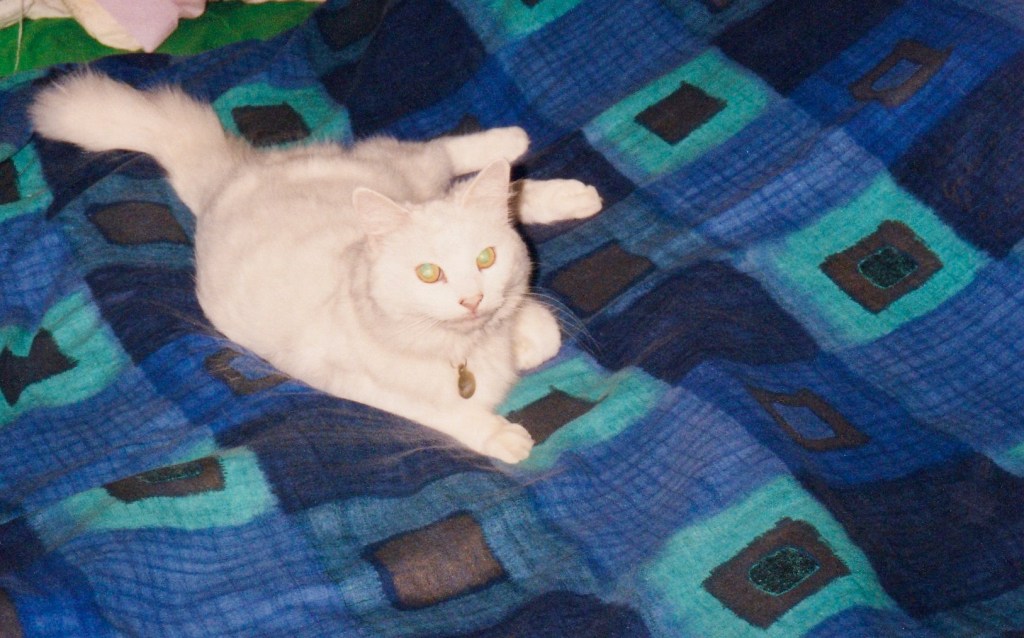
With Lily, who once came to a game of cricket with me…
Married life seemed pretty near perfect for a while. We spent a week in Looe on honeymoon, relaxing after the stresses of planning a wedding and adjusting to the changes of a situation that neither of us had experienced before. Soon enough, we returned home and went back to work while basking in the glow of what should have been one of the happiest days of our lives. Time, and of course our choices, have tainted that day beyond recognition now and I often feel for people whose fairytales and dreams have come to an end through no fault of their own. Not that that was the case here, as already mentioned I take my share of responsibility for the break-up of my first marriage. But we’ll come to that.
It may not be unusual, but certainly from my perspective it’s strange that I remember little about the time when Louise and I were relatively free from stress and pressure. We must have discussed having children at some point, I certainly knew that I couldn’t wait to be a father. I seem to remember a reluctance on her part, which again should have been a warning sign for me, but in all honesty, I was besotted with her. She couldn’t do any wrong and I was totally invested in doing everything I could to make her happy. I clung to my own insecurities like a favourite blanket, always worrying that she would find someone or something better, but on the whole we were doing ok. We bought a couple of kittens (probably substitutes to stave off any difficult conversations around having children), a handsome, white, Maine Coone, who we named Eddie and his sister, a white, short-haired cat called Lily. I’d always had pets and felt very much that a house wasn’t a home without a four-legged companion of some sort.
Work became more demanding for me when the manager I worked under left, leaving myself and one other deputy manager in charge. The one silver lining to the increased hours and pressure was that I struck up a friendship with my Area Manager, Bob Johnson, who lived in Newton Abbot (small world) and was a Northampton Town fan. Unusually, given my general mistrust of people in authority, we hit it off straight away and over the course of the next year or so, I would help Bob out by covering other stores in the area, even missing out on Argyle’s first appearance (and solitary victory) at Wembley at the end of the 1995-96 season.
There was one particularly glorious day that really sticks in my memory during the Euro 96 tournament. England, after a disappointing opening draw against the Swiss, were playing Scotland and I was covering a store in Worthing while the game was going on. The chip shop next door was showing the game and I was lucky enough to be queuing for my lunch at the exact same time that Paul Gascoigne fired in England’s second goal following David Seaman’s penalty save. Pandemonium ensued as everyone went mad, strangers hugged and the previously flat tournament finally captured the nation’s spirit. A late finish ended with a request from Bob for me to work the following morning and he offered me the option of staying in the flat above the shop that he used from time to time. After several pints, we talked of football, life, the Universe and everything into the wee, small hours before falling asleep in our respective chairs. He was, without doubt, the best person that I ever worked for and I remain grateful for the kindness he showed me when facilitating a transfer and promotion later that summer. It was a rare period in my life when I was relatively free from the crippling insecurity that still haunts me, something that has robbed me of numerous friendships over the years.
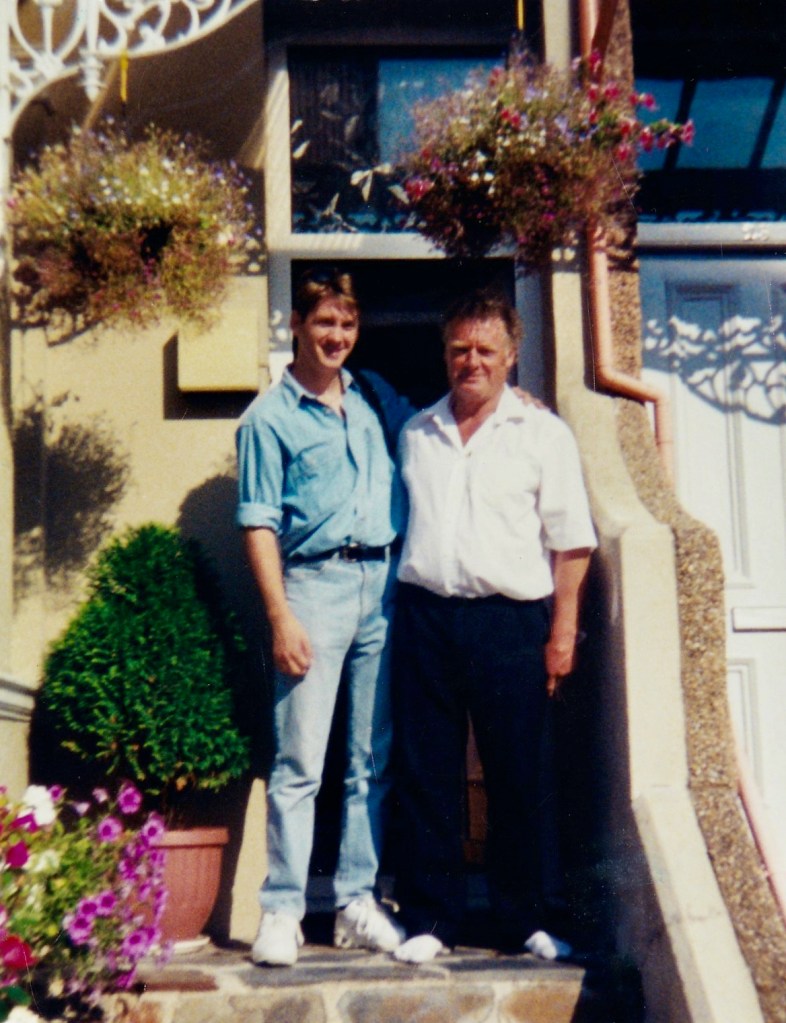
With Dad, once again exhibiting some excellent fashion choices…
Louise’s profile at Horsham Gym Club was on the rise and I continued to help out where I could, although we had a very different approach to encouraging her gymnasts. She had obviously been coached a certain way and had absorbed much of that into her own style, while I preferred to encourage and reason, aside from one horrible moment which I still recall to this day, when I shouted across the gym at one unfortunate young gymnast, who was struggling on the beam. With hindsight and experience, I suspect that I was trying something that I had seen Louise do on the odd occasion and I couldn’t have been more wrong. When you set yourself up as the positive voice of encouragement, you can’t suddenly switch because it betrays all of the trust that you’ve worked so hard to build. It was a steep learning curve for me and something that I tried to take forward on my coaching journey.
At one point, the night before a competition, Louise and I disagreed about the prospects of one of the girls, Lisa. Louise wanted to pull her from the competition as she hadn’t trained well enough, whereas I felt that Lisa deserved the opportunity to perform on the day. This conversation was quite heated and eventually, against her own wishes, Louise agreed to let Lisa compete. Lisa medalled the following day and that gave me a little confidence in my ability to contribute towards enabling athletes to reach their potential through support and praise instead of shouting and threatening. Whatever I lacked in experience as a coach and in the knowledge of the sport itself, it appeared that I had an aptitude for motivation, which is something that I would hope I have held onto and brought into my work as a cricket coach more often than not. But again, much more of that later.
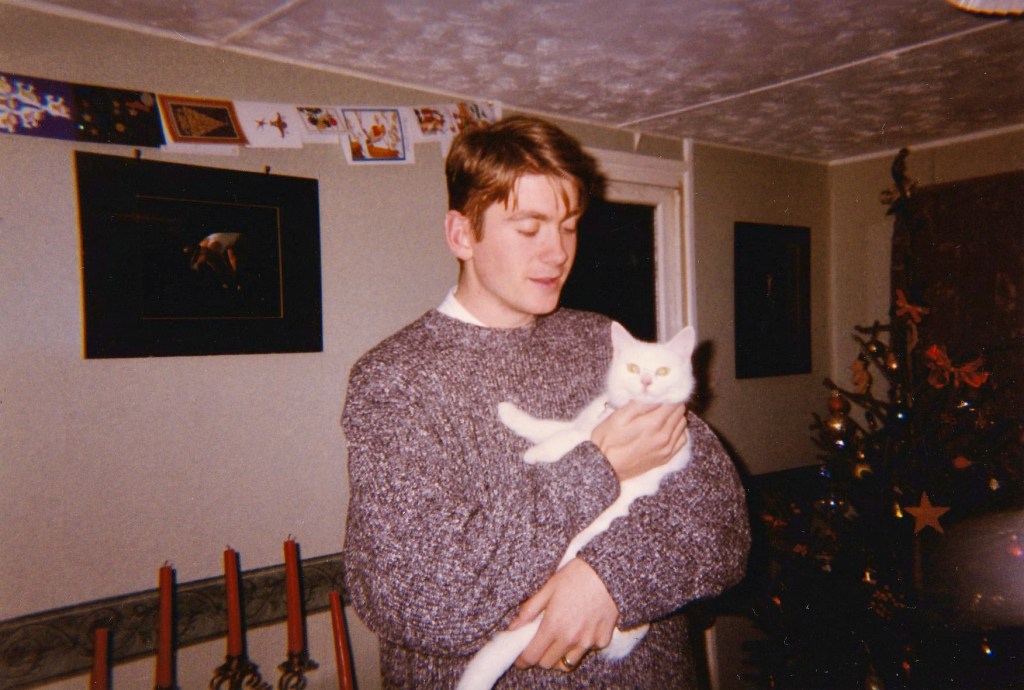
Eddie, named after Ade Edmondson’s character in Bottom
Louise’s success as a coach soon brought about job offers and opportunities, one of which came from Pinewood Gymnastics Club in Crowthorne, Berkshire. I don’t remember there being much in the way of a discussion about her accepting the offer, which she duly did, but I wasn’t overly happy about having to move away. I was doing well at work and had played a handful of games for Slinfold CC, finally feeling that I was putting down roots, that I maybe belonged somewhere. I loved living on the farm and we found ourselves having to trade that for a flat above the shop that I would manage in Crowthorne itself, part of the package that I would accept as my transfer to the area. So, we packed up our things, including Eddie, Lily and a new arrival from Lily’s first litter of kittens, Molly, who would be renamed Mog much further down the line. We set sail for Berkshire, land of hope and opportunity. Near Bracknell…
Slowly, I began to pull my life back together. Going back to work was tough and everyone was very supportive. Friends were sympathetic, as one might expect and I gradually began to adjust to a ‘new normal’.
The one bright spot on the horizon was an impending trip to Australia. When I had met Louise, she had already arranged a four and a half week stay with family in Sydney over Christmas and New Year. After recent events I was reluctant to be at home on my own for so long, so we decided that we could just about afford for me to go with her. The downside was that I had to fly on my own and I’d never flown before. In at the deep end once again. She flew out ahead of me and on December 18th, 1994 I boarded an aeroplane for the first time, full of trepidation and a typically morbid suspicion that the plane might crash. I’ve never really liked flying and I suspect that it’s linked to the trauma I suffered as a child. It’s that same situation of expecting the worst thing to happen.
Obviously, I survived the flight, reading James Herbert’s The Ghosts of Sleath in one sitting. When I touched down in Sydney, my relief was as palpable as the warm breeze that hit me as I left the plane. I was on the other side of the world and it felt a little surreal to have left a rainy Heathrow behind to step out into the sunshine.
Louise met me at the airport and I’d never been so relieved to see anyone. We settled in quickly despite my all-too-apparent nerves and social awkwardness. I’ve always found meeting new people relatively daunting and this was no different, save for the fact that I was miles and miles away from familiarity and anything that might ground me. Once the jet lag wore off, we hit the ground running and began to explore our new environment.
We’d been in Sydney for a few days when Louise told me that she had something to tell me. Immediately, my defences kicked in and I prepared myself for bad news, my mind reeling at the numerous prospects tumbling through my brain, including the possibility of having to return home to England on my own and pack up my belongings. Those particular concerns were unfounded and seemed like small potatoes once I found out what she wanted to tell me.
She confessed to me that when she was a young gymnast she’d been sexually abused by her coach when they were away at a competition. As she told me the details of what had happened, years of pent-up frustration broke loose and she sobbed for what seemed like hours. I had no idea what to do, a survivor of abuse myself but a story that I hadn’t shared with her at this point (nor would I at any point in our relationship). My instinct was to hold her and listen to what she had to say for as long as it took, but I didn’t know how to touch her, how to hold her. Up until this moment, I think it’s fair to say that ours had been a very physical relationship, yet with this new revelation I realised that I had no idea what to do next. We were starting all over again and everything that had underpinned our relationship had dissipated in an instant. I was reeling and lost, my own feelings insignificant compared to hers, the urge to protect the person who I loved most in the world almost overwhelming. But I could do nothing. In the end, all I could do was wait. Wait until she felt able to talk and in some ways I was flattered that she’d been able to share what had happened with me. Nobody else knew, to the best of my knowledge and I was sworn to secrecy.
The remainder of the holiday was enjoyable. We enjoyed a couple of days at the Ashes Test (more to come on that), a couple of road trips, a trip to Taronga Zoo and a visit to the Sydney Opera House. However, we were both dealing with demons of our own. I was struggling with the loss of Carole, bottling up my emotions, which wasn’t the wisest of strategies and it all spilled over when we went to the cinema to see Forrest Gump. I also recognise, with the benefit of hindsight, that these emotions were also sat on all of the repressed memories and trauma of previous years. To say that I was an emotional wreck would be an understatement.
Physically, I began to hold back, concerned that any actions on my part might trigger memories of what Louise had been through and put her in mind of her coach, something that I knew I wouldn’t be able to cope with. It was ultimately the wrong response because it elevated her trauma to a new level and suddenly, everything was associated with the abuse she’d suffered, even the tenderness that we had previously shared because of my reticence in trying to be physical with her. Compared to the amount of information that is on hand these days, we were stumbling in the dark in learning how to deal with trauma.
Gradually, we moved forward again. We returned home and began to pick up the pieces of our lives once more. I left McDonalds (after a difference of opinion with the new franchise owner concerning the printing out and replacement of best before dates on certain food items) and took on the job of deputy manager of a convenience store in Horsham. It meant early starts and sometimes late nights, but the money was better and it was the fresh start that I needed. It took a little while to settle but the staff were good and mostly friendly and I enjoyed the work. In other news, Argyle continued to navigate their ‘annus horriblis’, which culminated in relegation to the fourth tier for the first time in their history as Peter Shilton’s financial issues became public knowledge and a club that had seemed destined for glory just a few months previously almost imploded on and off the pitch. I finally found my way back to cricket, joining Slinfold and playing a handful of games for their Second XI and Sunday teams. It was great to be back playing again, although I did little of note that would have caught the attention of the cricketing gods. A 17 over spell up the hill (which wasn’t really that much of a hill) on a scorching hot day at Pulborough sticks in the memory, but I recall little else.
There was also the small matter of a wedding to plan, although I don’t know if the enormity of the step that we were taking ever really sank in for either of us. We were carried along on a wave of physical attraction at first that eventually peaked and crashed upon the shore and in the shallow waters of familiarity we found what we assumed to be support and understanding in the face of trauma, both past and recent. In some ways, I suspect that masked some of the other issues we were facing, such as the intrusive nature of Louise’s ex-boyfriend and my own insecurities and jealousy, which were to resurface just a matter of weeks before the wedding itself. There was also Louise’s inherently selfish nature which, unusually for me, I had yet to pick up on. It remains one of the few times that my instincts have failed me.
With the church and reception both booked, suits were hired and invitations sent, speeches were written and fussed over. Our attention turned to the obligatory stag and hen parties, neither of which filled me with much enthusiasm. I’ve always found parties of any sort challenging, too many people in one place make me feel uncomfortable and makes it difficult for me to get a read on situations. I certainly wasn’t a drinker by this point and I think my stag night was just a quiet night at home with a very small gathering of friends. Louise, from memory, had booked some sort of gathering at a spa and was very committed to going out in style. I was expecting trouble and maybe my own reservations enabled that trouble to manifest itself.
I’d describe Louise’s best friend, Bev, as marmite. I’m not sure that she ever particularly warmed to me, but we managed to get along when we had to. To be fair, I think that she probably saw my insecurities as a bigger issue than Louise did and perhaps that was insightful on her part. I have a vague memory that she was someone who had also been through numerous challenges in her life and perhaps there was an element of recognition there on both of our parts. Either way, it was…complicated.
The problems from the hen night arose when the photographs were doing the rounds and there were shots of a couple of guys in towels that gave one or two of us cause for concern – as did the lack of an explanation. Louise was reticent in providing any details and I had a nagging concern about the whole situation. While eventually we worked through the difficulties, I’m not convinced that my concerns ever really left me after that. Neither am I convinced that I ever knew the truth.
As we neared the ‘big day’ various members of my family travelled to stay with us. A couple of days away from the main event, in early August, Louise and I were waiting at Horsham train station for my sister, Rachael to arrive, when the announcement came that the train was delayed by about an hour. With little else to do but wait, we decided to take a walk around Horsham Park once the sun had set, but after about fifteen minutes of walking and canoodling, how can I put it…the urge took us, as it can when you’re young and in love, to quote the Flying Pickets song. Faced with limited options, we furtively ducked into the empty children’s play park, which back then was a huge area filled with swings, slides, roundabouts, climbing frames and slap bang in the middle of it, a few large, concrete tunnels that had been fixed to the ground for kids to crawl through, up and over. We picked one at random, that had been set at an angle of about 45 degrees and snuck inside. I’ll forego the details (let’s face it, there are some images that you don’t need me to paint) but my calves and hamstrings were feeling the aftereffects a good couple of days later. Fortunately, we remained undetected during our al fresco shenanigans and made it back to the station to pick Rachael up with a few minutes to spare.
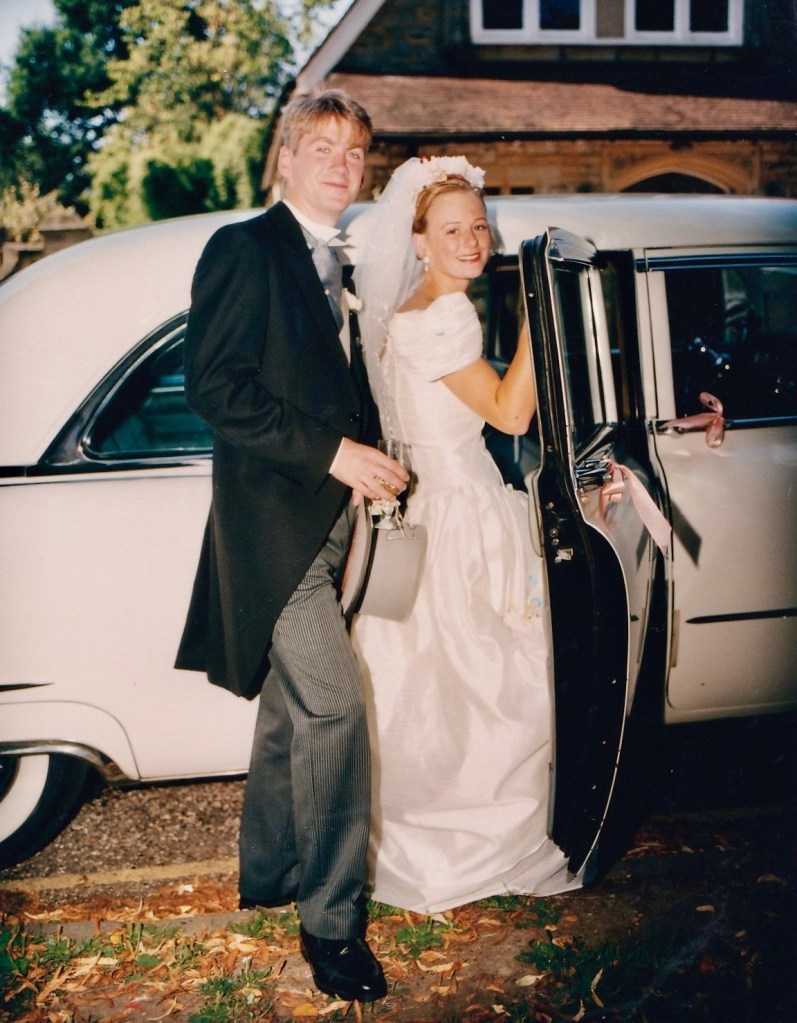
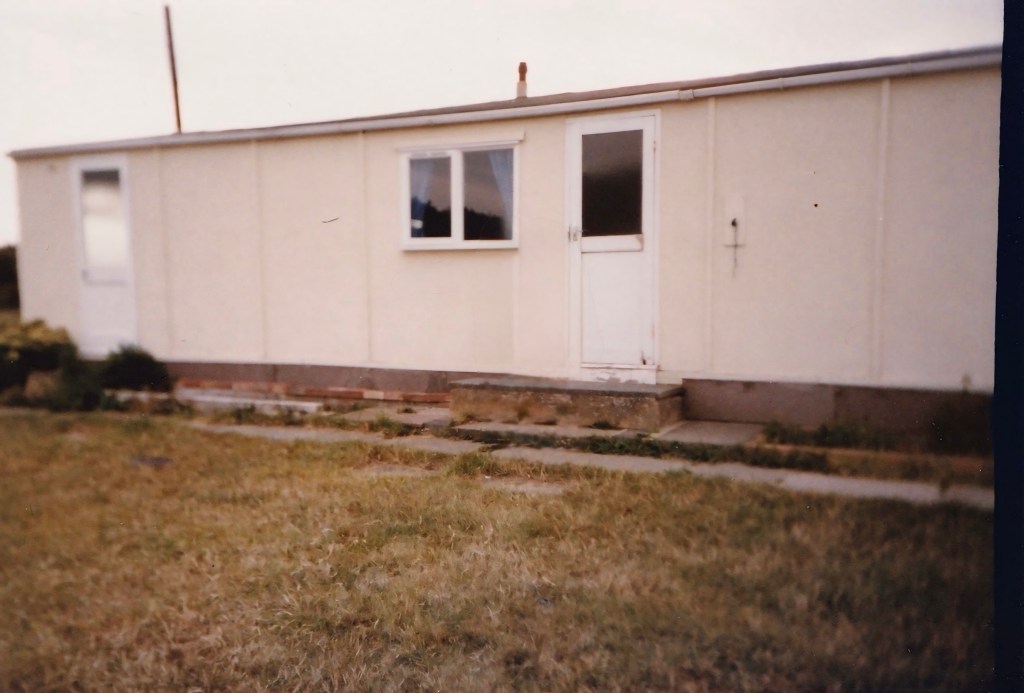
So, the night before the wedding, we had a house full of family and friends. Louise went to stay with her parents and I woke early the following morning. We had an area at the front of our mobile home that I would regularly use for bowling practice (back when I was a fast bowler with a physique to match) and around 6 o’clock in the morning I was chucking down a few overs and sending stumps flying. Breakfast followed with the arrival of more guests and we eventually proceeded into Horsham, congregating at St Mary’s Church on the Causeway. It’s a beautiful church and as I stepped inside, dressed in my finery, the cool air in stark contrast to the sunshine outside, it finally sank in that I was about to get married. I suddenly had everything that I ever wanted. I had security and I was about to marry the woman who I loved and who I believed loved me. And despite, how things ended up, I think that she probably did in her own way, but that’s obviously another story and one I shall come to in time.
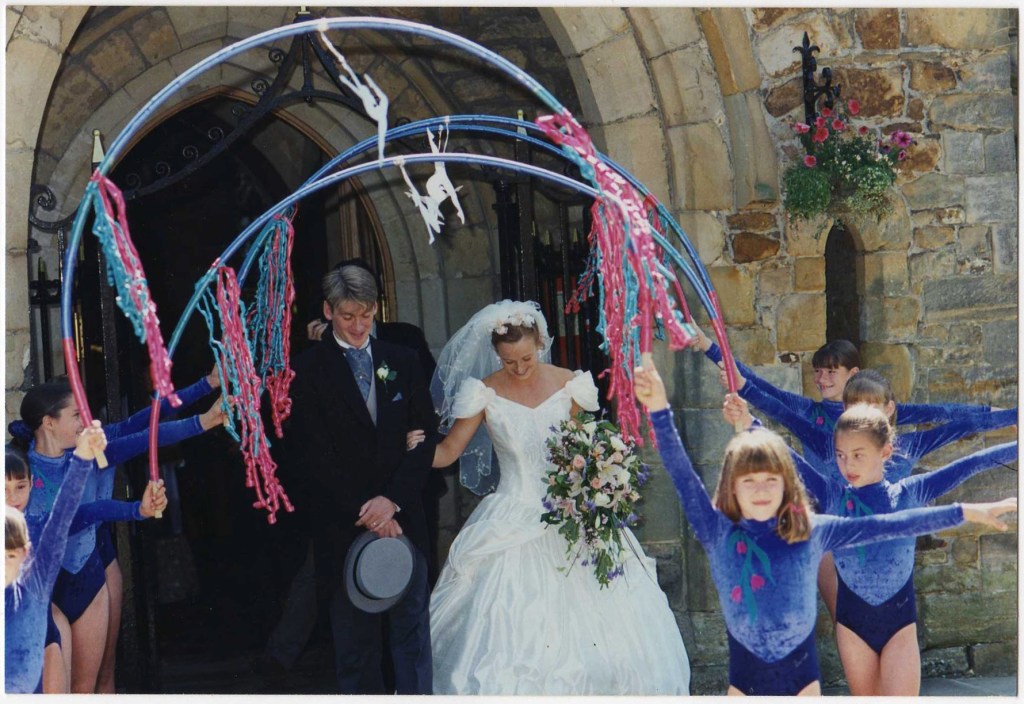
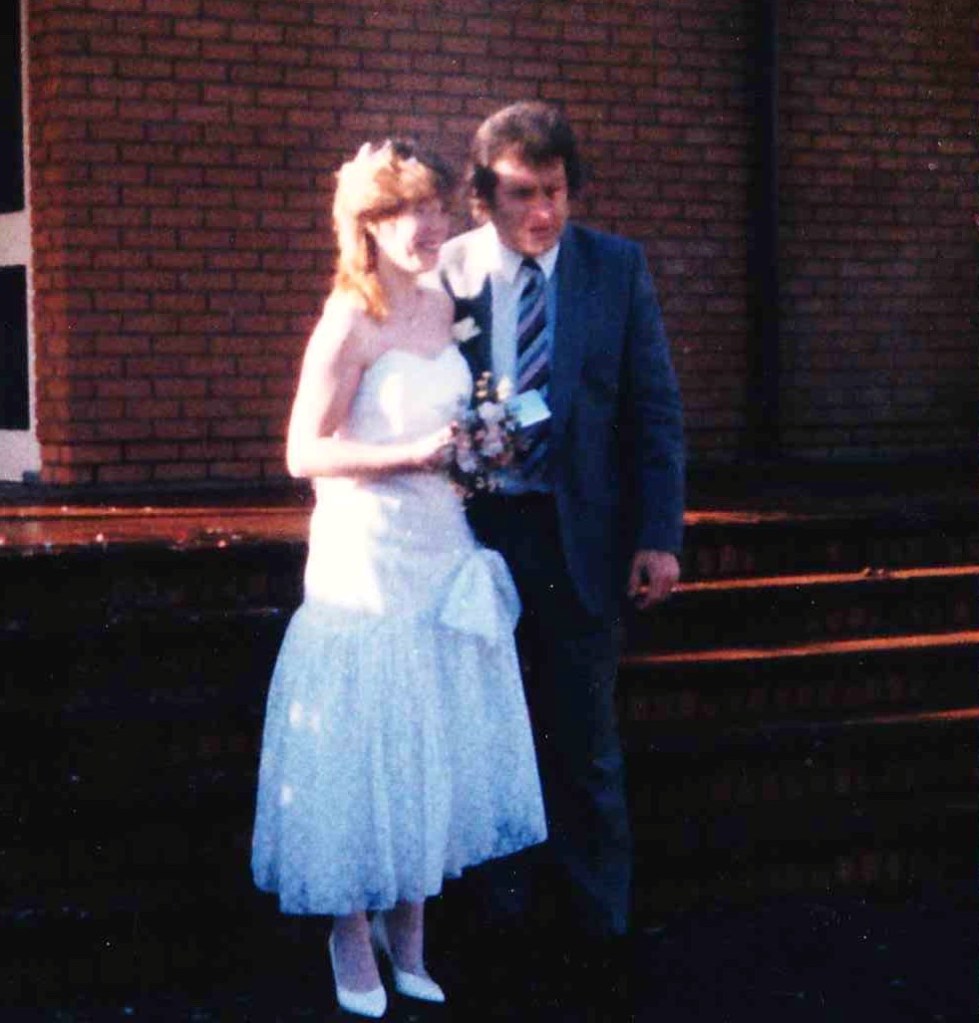
What I didn’t know and would only find out later, was that Louise’s ex-boyfriend had contacted her that morning and had asked her not to marry me and to go back to him. I often wondered how that conversation went and how close she came to not turning up on the day. It would have been totally befitting of my life up until that moment if I’d been left standing at the altar. However, whether for better or worse, she did turn up and we did indeed go through with the wedding. As we left the church, we were greeted by several of her gymnasts holding arches that we walked under and posed for the obligatory photographs before moving on to the church gardens for more pictures and congratulations. The sun was shining high in the sky and there was a feeling of genuine happiness to which I was unaccustomed. Everything seemed good with the world.
The reception was held at Cottesmore Golf Club and upon our arrival we formed the prearranged receiving line, an absolute nightmare for anyone with social anxiety. Greeting people should always be a very simple process to my mind, made more complex now by a variety of handshakes and trying to work out if people are one kiss on the cheek people or two kisses, one on each cheek. And how do we know who is the kisser and who is the kissee? Not to mention the absolute terror if both parties believe themselves to be the kisser and inadvertently go in at the same time and God forbid, kiss on the lips. These days, I’m happy with a hug but if there is any kissing expected I tend to go for a full-on, cheek first lunge to make sure I’m not the one doing the kissing, which obviously can result in essentially just rubbing cheeks with someone, but I’ll take that over the alternative, even if I do get the odd, strange look. I’d be much more comfortable with a hug or a handshake or perhaps we should encourage people to announce how they’d like to be greeted? I’m not going to lie, I find the whole process very confusing even though I consider myself to be quite a tactile person. The joys of being undiagnosed.
Food was eaten and speeches were made. During my effort I spoke about Carole and raised a glass to toast her, which drew a few tears from all and sundry. I would say that I got off quite lightly where the best man’s speech was concerned, but there wasn’t really a tremendous amount of dirt to unearth concerning my twenty-one-year-old self. Save for a little light-hearted criticism of my cricketing abilities it was all a little tame and was probably made more difficult following my own emotional outpourings.
A barn dance followed by a disco rounded off the day and around midnight we sloped off to our room, a little drunk and almost but not quite exhausted. As we began to consider heading to bed, a peculiar thing happened. The tap over the bath turned itself on. After the initial surprise, a cold shiver ran down my spine as I turned the tap off. I turned to Louise and said:
‘I think that was Carole. I think that she was just letting us know that she’d been here today.’
I maintain that belief and a similar thing happened after my father passed away (again, more to come on that). I’m not religious, but I do believe that death is not the end. That poignant moment could well have given the entire day a very different feel, but once the shock subsided it actually felt more like a nod of approval and the beginning of a new chapter. For the first time in my life, I think I experienced hope.
It was a totally and utterly unremarkable Monday in November, 1994. The remarkable ones only come along so often, so it was no surprise. The day before, I’d received a call from my eldest sister, Carole, who was visiting my youngest sister, Ellie, in Horsham and they were planning on a night out. Carole asked if I wanted to tag along. And I lied.
I said that I was tired, which wasn’t really a lie, but in all honesty, I could have mustered some energy from somewhere and made the short trip into town. The lie itself felt inadequate, so I embellished it with suggestions of ‘important things to do’. Nothing so far would have troubled the ‘Top 10 untruths ever told’, even those of my own telling, but little did I know what fate had in store for me as penance for my deceit. Ultimately, as I said to Louise after hanging up the phone, I just couldn’t be doing with any drama and drama had a tendency to cling to Carole’s coat tails wherever she went.
That unremarkable Monday became Tuesday, as it always does. We’d not long been home, in our cosy mobile home in Colgate after an evening coaching gymnastics. The sun had long since bid the day farewell and there was a chill in the air that crept in through the rickety front door, but things were generally good. Outside the confines of our humble abode, The Beautiful South’s ‘One Last Love Song’ had entered the UK charts at number 14, royal assent was given to lower the age of consent from 21 to eighteen for gay relationships and lesbianism was recognised in English Law for the first time. My beloved Argyle had just slumped to a 3-1 defeat at Rotherham and England’s cricketers were in Australia for an Ashes tour that would once again end in defeat. But I digress. Again.
The phone rang again. These were the days before mobile phones dominated our lives, so I crossed the kitchen and picked up the receiver. I think that it was Ellie, who made the first call. It might have been mother, but I’m not entirely sure. Anyway, whoever was on the other end of the line told me that Carole was in hospital, which in the past had often been a regular occurrence. So it came as no surprise and a fairly straightforward conversation followed, probably something along the lines of ‘keep me updated’ while not really taking in what was being said. Or perhaps none of us really understood at that point how serious the situation was. I hung up and told Louise what had happened, sounding very blasé about the whole thing, perhaps even explaining why nobody really seemed that bothered, an air of ‘here we go again’ very much prevalent throughout the conversation I’d just had. Life continued as normal. We ate dinner, we probably watched a bit of television until around 10.30, when we were about to go to bed. The phone rang again. It was my mother, this time.
‘Carole’s in hospital,’ she said, with a pause. ‘And she might not make it…’
I think I found this difficult to take in. Maybe all of those previous dramas were clouding my judgement, but it was suggested to me that we should make our way to Epsom Hospital, where Carole was currently in intensive care. We drove into Horsham first and picked Ellie up before disaster struck. Outside Horsham train station, our exhaust fell off and we dragged it noisily behind us as we parked up in the nearby taxi rank. After a hasty call to Louise’s parents in a nearby phone box, we waited for her father to arrive from Pulborough (I think, if my memory serves me well) to take us on to Epsom. The wait and the journey to the hospital were torturous as Ellie filled us in on what had happened. From what I remember, Carole was on medication for her epilepsy and was supposed to avoid alcohol. I don’t believe that she drank a lot on that evening out with Ellie (the one that I had lied to avoid) and I suspect that what happened may well have occurred regardless, but at some point after their night out, Carole had a fit back at Ellie’s flat and was taken into hospital. To be honest, even after all this time, I’m not sure that I want or need any more details than that.
We arrived at the hospital and were met with grim silence as we took the lift up to the intensive care unit. Carole’s boyfriend, Mark, was already there and we were shown into a small room that had been set aside for us. Over the next few hours, my parents arrived (separately, each armed with a lifetime’s supply of ill-feeling and resentment towards each other) along with Rachael. We had little to do but stare at the peeling paint on the walls and stride up and down melancholy corridors as we waited for information. I felt trapped in what I still consider to be one of the loneliest places I’ve ever encountered and that’s up against some stiff competition. I wondered how many brothers, how many fathers and mothers or husbands and wives had paced these silent passages before, how many ghosts wandered in the darkness, desperate to communicate with someone, to tell their story before they could move on.
Eventually, I was allowed in to the ICU to see Carole. The first thing that I noticed was the sound of the ventilator, wheezing like a grampus to emphasise both the seriousness and the absurdity of the situation. A twenty-six-year-old woman clinging to life by the finest of threads, her fate in the balance. Every sound seemed disrespectful and there were numerous noises that in any other situation would go unnoticed, but in that strange, new environment, my senses were suddenly and unexpectedly attuned to everything. Every beep and whisper, every aided breath that my sister was taking was important and terrifying. Somebody tried to explain what was happening, but I couldn’t take it in. What had been so difficult to grasp during the earlier phone call hit me abruptly like a sledgehammer. Carole was in intensive care and she might not make it.
I walked over to the bed and took her hand in mine. Her skin was warm but there was no response. I talked to her for a while, the words feeling awkward in my mouth, almost embarrassing and pointless now, because if she died, nothing would ever matter again. I prayed to a god that I didn’t believe in for a miracle that I never expected to arrive. Hope, that most precious of emotions, was lingering by the exit, pulling its coat on before taking its leave from our small and bitter group. I think that I maybe had a sense of what was going on, but I didn’t want to believe it. However difficult life had been, this wasn’t supposed to be a part of it, not yet, not here…not this night.
And it wasn’t. At least, not this night. Maybe Death had other scores to settle, maybe demons of our own making wished to feast on our collective torment and pity. There was plenty to go around as we discovered over the next few days and nights, in the small, terrible hours when you’re so sleep-deprived that it’s hard to discern what is real and what’s not and the truth becomes a pill that is almost impossible to swallow. Old grudges resurfaced and blame was bandied about with an absence of responsibility. The truth is that arguably, we were all to blame in one way or another. Some more so, but we all had a share of responsibility for the life decisions that had led Carole to this moment. We’d all let her down and we’d all let each other down. Promises that could and would never be kept were brokered during those long nights, desperation clawing at a hope that had long since left the building.
To top it all off, I had an additional concern and one that I’ve never gained clarity on, but those instincts of mine that were and are so often reliable picked up on something. The thing is, when you are a victim of abuse, you learn to read the room, to read people. You are always waiting for the next bad thing to come along. You learn patterns of behaviour, you become adept at reading body language. Among all of the comings and goings in that small room at the top of the hospital, there was a period of time when Louise was talking to Carole’s boyfriend, Mark. The rest of us, well, we might have been in the hospital canteen eating food that tasted of nothing and raking over memories that made us laugh and cry, we might even have been stalking the corridors in search of that ever-elusive hope again. But when I got back to that room…something was off. It probably sounds bizarre, if not a little paranoid to suggest that something had happened between the two of them given that actual situation, but for a good few hours later, Louise was different, very different to how she had been with me up to that point in our relationship. Sometimes, in extreme circumstances where emotions are highly charged, things can happen. I’ll never know, but I’ll never forget that feeling of uncertainty and it wasn’t the last time that I would come to feel that in our relationship, but that’s much further down the line.
By the Friday afternoon, tempers were becoming frayed and the room in the hospital had become poisonous. I needed to get out, I needed a few hours or normality, so Louise and I returned home. She went to coach and when she came back we shared some time together, which made me feel incredibly guilty. My sister was dying in hospital and I was, well…you don’t need details. Again, I think it was symptomatic of the raw emotions that were surging through all of us as we tried to navigate an impossible situation. Afterwards, I lay in Louise’s arms and I cried. The shadow of what was to come was looming over us with a grim certainty as we dressed and gathered ourselves ahead of the drive back to Epsom. That night, was the longest night as the medical staff told us to prepare ourselves for the worst. There was nothing more that could be done. No miracle, no answer to our prayers. Carole was dying, the official cause was apparently bronchopneumonia, of which I knew little then and only a fraction more now. Ultimately, the cause didn’t matter, it wasn’t going to be cured and it wouldn’t change the fact that I would never see or speak to her again.
Saturday morning arrived and as the sun came up, I made a decision. I went into the ICU and held Carole’s hand once more. I told her that I loved her and that I was sorry and I cried more than I had ever cried in my life. I told her that I didn’t want to see her die and I asked for her forgiveness and understanding. I don’t know that I ever received either, I don’t know if she even heard me, but we are told in those situations that talking to patients is important. So, I talked. And then I kissed her forehead, I cried again and I walked out of the room. By now, I had noticed that there was a distinguishable smell in the room, something different, something new and something that I didn’t like. It appeared that Death was becoming impatient.
Louise and I went for a drive and Ellie chose to come with us. In truth, I don’t think any of us wanted to be there at the end. I still don’t know if it was the right thing to do. When we returned to the hospital, we saw my father downstairs by the lifts and he gave us the slightest shake of his head. I totally lost it, all of my pent up fury and rage unleashed as I pummelled the walls with my fists. Ridiculously, I’d bought a teddy bear to give to Carole upon our return, still hoping against hope that my miracle would arrive and I sank to my knees, cradling the bag containing the bear as hot tears spilled down my face. The anger eventually subsided, leaving me bereft and numb.
During the afternoon, I was asked if I wanted to visit Carole in the Chapel of Rest. Louise offered to come in with me, but I felt that it was something that I had to do alone. This was my grief at its most raw, my loss becoming tangible and the fear that I felt was mine to face. As I eased open the door, fully expecting a creaking of hinges to accompany my entrance, memories of far too many horror films crept out of the dark recesses of my mind. As I saw Carole laid out peacefully a few yards in front of me, I understood what was meant by the saying ‘deathly-pale’. She was there, but not there. I forced myself to cross the room towards her, quite literally dragging my feet across the carpet. More tears cascaded down my face, when previously I thought I might never cry again and as I finally stood next to her body, I reached down and kissed her forehead, her skin colder than anything I had ever felt before and that same smell clinging to her, despite the best efforts of those who had prepared her in the Chapel. Once you have experienced the smell of death, it never leaves you and you never forget it. I sobbed an apology to her and I begged her to come back as my heart broke into a million tiny pieces. I couldn’t tell you how long I stayed with her, it felt like forever, yet no time at all. Eventually, I said goodbye to her again and I left the Chapel.
Outside, the world carried on and the sun shone, brilliant and stark against my feelings of despair. I wanted the world to be miserable and to share my grief through driving rain and stormy clouds. I wanted everyone to be sad forever, but people strode past, laughing at jokes that suddenly weren’t funny anymore and smiling at beauty that I could not see. My fragmented family, already damaged beyond repair before this tragedy, slowly drifted back to their own corners of the country to brood on our loss.
I returned home to well-meant sympathy but I felt nothing, just a horrid, deep emptiness. We were told that we would have to wait for a post-mortem and as the nearest next of kin, I had to return to the hospital later in the week to sign the death certificate, which left me angrier than ever at my parents. Why did it have to be my responsibility? It shouldn’t have been down to me, I should never have had to do it. But I did, because there was nobody else who could or would. I wonder how many times that’s been the case…
Carole with her first husband outside their home in Crownhill, Plymouth.
Almost two weeks later, on Friday 25th November, Carole’s funeral took place. I was grateful that I’d been to see her in the Chapel as I was well prepared for seeing her in the coffin, but it didn’t really make it any easier, it was just less of a shock for me than it was for anyone else. I held it together reasonably well until the poem that I wrote for her was read out during the service and the floodgates opened. The service itself was simple and I think that we travelled to Gosport Crematorium afterwards, which was equally traumatic. I was acutely aware of how people stare at funeral processions, which irritated me even though I suspect most of the attention was sympathetic. At the end of the second part of the service, a pair of curtains slid silently across in front of the coffin as Carole’s chosen song (Whitney Houston’s ‘I Will Always Love You’) played and I blew a kiss at the coffin to say goodbye for the last time before everyone traipsed outside to wait for someone, anyone to come along and tell them what to do. These were some of my darkest days and although there were more to come, I had no idea how to go about moving forward from here.
The date was set. After four turbulent years away from Plymouth, I’d made the decision to move back to Devon, where my Dad had a spare room waiting. Still working at McDonalds, a transfer had been arranged, my bags were packed and I had said most of my goodbyes. Still not the most outgoing of souls, I’d been invited to show my face at a friend’s party just around the corner from where I’d been living and I figured it would be the last chance I would have to say a few last farewells to some people I’d not managed to see previously. I was happy with my decision and it was entirely possible that it was at least partly in response to what had happened with Amanda – it wasn’t my main motivation but it’s fair to say that I hadn’t been the luckiest in love in Sussex. A couple of brief flings had done little to tempt me to stay and I’d reached the point where I felt it was better for me to walk away.
I remember very little about the early hours of the party. I suspect that much of it was spent people watching and I wasn’t really a drinker at this point. This was still at the stage where I’d had a little provisional interest in some of my writing and this would have inevitably formed most of the conversations that I was involved in. At some point after midnight, as the numbers began to dwindle, I found myself talking to a blonde woman a couple of years older than me about life, the universe and everything in between.
Her name was Louise, she was a gymnastics coach and in her own words (more or less), she’d recently come out of a long-term, shitty relationship with someone who was a bit too preoccupied with themselves. She was shorter than me with an athletic build and a warm personality. We chatted a little more, sat on the lawn while looking up at the stars and I pointed out the interesting ones before time seemed to slow and what probably passes for fate took control of the situation. A little after two o’clock in the morning, we bundled into her white, VW Golf and ended up on the Sussex Downs, overlooking Storrington as the sun came up and things happened.
A few hours later, we were back at her flat in Lower Beeding. These were the days when things could happen more often and afterwards, as we lay in each other’s arms, I decided that I wasn’t going to move back to Plymouth after all. Talk about a leap of faith, but from a very early age I have always trusted my instincts and they were telling me that this was IT. The one. The showstopper, the moment I’d been searching for in all of my twenty-plus years. I made a very difficult phone call to my father then called in at the Horsham McDonalds, where the manager, Mark, managed to cancel my transfer and re-employ me. Within a week, I had moved in with Louise and although moving at a frightening pace, we were happy with our decisions.
As with most things in my life, nothing was straightforward. Louise’s ex-boyfriend, was essentially an enormous cock, following us around in his car that appeared to have the accelerator directly linked to a microscopic penis. He clearly suffered from small man syndrome, with his bulging biceps working overtime to compensate and an Ewok-like strut that made his attempts to intimidate us laughable. The situation was made more difficult as he worked in the same building where she coached gymnastics and whenever I was there he made damn sure that we felt his presence, staring over the balcony at us and trying to give me evil looks that frankly just made him look a little constipated.
I also found travel to Horsham from Lower Beeding challenging and in the early days of our relationship, I would often have to walk to or from work – just the four miles, which gave me flashbacks to my time in Ideford and the essential trips to Teignmouth! All things considered, we were pretty happy though and soon enough our conversations turned towards our long-term future and in keeping with the pace of our relationship so far, she agreed to my marriage proposal with a date set for August 5th, 1995. Strangely, I don’t recall the actual details of the proposal. Normally something like that would be etched into my memory, but I suppose that time and tide and a head full of memories has inevitably squeezed some stuff into the furthest corners of my mind or out of my ears. I think that I asked her father’s ‘permission’, which has always struck me as an odd thing to have to do, but it was still very much ‘the done thing’ even back in the mid-nineties. To be fair, Louise’s parents, Clive and Marti, were lovely and never made me feel anything other than loved and part of the family.
In the early autumn we moved into a mobile home at a farm in Colgate, owned by the parents of one of the girls that Louise coached. It was a snug, two-bedroom affair in beautiful surroundings and more importantly, somewhere that we felt was ours and we were instantly happy there. For the first time in my life, I felt properly loved and reasonably happy with who I was. I was still painfully insecure and I hadn’t quite shrugged off my jealous streak, but I believed that Louise loved me and the fact that we were engaged did give me some sort of security. We enjoyed a very passionate first few months together and I felt that we were equals in our relationship, not necessarily something that I was accustomed to experiencing. I even started helping out with coaching gymnastics when I wasn’t working and found that I enjoyed working with young athletes, something that would shape my later career choices.
I let my guard down and allowed myself to believe that life was good.