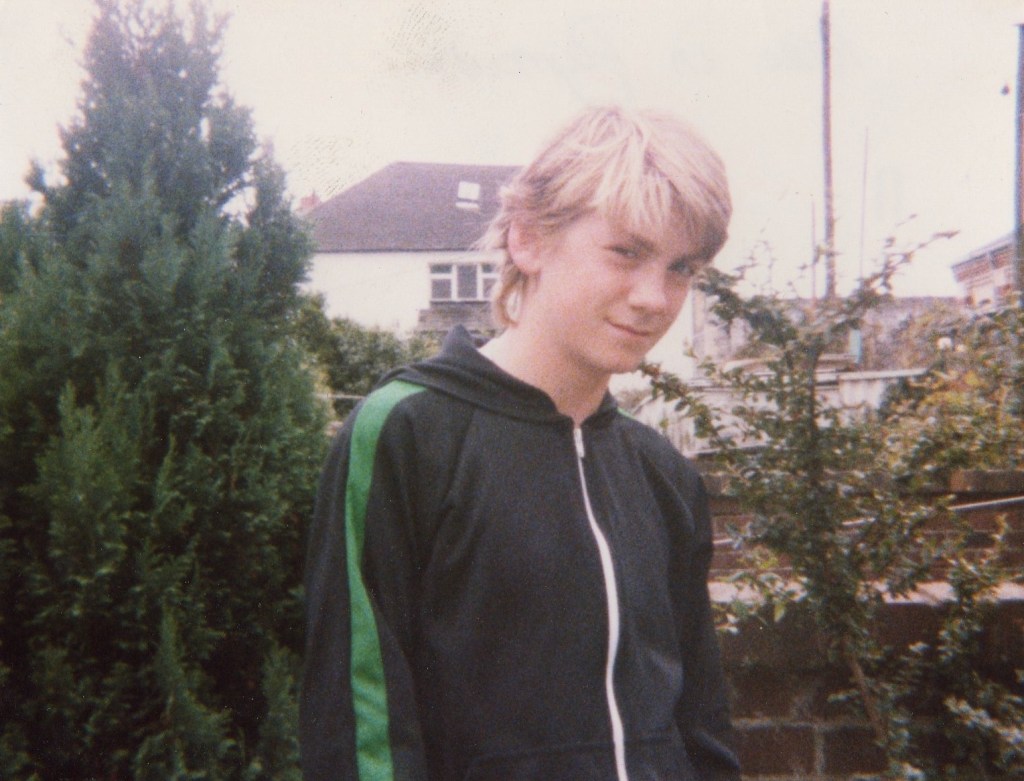
Needless to say, at an all-boys school, opportunities to engage with girls were limited. At the time, the premises on which Devonport High School was situated were shared with a mixed school, Tamar High School, which was attended by a few of the students from Pennycross and, of course, the much-maligned apple of my eye, Joanne Kenny. After a lengthy settling-in period, which consisted entirely of keeping a low profile, I casually sought out redemption in the form of a request for another date with the girl I had wronged while taking my first, clumsy and ultimately, spectacularly irrelevant steps in the dating world. That request was politely and gently declined and I was left to conclude that that particular ship had sailed. So, I decided after a short period of time to lick my wounds, to ask Joanne’s friend, Alison, out. Great idea, eh? Nope.
Her surname escapes me, although I have a vague memory at the back of my mind that I’m not confident enough to commit to paper. Well, screen, but you get the gist. The more I’ve allowed my subconscious mind to process this particular part of my story, the more details have inched towards the different part of my brain that deals with what I think are facts. So, I’ll attempt to give an honest, if slightly hazy, recollection of my shortcomings in the dating world of the late eighties.
Alison was very quiet and by some miraculous fluke, I’d managed to appear attractive to someone who was far more shy than I was. Sadly, I was also still a colossal bell end. Armed with knowledge and experience now, I wonder if my failings in these early relationships were something to do with PDA (Pathological Demand Avoidance). It certainly is easier for me to stomach when I consider that I stood Alison up twice. On the first occasion, we had a genuine family emergency and I had no way of getting in touch with her to cancel the date, something which she was remarkably forgiving of. The second time, I had no such excuse; I simply got cold feet. I liked the idea of going out with someone, but I think deep down, I didn’t think that I was worthy of being liked, let alone of provoking any other positive feelings in anyone. So again, it was far easier to back out of the situation than to explore it and find out where it would lead. Once again, I incurred Joanne’s wrath and for what it’s worth, I felt like an absolute shit once I realised how much I had hurt Alison. As someone of limited self-esteem, I should have recognised our similarities and behaved accordingly. I didn’t and it still bugs me to this day. I also hope that I remember things correctly and that I didn’t behave any worse than the winds of time will allow me to recall. Either way, it suggests that when Jim Diamond sang that he should have known better back in 1984, he was absolutely looking into the future at this fourteen-year-old pillock. Perhaps my later relationships, when I was on the receiving end of similar insouciance was my comeuppance for these misdemeanours. What goes around comes around, don’t you know?
Sport at DHS was plentiful but missing cricket, much to my disappointment. In my five years at the school, we played one proper match, an inter-school friendly in the 1st year that I remember little about except for a leaping, one-handed catch that I took at square leg to dismiss arguably the best cricketer in the year, Scott Drawer. Scott and I had come to DHS as the only two students from Pennycross and he was the only person I knew upon starting my new school. We also shared the same birthday and for a time we got on well and were friends. He was a very good, all-round sportsman and was clearly driven to succeed and I suspect that ultimately the difference in our work ethic would prove to be a factor in us going our separate ways.
There was also a cricket tournament that the school entered at what is now the site of Harpers, owned by Plymouth Argyle, which I think was where Plymouth CC used to play. My solitary memory from that tournament was bowling at an opposing batter who drilled a straight drive high to my left. Seeing the ball straight off the bat, I flung myself full length in my follow-through and plucked a one-handed catch out of the air that slapped neatly into the palm of my hand! I always loved fielding and was fortunate enough to possess at least the basic skills that enabled me to pass as a half-decent fielder. Whatever my other limitations, I had that to fall back on!
During my fourth year at DHS, two or three of us were invited to take part in a county cricket trial, held at Plymouth College. We had maybe a handful of nets with one of the P.E. teachers, Mr Hayman, who was really enthusiastic about our attempts to get our skills up to speed in time for the trials in the ‘nets’ that we had available to us. This was the first time I had ever received any coaching (everything up to this point, including the switch from right to left-handed batter, was entirely self-taught) and I was thrilled to have someone who took the time to pass on a little advice. When we duly turned up to the magnificent facilities at Plymouth College, I suspect that we were somewhat overawed and while I don’t think any of us embarrassed ourselves, it was clear that we were out of our comfort zones. I would later gain my ‘revenge’ on the ‘posh boys’ in a club game and I hope you’ll indulge me when I recall that game a little further down the line.
Rugby never appealed to me; I was neither fast nor built like the proverbial brick outhouse, so focussed my time on football. While not always a regular starter, I suppose I was reasonably versatile playing in many positions over the years. I spent two years in goal at club and school, which was arguably my best position, but while a half-decent shot stopper, I was reluctant to throw myself at the feet of onrushing strikers. My solitary goal for the school came in a big win against an opposition whose name escapes me (unusually given my love of stats), where fellow midfielder, Tim Robinson and I rotated our positions to alternate forward roles in our attacking play, despite protestations from the manager. I got on the end of a forward pass, turned inside a defender and as the ball ran away from me, slid in to hook the ball beyond the oncoming goalkeeper and into the net.
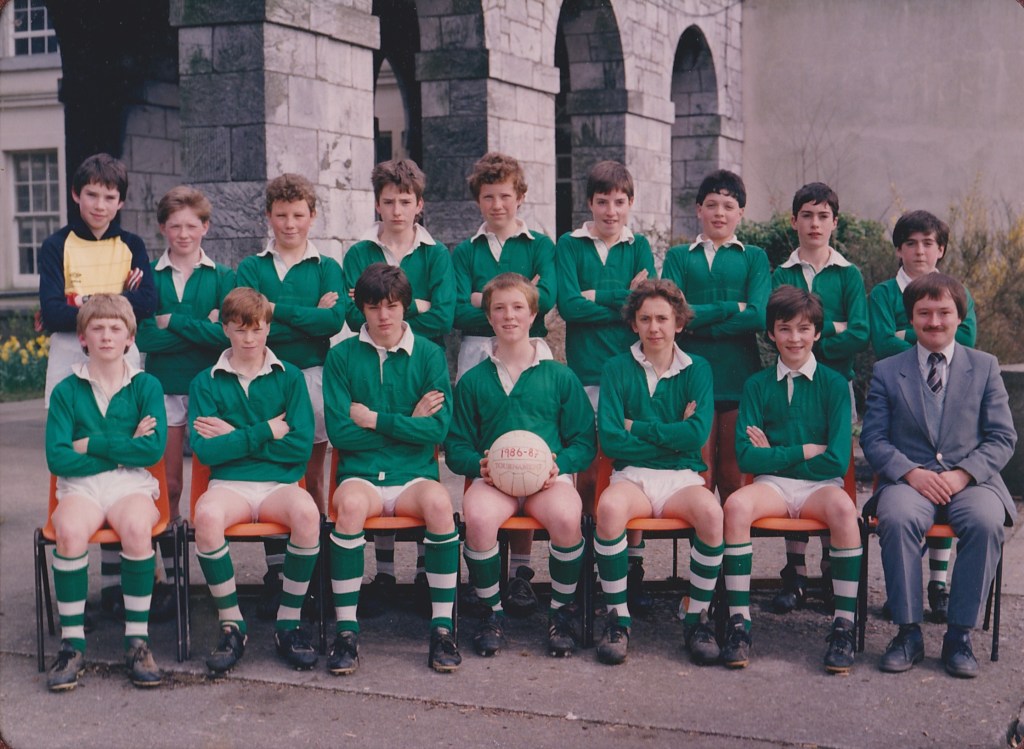
The other issue that I had in retaining a place on the team was, I suspect, my inability to keep my gob shut and not take the piss out of the teacher running the school team, Mr Skinner, who was also my biology teacher during my final two years at school. I would regularly overstep the mark in classes. Nothing necessarily outrageous, but irritating and I’m not particularly proud of the way I conducted myself at DHS – self-sabotaging my education was a particular skill, but knowing what I now know about autism and PDA, I think there was probably more to it than labelling me a ‘badly-behaved’ child. In hindsight, I was fortunate to play as many games for the school team as I did. I certainly wouldn’t have picked myself with the knowledge and experience that I now possess!
One of the biggest issues that I faced during my time at DHS was that there was little support at home and the conversations around my progress were something along the lines of:
‘Have you done your homework?’
‘Yes.’
In truth, I struggled with most subjects due to a chronic lack of self-confidence and I masked that by trying to be funny. I felt destined for failure with most tasks that I undertook and if I’d managed to ask for help at home, I’m reasonably certain that it wouldn’t have been forthcoming, so I lied about having done my homework and did my best to fudge my way through school. I probably needed more help than I realised, but from year three onwards, I was reasonably confident that assistance at home was not really on anyone’s radar. In five years at DHS, I can only recall Dad attending one parents’ evening, which would have been during that first year when I was quiet and not so much of a gobshite.
That might sound like an unfair criticism. Things had become much less fraught at home after our move to Plymouth, although Dad clearly still had a temper on him, the embers of which would occasionally threaten to ignite something more spectacular. I’m not sure that Dad ever really ‘got’ what being a parent meant and as time went on, I certainly began to feel like an imposition on his time. I get it, work was important. He had ‘his own’ life to lead, but for much of my time under his roof, we felt to me like individuals all co-existing together. I don’t remember us doing much together as a family and during the five years I spent at secondary school, I can only recall one occasion where he came to watch me take part in a sporting fixture, a club cricket final where we lost to Saltash and I received an absolute howler of an umpiring decision (again, more to follow later).
I think there was also an expectation for me to be ‘ok’ with everything, perhaps because some of my sisters were arguably seen as having ‘bigger’ or more significant problems. While I was quieter, with issues that went under the radar most of the time, I probably just didn’t really get noticed. Even when we were in Ideford and Teignmouth and times were much more difficult, I was just expected to carry on regardless. Maybe I accepted that role and played it too willingly. I’ve always felt that my life has contained an element of self-preservation to some extent, obviously more so when I was a child and the next outburst or punishment lurked unseen around every corner. It’s part of the reason that I always choose my seat carefully in pubs and restaurants. I like to know when trouble is coming my way. On the rare occasions that I head out with friends, I am always on alert, listening to peripheral conversations and people watching. Anticipation was my most valued asset as a youngster and my experiences taught me to read people.
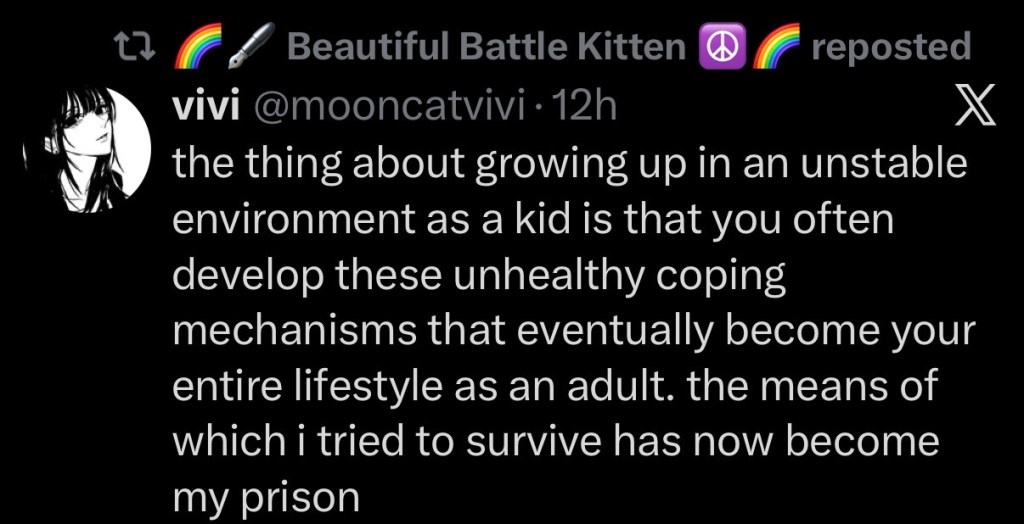
I loved my Dad; it’s important to state that before I go any further. I loved him despite everything that happened in my childhood. I do, however, think that he was quite a selfish person and that may draw criticism from some quarters, more so given that he is no longer here to defend himself. Some would say that he gave up work to look after me after he and mum separated, while I would argue that I gave up my childhood to look after him. We never had a family holiday that I can remember and once we moved to Plymouth with Brenda, his focus was on his new relationship. Again, given his life up to that point, I can understand that, in some ways, but I remember one conversation, years later, when discussing being a parent, when he ‘advised’ me not to love my children too much because they’ll ‘break your heart’. More than a little hypocritical in my eyes, but incredibly revealing about his state of mind. Neither of my parents were ever really able to accept responsibility for the way that their own children’s lives had panned out and it was somehow pitiful that my father’s takeaway from it seemed to be that he was the wounded party. In addition to the lack of emotional and educational support, he would regularly tell me that once I was 18, I was no longer his responsibility. I don’t think that he enjoyed the responsibilities of parenthood at all and I suspect that he was preparing for and looking forward to that moment for some considerable time.
Similarly, I also recognise and respect what Brenda did for him. There is no doubt that he changed after they met, generally for the better, and if they hadn’t crossed paths I’m not sure what would have happened to him. She was able to make him happy and for that I am grateful because I don’t think that he was a particularly happy person. Happiness for me is…difficult to achieve. I can’t remember if I’ve written this elsewhere on my blog, but contenment is far more attainable. It’s also less of a fall from contentment than happiness if life goes horribly wrong. It doesn’t mean that I don’t experience ‘happiness’, more that I’m less inclined to label it as such.
In year three at DHS (year nine in new money), Dad and Brenda took a two-week holiday. Very nice for them and while I probably sound a bit resentful, I didn’t begrudge them that – I guess that they wanted time away for themselves and didn’t want me tagging along and spoiling the atmos. I forget where they went, but it’s not terribly relevant. Italy? Greece? Somewhere far more exotic than the rows of semi-detached houses in deepest, darkest Peverell. What is relevant is that at the age of 14, I was suddenly alone in the house for a fortnight. Which at first was brilliant, but the novelty soon wore off. My stepsister would call in occasionally to check on me, but most of that time was spent on my own. No parties, I wouldn’t have been brave enough and in all honesty, I barely knew enough people to hold a conversation with, let alone a social gathering. It also wasn’t like I didn’t want to go abroad or on holiday, I was just never given the option. My holiday each year was visiting my mother in Horsham and substituting one dysfunctional family situation for another. But I guess they felt that maybe they had earned the right to make those choices at that stage in their lives and who am I to challenge that? Did it affect me? Yes, it did. Can I do anything about it? Absolutely not, but these moments, tiny or huge, have all combined to make me who I am today.
‘Every decision creates ripples, like a huge boulder dropped in a lake. The heavier the decision, the larger the waves, the more uncertain the consequences’ – Ben Aaronovitch, 1988.
The same situation occurred in Year Four and perhaps most tellingly, in Year Five…right in the middle of my GCSEs. I wasn’t aware of things such as revision timetables during my exams; I had no structure, no guidance. No support. Maybe some of it was there and I simply didn’t access it, but by this point, I had buried my head in the sand and was blindly believing that I would somehow fluke my way to some adequate grades. In truth, that was never going to happen. I was constantly overwhelmed by the sheer amount of work required to succeed and aghast at the volume of knowledge that I was expected to retain across multiple subjects. English became my safe haven, my great hope because it was more about creativity and opinions, neither of which I have been short of over the years. I should have done much better in Biology, History and French as I didn’t depise the subjects or teachers and perhaps with a little encouragement or guidance I could have achieved more. Everything else, however, was very much a lost cause.
At sixteen years old, on the cusp of joining the ‘real world’, I was out of my depth in an education system that I didn’t really feel a part of. I sometimes wonder if the immaturity that I displayed during this time was a product of the loss of my earlier childhood. Was I subconsciously trying to claw back those lost years? Was I emotionally and socially underdeveloped and incapable of approaching my GCSE’s with clarity of thought and an understanding of consequences? Or had the expectation that I was ‘ok’ about everything just become a coping mechanism for me? I’d love to be able to let these thought processes go and perhaps in time, having told my story, I may find some peace. I hope so.
It’s no wonder that I never considered staying on into the sixth form and certainly no surprise that all I obtained with decent grades were my two English GCSEs. I’m not shifting blame; I didn’t work hard enough, I loved making people laugh and I was more interested in playing football and cricket. But I was unsupported, disenchanted and struggling with both my past and an undiagnosed disability. I felt horribly alone and lost for two weeks during the most important exams of my life. It was tough and many nights were spent in a state of panic, crying as the realisation of my lack of preparation descended upon me. Those feelings have never really left me.
Copyright Alec Hepburn, 2026
 A Life More Ordinary
Leave a comment