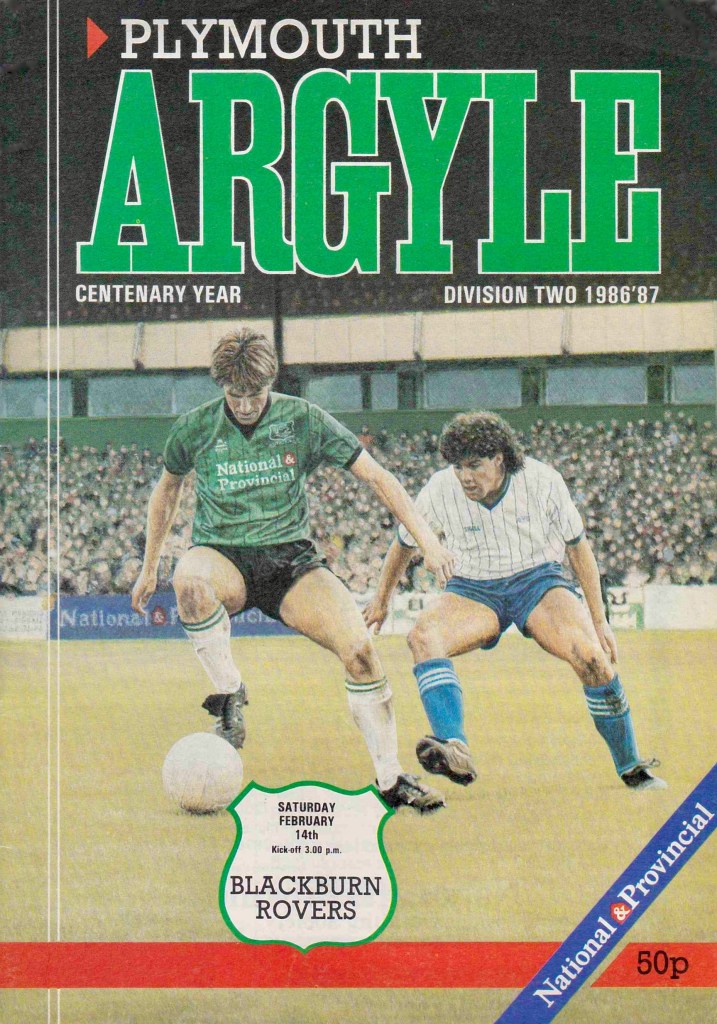
Whisper it quietly, but when I first discovered football, I became a Manchester United fan (I suspect to my father’s disappointment, he would have loved nothing more than for me to follow in his Sunderland-supporting footsteps). I have no idea why I followed the Red Devils and perhaps that’s part of the reason why, on February 14th, 1987, I fell in love with Plymouth Argyle. It’s quite the switch, granted, but not one that I have ever regretted.
So, when did football get its claws in me? The first game that I ever recall seeing was the 1979 FA Cup Final, Arsenal v Manchester United. At home in Teignmouth, Cup Final day was quite the thing, watching the build-up and settling down just in time for ‘Abide with Me’. A classic cup final followed with Arsenal coasting into a 2-0 lead before a late United fightback, Sammy McIlroy’s 88th-minute leveller and my subsequent celebrations provoking a falling out with Alison of Rooney vs Vardy proportions. With the scores level at 2-2, it looked like the game would go to extra time until Alan Sunderland popped up to nab a late winner and break my little United-loving heart.
For the next few years, it was all about United. The 1983 cup triumph (via a replay) against Brighton was perfection, given that my stepfather was a Seagulls fan and, of course, two years later, Norman Whiteside was the hero when he fired past Neville Southall in extra time to end Everton’s hopes of cup success. At some point, I was given a birthday card signed by the entire United squad, which I was absolutely blown away by. Sadly, I have no idea what happened to it.
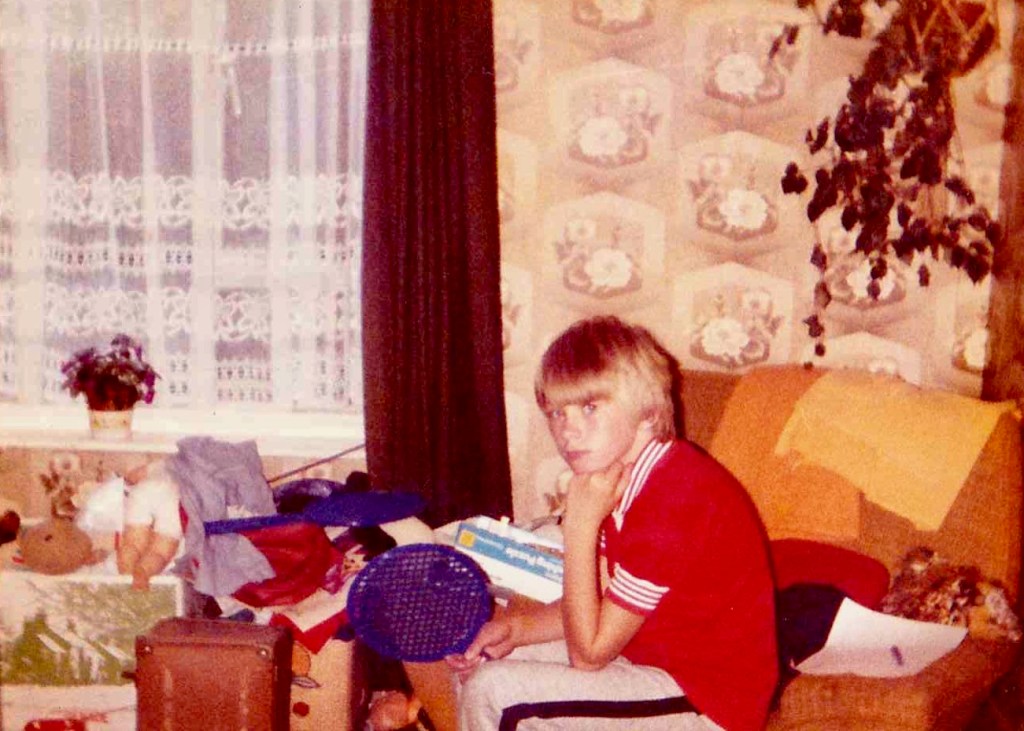
After moving to Ideford in 1982, Saturdays consisted of a kick about in the frankly humungous garden that we had, trying not to lose the ball in the masses of hedges (mainly because it would be me braving the brambles and thorns in retrieving said ball). At some point during the morning, the newspaper would get delivered along with one of my two luxuries, Champ comic, which contained the magnificent comic strip ‘We are United’, so I would settle down to read that. Around 2 o’clock the ice cream van would make its weekly visit to the village, pulling up at the top of the hill (we lived at the bottom but with only eight houses in the road it wasn’t a huge inconvenience) and prompting a dash to beat the queue for a screwball, my other luxury, vanilla ice cream packed above a rock-hard bubblegum at the bottom presented in a plastic container that doubled up quite nicely as a home-made Dalek once empty and clean.
By 2.45, I’d be in the lounge with Dad, the radio on, him lurking behind his copy of the Daily Mirror, me probably doing my best to try and be as quiet as possible. The next couple of hours would dictate the remainder of our Saturday in a simple equation. If Sunderland won, we would enjoy a harmonious evening. If they lost, Satan and his minions would descend upon number one, Church Road and condemn us to what felt like an eternity of misery and torture. Of course, if Sunderland were playing Manchester United, I’d be willing my team to lose. If they won, it would be entirely my fault and I would suffer the silent treatment until I had made up for something completely out of my control by completing an unspecified number of household chores.
Despite the endless trepidation around the outcome of Sunderland’s matches, those Saturday afternoons were mostly enjoyable. On reflection, it was only really sport that my father and I bonded over and we would go on to spend many a weekend listening to match updates, which, in the summer, would be traded for long afternoons watching either the Test match or the John Player League on Sunday Grandstand. Days like these formed the basis of my relationship with my dad as I moved into adulthood and we only really progressed beyond them towards the end of his life.
By the end of the 1984-85 season, we had moved to Plymouth. I’d been aware of Argyle during their FA Cup run of 1983-84 and despite now living in the city, I’d not made it to Home Park by the time they won promotion from the Third Division to what is now the Championship – although living in Westbourne Road in Peverell, we could always hear when Argyle had scored and none more so than the night they clinched promotion, thumping Bristol City 4-0 in front of ’20,000’ and the rest.
In the Second Division in 1986-87, Argyle hit the ground running and were becoming harder to ignore, back pages of the Evening Herald regularly catching my attention while on my paper round. In January 1987, they were drawn against Arsenal (top of the First Division) in the fourth round of the FA Cup, a game which would see them succumb to a 6-1 defeat against the likes of David Rocastle, Charlie Nicholas, Niall Quinn and Tony Adams.
Two weeks later, my stepbrother, Martin, offered me the chance to join him in watching Argyle take on Blackburn at home.
Once I’d committed to going, the excitement had started to build. My morning paper round had taken a little longer on the Saturday as I scanned every article in the sports pages of every newspaper in search of Argyle-related news. I was paid my week’s wages upon my return to the shop, which was followed by an interminable wait, the hours dragging by until we left home and headed towards Central Park. A quick stop at the pasty van by the entrance to the park yielded beef and potato (and assorted vegetable-based ingredients) goodness and we joined the steadily moving crowd to walk up the hill towards the ground. It was there that I felt it.
It started as a peculiar tingle in my fingers, accompanied by a nervous rumble in my stomach. A tiny, almost imperceptible shiver coursed down my spine as I looked around me, green and white scarves and bobble hats growing in number as we marched on. Half-heard conversations about the possible line-up, grumbles about the previous week’s defeat to Reading and the odd puff of tobacco smoke drifted over my head, We stopped to pick up a programme, the beginnings of one of my many hobbies, before we arrived at the entrance to the old Lyndhurst stand, pushing through the narrow turnstiles and making our way up the slight incline towards the terraces. Once at the top, I was afforded a moment of magic as the Home Park pitch blossomed into view, the grandstand opposite already filling up while the noise from the Devonport End briefly grabbed my attention before the momentum of the crowd carried me into the Lyndhurst stand and down towards the halfway line. Feet were shuffled, the murmur increased in volume and the atmosphere was like nothing I’d ever experienced. It was magical!
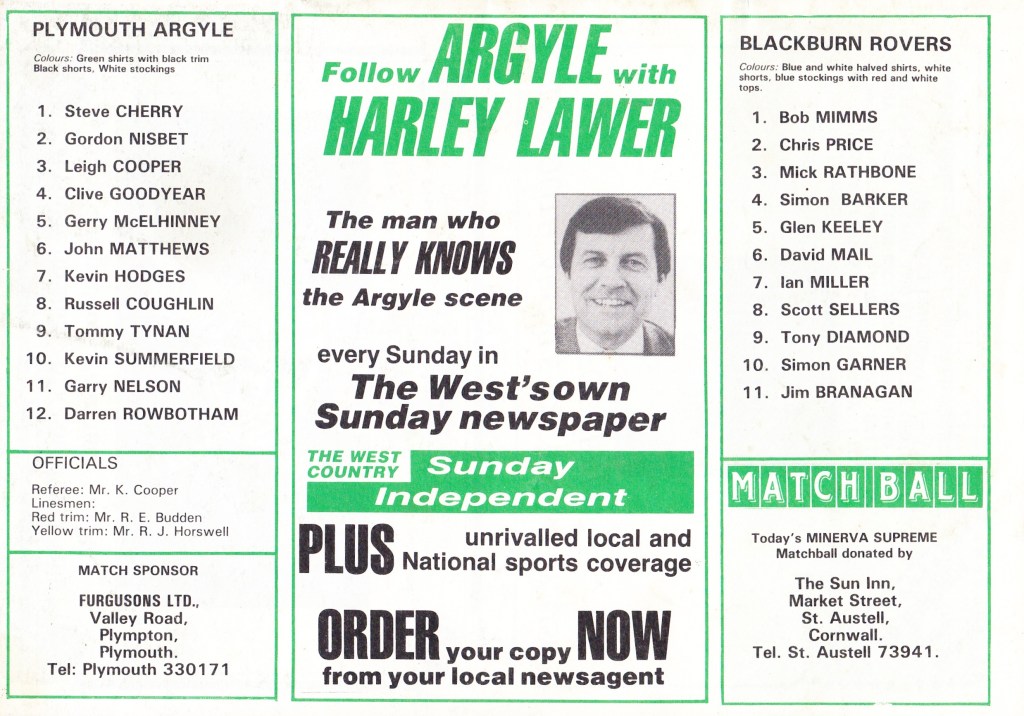
Out came the teams and within five minutes I heard the Argyle crowd vociferously suggesting that Steve Cherry, who had replaced fan favourite, Geoff Crudgington, in goal for the Arsenal cup tie, may have regularly enjoyed activities that involved one-handed reading and self-gratification. This dissatisfaction with the Pilgrims number one continued for much of the game, even after the 29th minute, when Kevin Summerfield headed past Bobby Mimms to give Argyle the lead. Blackburn were offered a golden opportunity to level early in the second half, when Gerry McElhinney was penalised for a foul on Keeley, with most of Home Park convinced that an equaliser was imminent. Barker’s spot-kick was well struck, but Cherry guessed correctly enough to block the ball with his legs, a chorus of ‘One Steve Cherry’ breaking out among the ranks of the Argyle faithful as the ball was cleared. If anyone ever doubted the fickle nature of football fans…
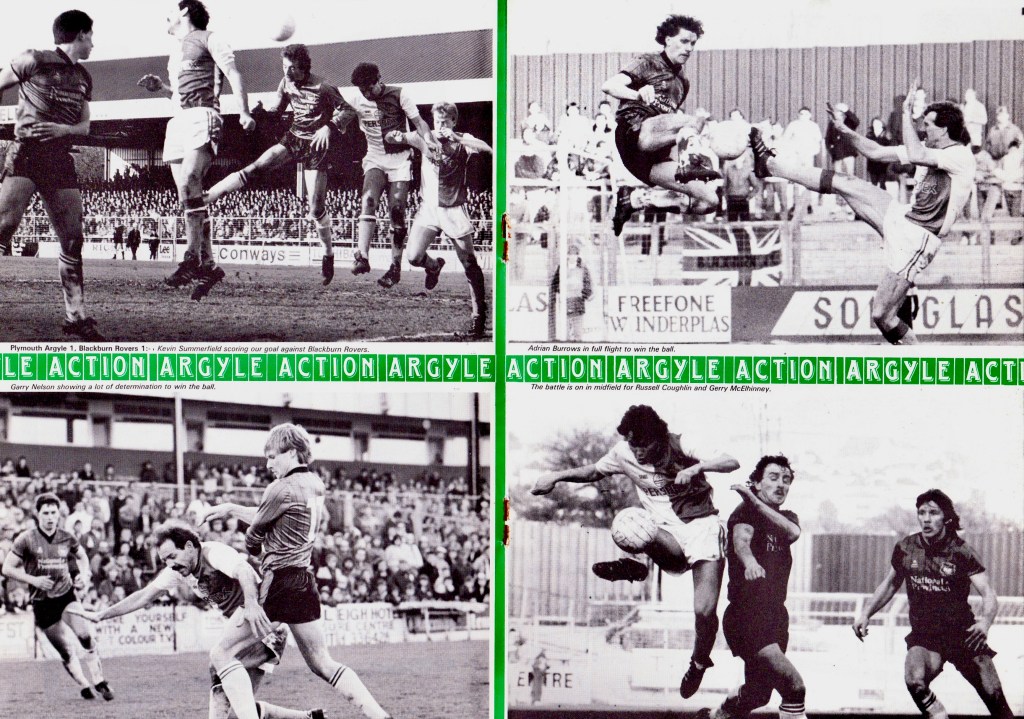
Blackburn did find an equaliser, but I was hooked. Plymouth Argyle were the team for me and from that day on, I never wavered. For better or worse!
Copyright Alec Hepburn, 2026.
No copyright infringement intended by the inclusion of the photographs from the Argyle v Blackburn match.
 A Life More Ordinary
Leave a comment