We left Teignmouth after Mum and Dad separated, although I’m not too sure of the hows and the whys involved in moving out of the town. In fact, thinking about it, it must have been a little while after the split that we moved because more stuff happened before we made our way out to Ideford, but there is time enough for those stories in other parts of this blog.
In my head, I’ve settled more or less for the summer of 1982 being the time that we arrived in the little village that holds a very special place in my heart. The Falklands War was drawing to a close as Captain Sensible was about to top the charts with Happy Talk, although I don’t believe that the two events are related. It would be quite the claim for Raymond Burns, the punk founder of The Damned, if that were the case, although his foray into British politics with the creation of the Blah Party in September 2006 would at the very least suggest that he had more than just a passing interest in the affairs of state.
Elsewhere, ABC’s The Lexicon of Love, the fourth best-selling album of the year, reached number one in the UK charts. The hugely enjoyable televisual extravaganza, ‘It’s a Knockout’, aired its final episode, as did the mysteriously terrifying Sapphire and Steel. Gandhi won eight Academy awards including Best Picture and in the World Cup, England were eliminated at the second group stage following a goalless draw with a Spain side who had earlier lost in the group stages to Northern Ireland, courtesy of a late Gerry Armstrong goal. The Mary Rose, flagship of Henry VIII was raised from the Solent while Sue Townsend’s The Secret Diary of Adrian Mole, Aged 13 ¾ was published, a book that I would eventually read and enjoy immensely.
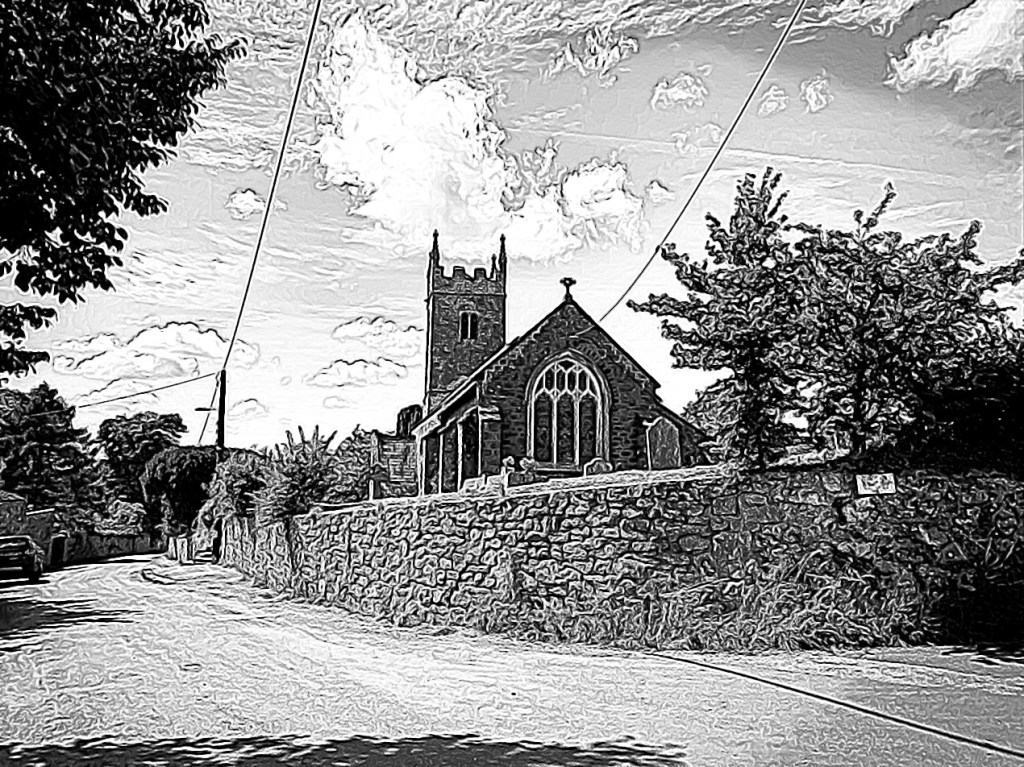
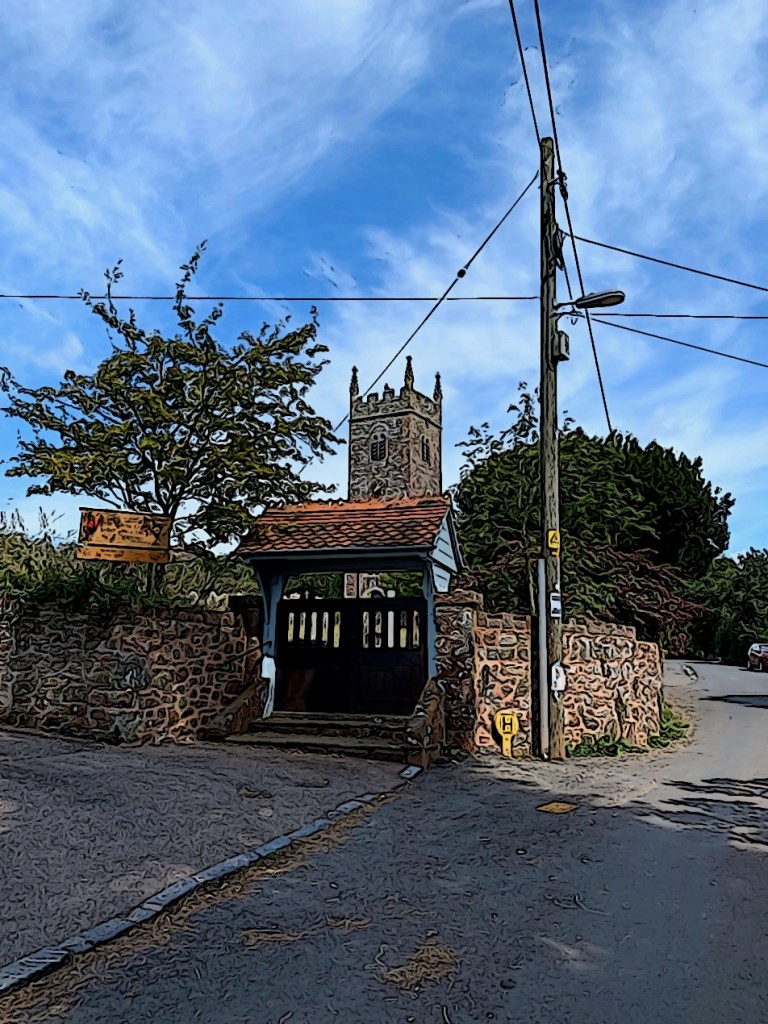
I hope that the residents of Ideford will forgive me if I describe the village as unremarkable. It’s about four miles out of Teignmouth, up over the golf course and beyond, down narrow, twisting roads that are hellish to drive along and pretty much in the middle of nowhere. In the early to mid-eighties, during our time there, Ideford contained a pub (The Royal Oak, which is still there), a post office that looked suspiciously like somebody’s house that now looks exactly like somebody’s house and is no longer a post office and a garage that fixed cars but didn’t sell anything (to the best of my knowledge). There were a couple of phone boxes and the remaining one was doubling up as a marvellous book exchange on my last trip back. And a church. As in there was also a church, the phone box wasn’t purporting to be a place of worship, I suspect it’s a tad trickier to contact a higher power than hoping they’ll accept a reverse charge call.
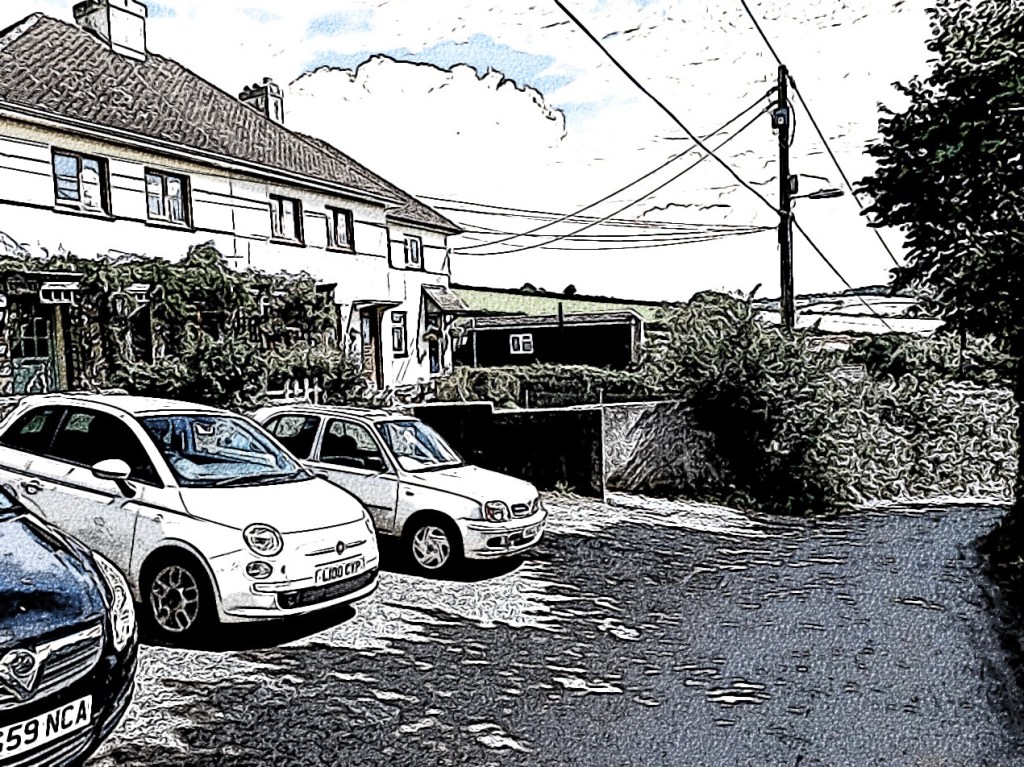
We lived at number one, Church Road. The first of a row of eight houses (two blocks of four) on a hill that, surprisingly enough, overlooked the church. Being in the end house had its advantages; we had an enormous garden that surrounded the three unattached sides of the house. At the front, there was a small-ish lawn with a beautiful Chinese Lantern tree in the corner. Looking outward from the house to the left of the lawn was a vast expanse of about 25-30 metres where we built a couple of fishponds, the largest of which would leak during the summer, so we would regularly have to refill it by carrying a huge stew pan full of water from the kitchen and emptying it carefully into the pond so as not to create any more damage to the fragile lining. That stew pan was heavy and transporting it from the kitchen was no mean feat when one had biceps like gnat bites. The other pond, further away from the house, was essentially a large, plastic tub sunk into the ground and filled with water and plants. The area in which it was located was quite overgrown and we would regularly see frogs and toads in the water. During the winter, it would freeze over with ice so thick that we were unable to break it, but somehow whatever was living in it managed to survive.
Alongside the house ran a sloping lawn, although I use the term lawn loosely. It was long enough to be able to set up a full-length cricket wicket, although the covering of grass was sparse to say the least – I suspect that batting on that deck prepared me for playing at the likes of Storrington, St Peters and those other dodgy wickets that I encountered in my adulthood. At the back of the house, a long garden stretched off into the distance. This was where we grew our vegetables during the summer (whether we had a love of gardening or not, we were all expected to take part) and I have vague memories of a rabbit hutch, home to the white furred and red-eyed ‘Fluffy’, in front of a D.I.Y. corrugated iron fence on the right of the garden, opposite the shed. I don’t remember what happened to Fluffy, but I think perhaps I shouldn’t ponder on it for too long given the paucity of food offerings that we often had to contend with. Behind that corrugated iron fence, we would regularly build dens that doubled up as spaceships or gangsters hideouts, furnished with bits of old carpet and whatever else we could find, oblivious to any bugs that might be living in the trees or bushes.
Korky, our cantankerous, black cat named after the cover star of the comic, The Dandy, came with us to our new home from Teignmouth. I would hazard a guess to suggest that she was loved by few in the family and had probably learned the hard way to make herself scarce when voices were raised and tempers flared. I’ve always loved animals and have been fortunate enough to have always been in a position to have pets. Korky, however, challenged that love of animals after an incident that took place shortly after we had moved into our new home. It was a grey day, deep in the middle of winter and it was cold enough for us to have lit the fire in the lounge. I heard Korky at the back door, miaowing to come in, so at my father’s request, I went to ‘do the honours’. With the door open and the heat rapidly escaping, Korky then decided to just sit on the back doorstep and miaow some more. Hastened by my father’s demand to ‘shut that bloody door’, I bent down and scooped Korky up in my arms, smiling as she nestled into my woolly jumper that wouldn’t have looked out of place on a lighthouse keeper.
Closing the back door, we crept back into the kitchen at the precise moment that my Dad chose to clear his throat with a ‘harrumph’ that closely resembled the sound of a foghorn. Korky panicked, twisting in my arms in a bid to escape the frightful racket. However, in her agitated state, one of her claws became caught on the fabric of my jumper. As I tried to calm her enough so that I could free her, she wriggled and writhed like some sort of evil dervish, swiping at my face with her other front paw and scratching just below my right eye and catching the bridge of my nose. As I screamed in surprise and my father charged into the kitchen, Korky became more traumatized and decided that the best thing to do would be to bite my right ear lobe before finally freeing herself from her temporary incarceration and fleeing through the lounge and up the stairs, swiftly tailed by my cricket-bat wielding father. With blood running down my face and dripping from my ear, I chased after them, insisting that the cat wasn’t at fault but that she had simply been scared. Fortunately, for Korky at least, she found a hiding place out of reach of the said piece of willow and stayed there until the wee small hours, only emerging once a more serene air had settled upon our home.
It might seem strange, but looking back at the time in Ideford, I’m convinced that this was as good as it got during my childhood. It wasn’t great and I still went through things that I shouldn’t have had to go through, but there were also times when I think I was genuinely as happy as I could be. For obvious reasons, it’s not an emotion that comes naturally to me and it’s only been the last few years that I have felt worthy of admitting feeling it to myself, let alone anyone else. For a long time, if I said that I was ‘ok’ that was ‘my happy’ and I believed that life would never be any better than that. Of course, I still live in fear of everything falling apart, but I’ve got better at recognising happiness and enjoying it for what it is at the time. Happiness often strikes me as the most temporary of emotions, harder to cling on to than anything else. I’ve always preferred to feel content rather than happy. It’s less far to fall when the next thing goes wrong.
It’s perhaps no surprise that the village of Ideford would go on to feature in the books that I would write, renamed as Ivyford. I had to add a couple of things to the village, such as a cricket pitch and a water mill, but most of the village described on the page is accurate. I’m pretty sure that events of Stand Against the Dark were first dreamed up among the leafy lanes of the village, perhaps even the first plot ideas were born there and then pushed to the back of my head to bake for a few years. Whenever I write about the village though, it always feels to me like I’m going home and that’s the biggest compliment that I can give it. I regularly pop back to soak up the atmosphere if I’m ever running dry on inspiration and it’s one of my very favourite places in the whole Universe. It’s probably just as well that there has never been a cricket pitch in the village, I may never have left.
I’d changed schools when we moved to the Ideford, although the nearest school was in Bishopsteignton, a couple of miles in the opposite direction to Teignmouth. It took a while to settle in and the early morning bus trips were a time for my mind to wander. At Bishopsteignton, it became obvious to me that the teachers I got on well with would get the best out of me. Living a life at home where the next wallop or bollocking could come out of nowhere meant that I was never going to respond well to discipline or threats. My first teacher was Mr Dunn, who was also in charge of the football team, as was Mr Glenny after Mr Dunn left. Whether or not word got around about my situation at home, I don’t know, but I was happy under these teachers and would do my best on and off the football pitch. It was here that I discovered my love of reading and writing, for once excelling at something all of my own – I’d regularly receive fulsome praise for my spelling and creative writing, completely new territory for me to be in receipt of positive feedback! I was genuinely sad to leave Bishopsteignton when we moved away from Ideford. I was given a football that was signed by all of the team, which meant an awful lot to someone who found friendships and home life difficult. Again, there were moments of contentment there and I’ll be sharing some of my memories of my school days in this blog.
Life in Ideford wasn’t terrible, perhaps aside from all the walking we would do (including the regular eight mile round trips to Teignmouth and back). Summers always seemed sunny, perhaps now viewed through rose-tinted glasses, and we’d often go walking during the holidays to pick blackberries along the narrow lanes. One time, a particularly juicy-looking harvest caught my eye from across the knee-deep stream that ran through the fields and despite my fear of water, I was tempted enough to brave the foot and a half deep flow, tiptoeing carefully to avoid the small, brown fish that darted around my wellies that were probably a little too big for me. Two or three minutes into my picking stint, I attempted to shuffle back along the stream with my half-full bowl of fruit nestled in the crook of my arm, eyeing up another batch of berries destined for a crumble or pie. However, my welly got stuck in the mud at the bottom of the stream and as I moved back, my foot slid outwards and upwards and I toppled back into the water, earning myself a soaking and a rebuke for losing the aforementioned blackberries from my bowl. I also had to spend the remainder of the afternoon’s expedition in soaking wet clothes – going home to dry out wasn’t an option. After that, country walks were never really high on my list of enjoyable activities.
Copyright Alec Hepburn, 2025.


 A Life More Ordinary
Leave a reply to Cookingfriend Cancel reply